
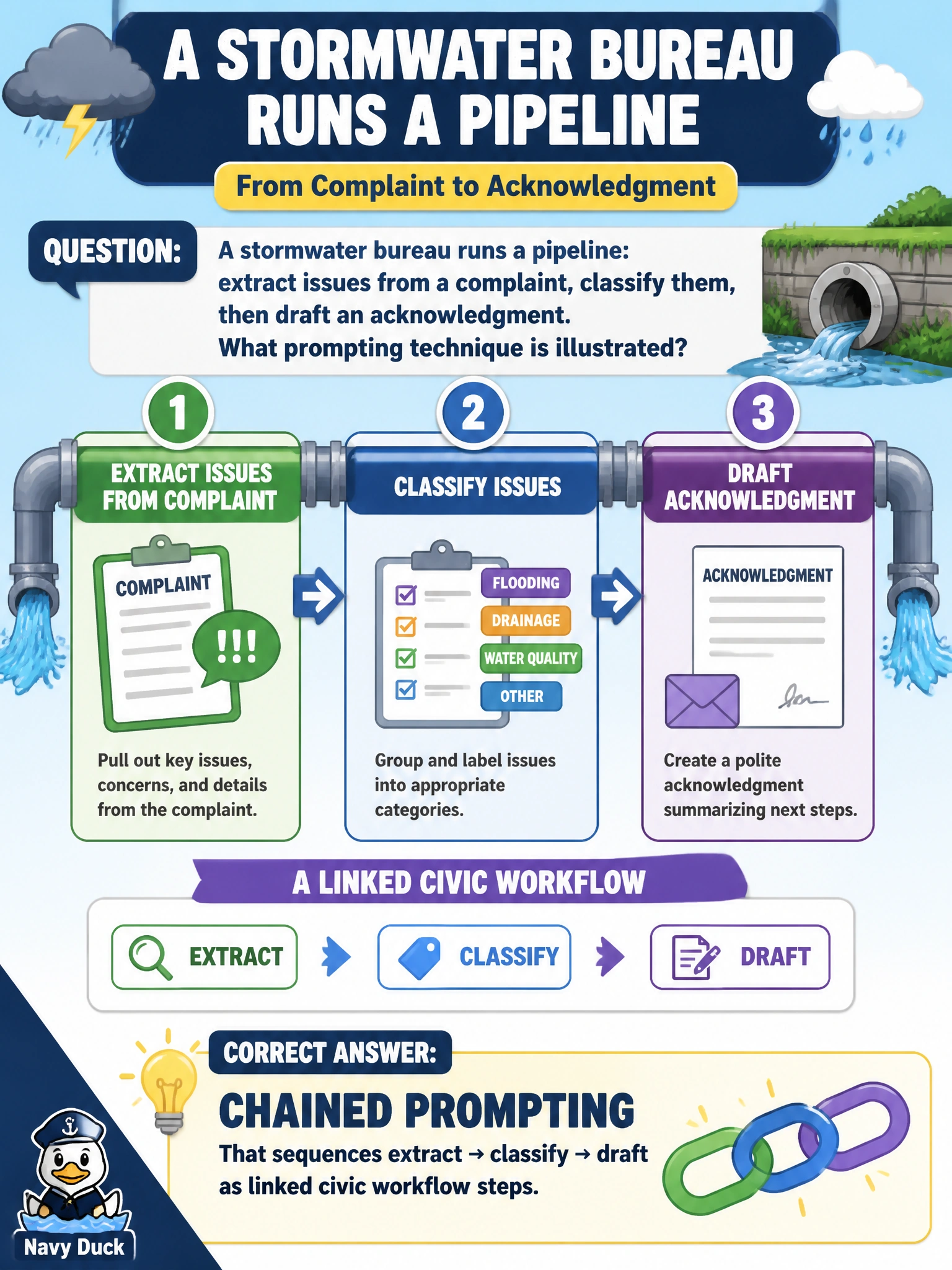
A stormwater bureau runs a pipeline: extract issues from a complaint, classify them, then draft an acknowledgment. What prompting technique is illustrated?
Select an answer to reveal the explanation.
Short Explanation
Break the job into a bucket brigade: pull the issues, label them, then write the “we got it” note. Chained prompts pass the baton so each step stays focused.
Full Explanation
A stormwater bureau pipeline that extracts issues from a complaint, classifies them, then drafts an acknowledgment illustrates chained prompting: sequencing linked civic workflow steps so each model call has a focused job and passes structured results downstream. Extract → classify → draft mirrors how work orders move, keeps intermediate labels available for routing, and lets staff inspect classification before a resident-facing note goes out.
A single zero-context shout that demands all three results with no intermediate steps overloads one call and makes failures hard to localize. Fine-tuning three separate diffusion models exclusively on storm-drain photographs addresses image generation, not this text complaint workflow. Disabling the model between steps so classification results never reach drafting breaks the baton pass the bureau needs for a coherent acknowledgment.
Exam caveat: chains need validated interfaces between steps—schemas for extracted issues and allowed labels. Errors propagate: bad extraction yields bad classification and a misleading acknowledgment. Include automated checks or human review on high-severity flooding or pollution complaints before send.
Operational check: run a sample complaint through the full pipeline, inspect intermediate JSON and labels, confirm the acknowledgment references the classified issues correctly, and alert operators when any step returns empty or low-confidence output.