
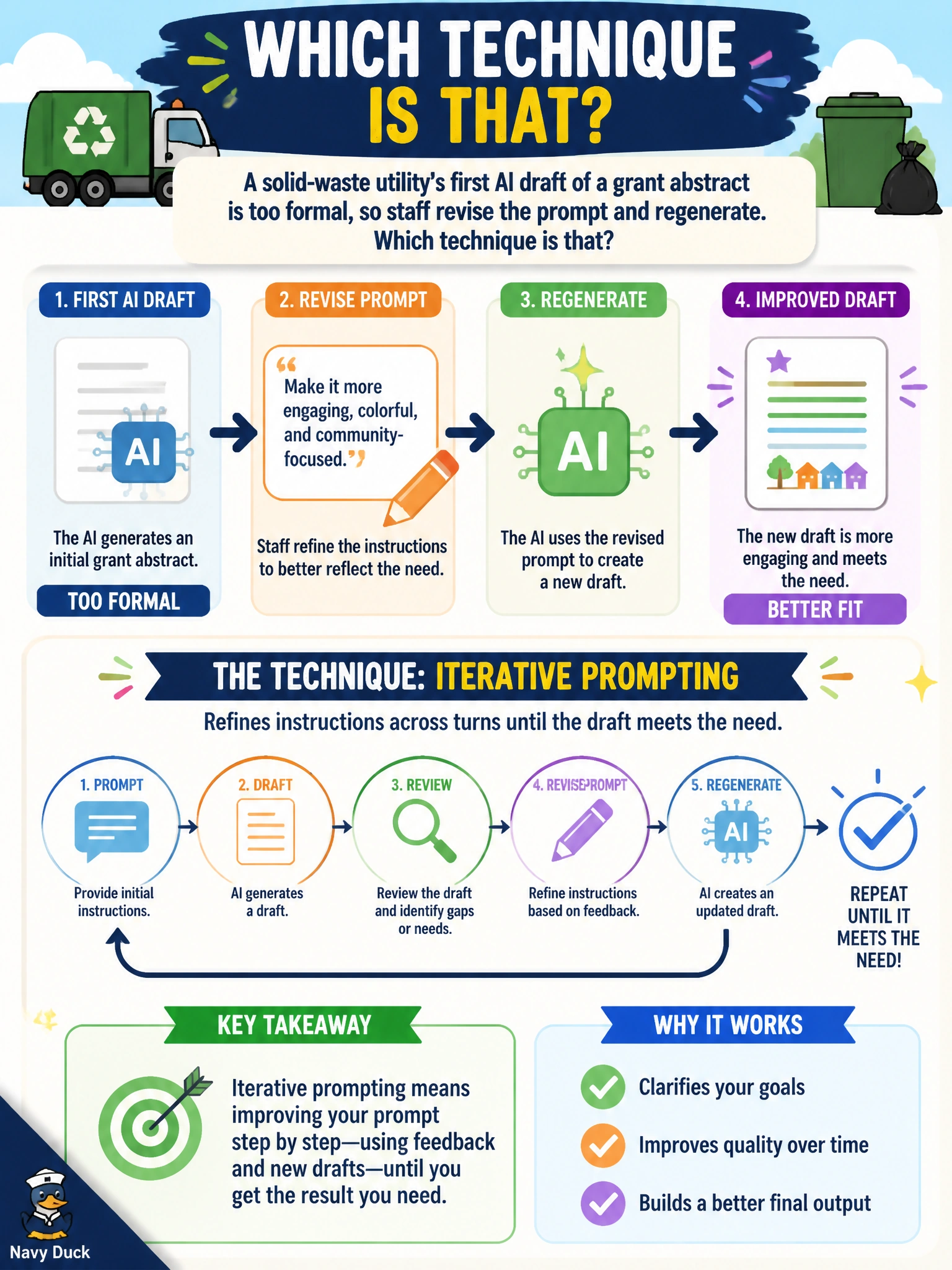
A solid-waste utility’s first AI draft of a grant abstract is too formal, so staff revise the prompt and regenerate. Which technique is that?
Select an answer to reveal the explanation.
Short Explanation
When your first draft feels too formal, revise the prompt and regenerate—that’s iterative prompting. You’re refining the instructions across turns until the draft fits the need, rather than posting fees or changing tone through indexing.
Full Explanation
When a solid-waste utility’s first AI draft of a grant abstract is too formal, staff revise the prompt and regenerate. That is iterative prompting: refining instructions across turns until the draft meets the audience and tone needs. You can adjust formality, length, emphasis, or audience, then regenerate; this applies ordinary writing revision to prompts rather than expecting a perfect draft from the first instruction. One-shot payment authorization that posts landfill fees without a second human look is a payment process, not revision of an abstract. Hybrid BM25 indexing of the abstract does not change its tone without new prompt text; indexing is not the prompt refinement described here. Prompt injection testing that deliberately overrides grant eligibility rules in production is a security test, not a way to polish a grant abstract, and doing it in production is unsafe. Exam caveat: iterative edits must preserve factual eligibility, budget figures, and compliance claims. Tone and plain-language changes must not invent metrics or stretch program scope; humans should verify numbers and required grant language before submission. Practical check: save the prompt version used for each regeneration, compare the draft with the solicitation’s plain-language and page-limit requirements, and stop when the tone fits without drifting from verified program facts or eligibility statements.