
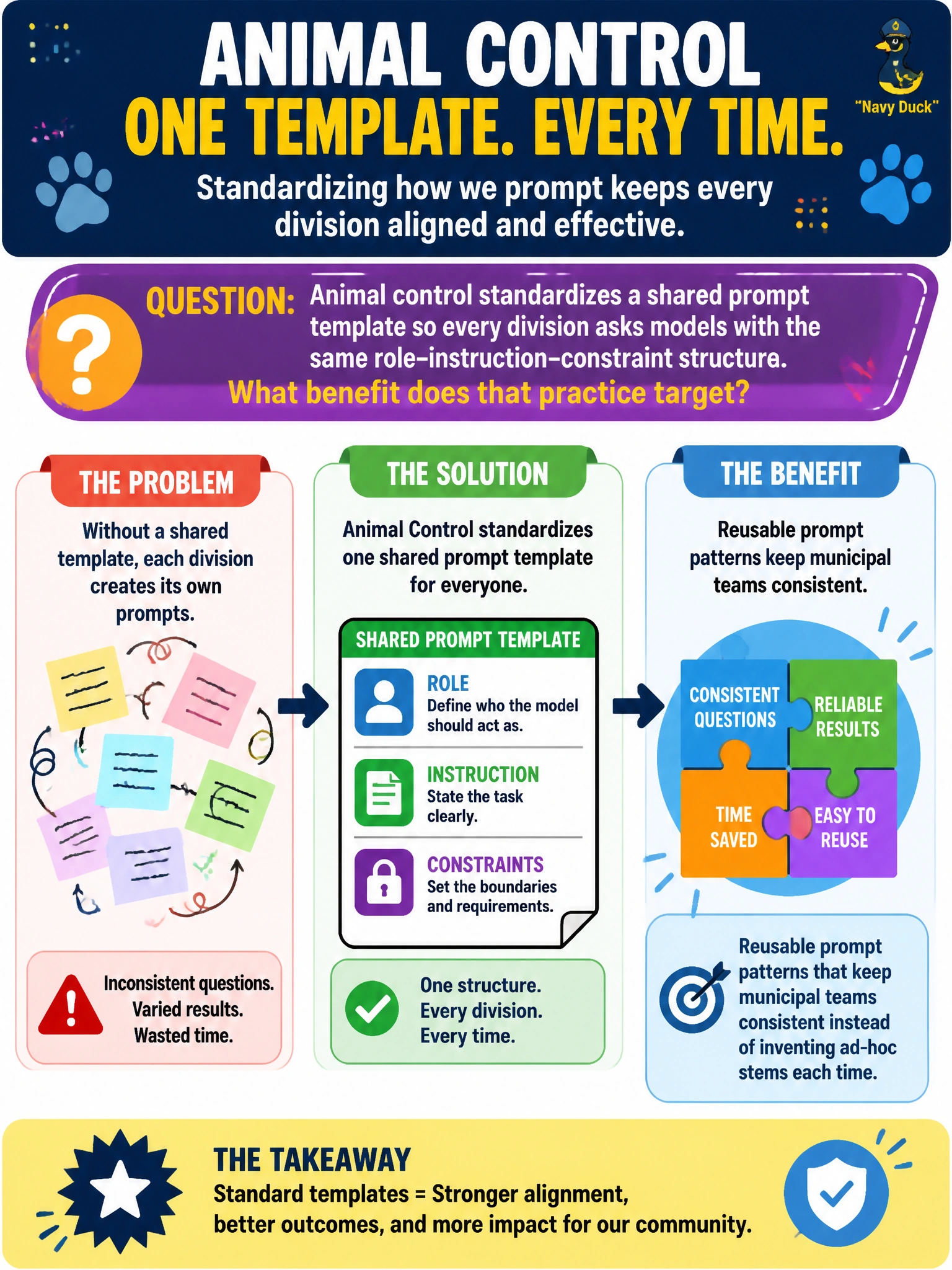
Animal control standardizes a shared prompt template so every division asks models with the same role–instruction–constraint structure. What benefit does that practice target?
Select an answer to reveal the explanation.
Short Explanation
One shared template is the department playbook: same shape every time, fewer surprise voices. Reusable patterns beat reinventing the prompt in the parking lot before each call.
Full Explanation
Standardizing a shared prompt template so every division asks models with the same role–instruction–constraint structure targets reusable prompt patterns that keep municipal teams consistent. Animal control then stops inventing ad-hoc stems in the parking lot before each call; every case write-up or assistant request follows the department playbook. Consistency improves quality, onboarding speed, and auditability across officers, dispatchers, and shifts.
A ban on instructions so each officer relies on zero guidance increases variance and error in license, bite, and shelter notes. Automatic fine-tuning of a new base model whenever a template field is edited confuses prompt governance with model training and is operationally unrealistic. Deletion of constraints so the assistant invents license-tag formats freely removes the safety and standardization the template exists to enforce.
Exam caveat: templates need version control and clear ownership—who may edit the shared prompt—and periodic review against ordinance and shelter-policy changes. A stale template can systematize outdated guidance at scale, which is worse than occasional ad-hoc slips.
Operational check: publish the template in the division handbook, have two officers complete the same case summary with it, compare structure and constraint adherence, and revise the master file under change control rather than allowing silent one-off forks.