
A language-access office is designing a permitting chatbot that must cite adopted ordinances rather than rely on the model's memorized training text. What pattern should they implement?
Select an answer to reveal the explanation.
Short Explanation
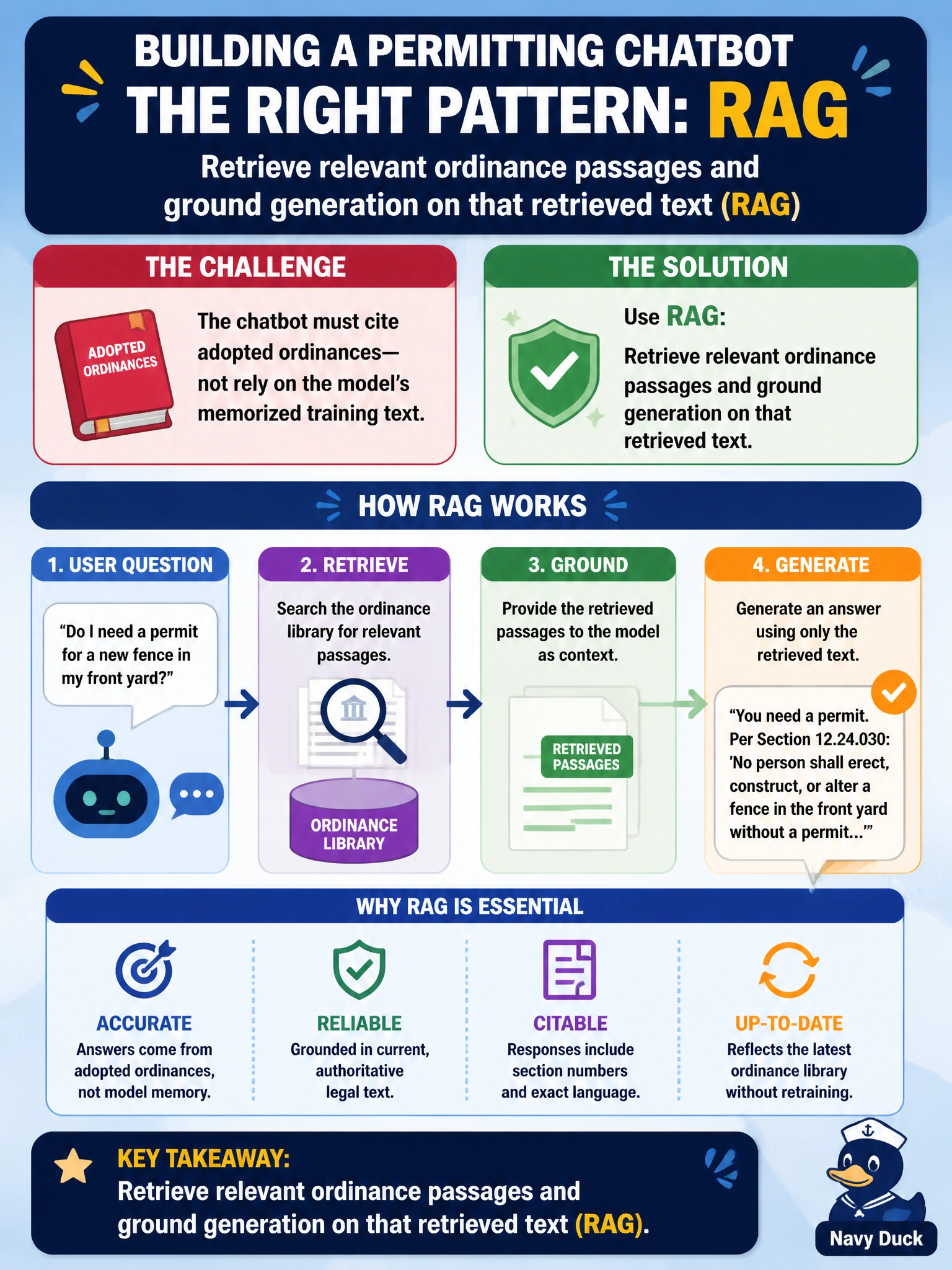
Don't trust the model's foggy memories of the code book—go pull the real ordinance page first, then let the model write the answer from that page. That's RAG in plain clothes.
Full Explanation
A language-access permitting chatbot that must cite adopted ordinances should not rely on parametric memory of training text, which can be incomplete, outdated, or paraphrased incorrectly. The pattern to implement is retrieval-augmented generation: retrieve relevant ordinance passages and ground generation on that retrieved text so answers reflect current adopted law. RAG is the standard municipal pattern when citation fidelity matters for public permitting guidance.
Increasing temperature so the model invents friendlier ordinance wording increases randomness and hallucination risk—the opposite of faithful citation. Disabling all external documents so the model answers only from parametric memory removes the authoritative corpus the office needs. Replacing the chatbot with a diffusion model that paints permit stickers abandons Q&A and citation entirely.
Exam caveat: retrieval quality matters as much as the generator—bad chunking or stale indexes still produce wrong permitting guidance even with a strong chat model. Operational check: index current ordinances, require answers to include retrieved citations, spot-check language-access replies against the source sections, and refresh the index when council adopts amendments.