
An ADA compliance office wants a repeatable way to shortlist hub models for municipal assistants. What practice best documents selection?
Select an answer to reveal the explanation.
Short Explanation
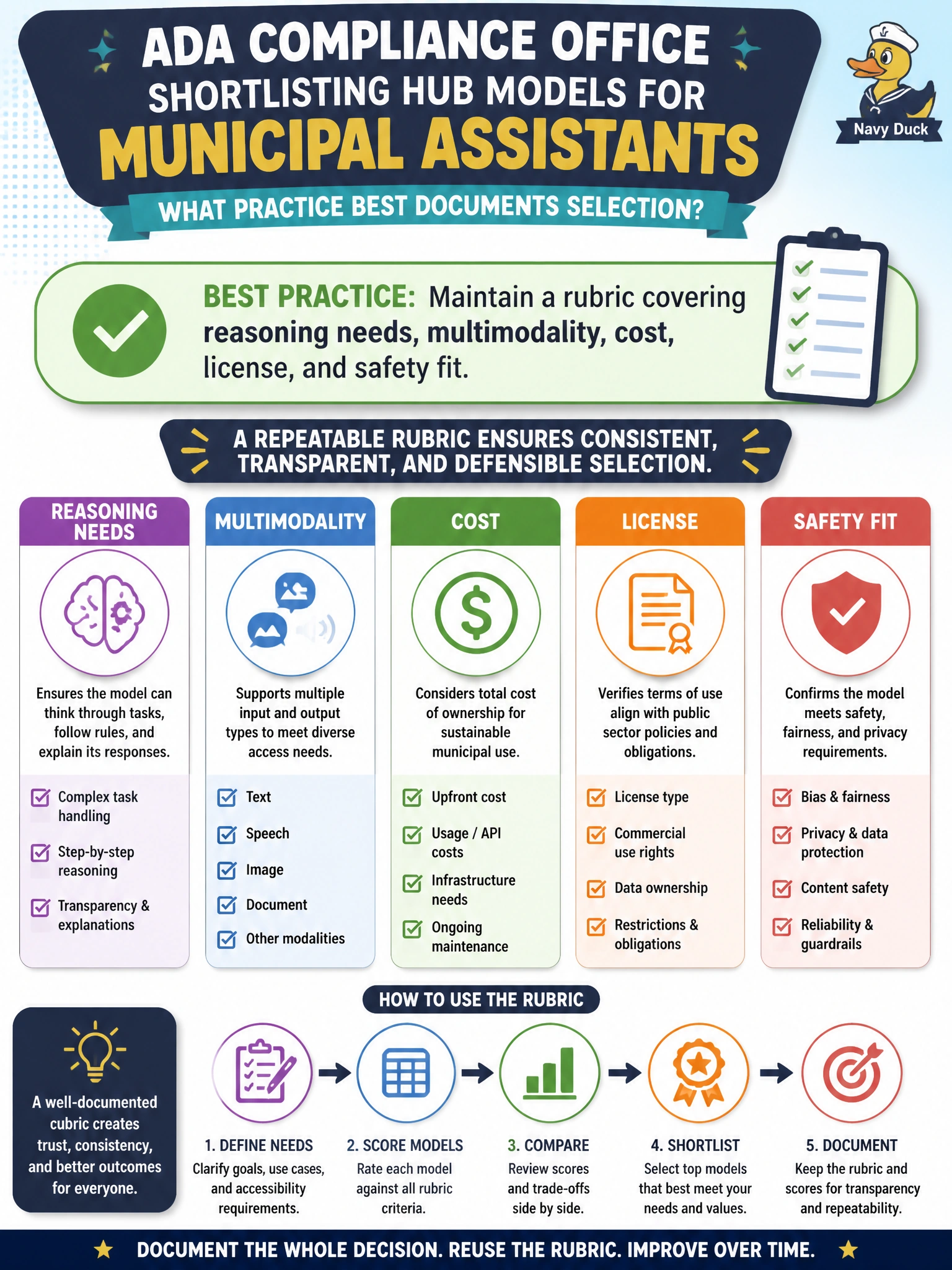
Write the scorecard before you shop: reasoning, modalities, cost, license, safety. Instinct and viral demos make poor procurement for ADA-facing city tools.
Full Explanation
An ADA compliance office shortlisting hub models for municipal assistants needs an auditable, repeatable method that survives personnel changes and public scrutiny. Maintaining a rubric covering reasoning needs, multimodality, cost, license, and safety fit documents why each model advances or fails and supports equitable, reviewable procurement for tools that may affect access to city services. Written, shared criteria beat ad-hoc analyst taste when fairness and accessibility obligations are in scope.
Picking models solely by whichever demo video has the most views substitutes virality and production polish for task fit, license review, and accessibility requirements. Requiring every model to include a built-in braille embosser API confuses assistive hardware interfaces with model-hub selection for language assistants; embossing belongs to the access technology stack, not the LLM card. Banning written criteria so each analyst may choose by instinct destroys repeatability, weakens compliance documentation, and invites inconsistent, indefensible choices.
Exam caveat: a model rubric should sit beside application-level accessibility checks (UI, alternatives, plain language); the hub card is only one layer of an ADA-minded deployment. Operational check: publish the rubric before shopping the hub, score every candidate the same way, archive scores with the selection memo, and revisit weights when municipal assistant requirements or ADA guidance change.