
A parks wildlife unit's public chat often feels slow, and residents abandon the session before a full answer appears. Which response-management approach best improves perceived wait?
Select an answer to reveal the explanation.
Short Explanation
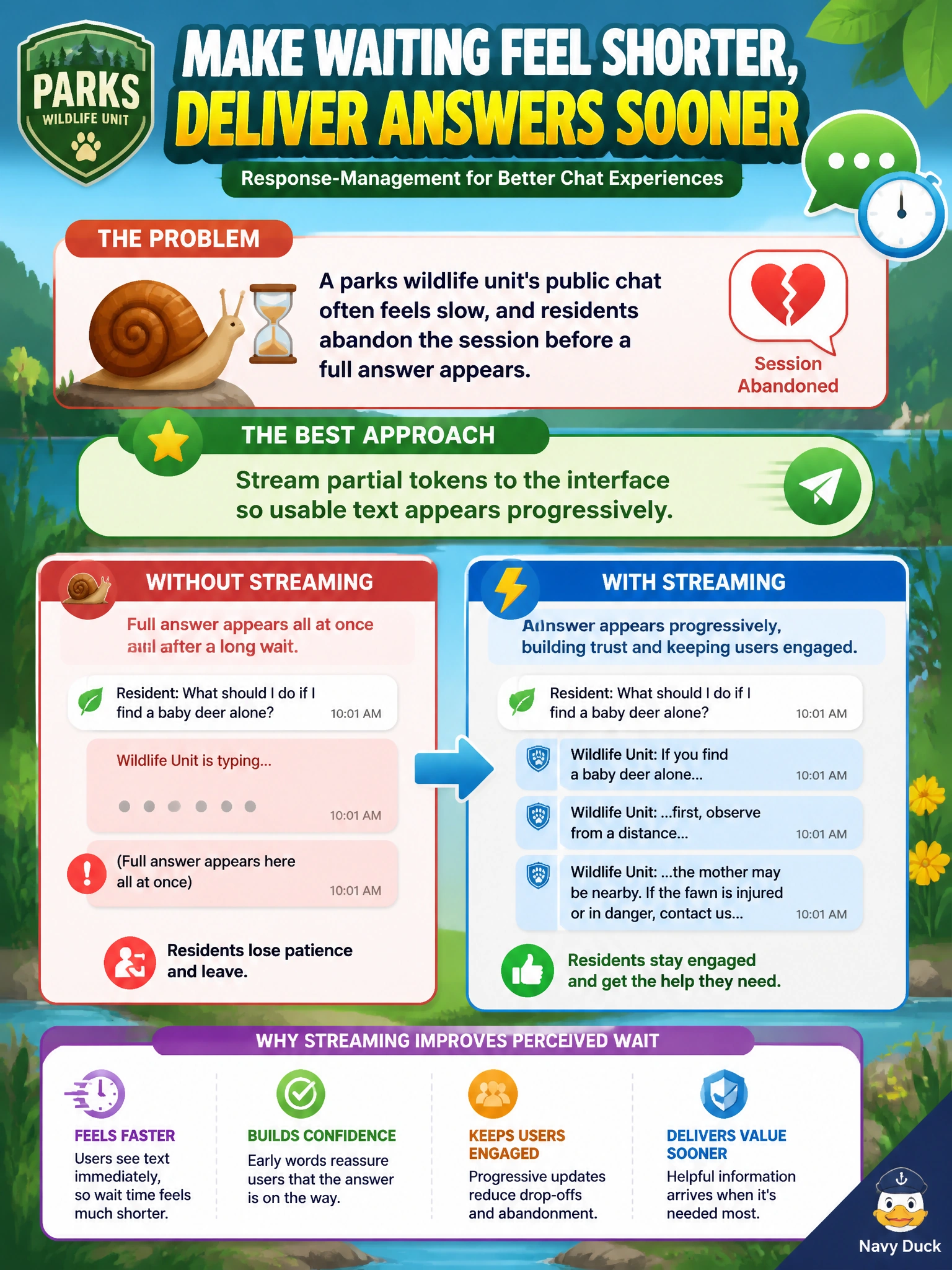
Waiting for a whole letter before opening the envelope feels endless. Streaming is like watching the letter write itself line by line—residents see progress and stick around.
Full Explanation
Parks wildlife public chat feels slow when residents wait for a full completion before any text appears. Streaming partial tokens to the interface improves perceived wait by showing progressive, usable text while generation continues, which reduces abandonment even if total generation time is unchanged. For civic self-service, perceived latency often matters as much as raw tokens-per-second.
Blocking all answers until a human ranger approves every token offline maximizes safety review latency and is incompatible with interactive chat expectations for routine wildlife FAQs. Requiring residents to retype the question every five seconds adds friction without accelerating generation and worsens UX. Replacing chat with a next-business-day email batch job removes interactivity entirely and increases wait rather than improving perceived responsiveness.
Exam caveat: streaming improves perception but does not by itself fix overloaded backends, oversized prompts, or rate limits; still trim context and size the model for the parks workload. Operational check: enable streaming on the wildlife chat UI, measure time-to-first-token and session abandonment before versus after, and confirm partial text is readable and not misleading mid-sentence on common intents.