
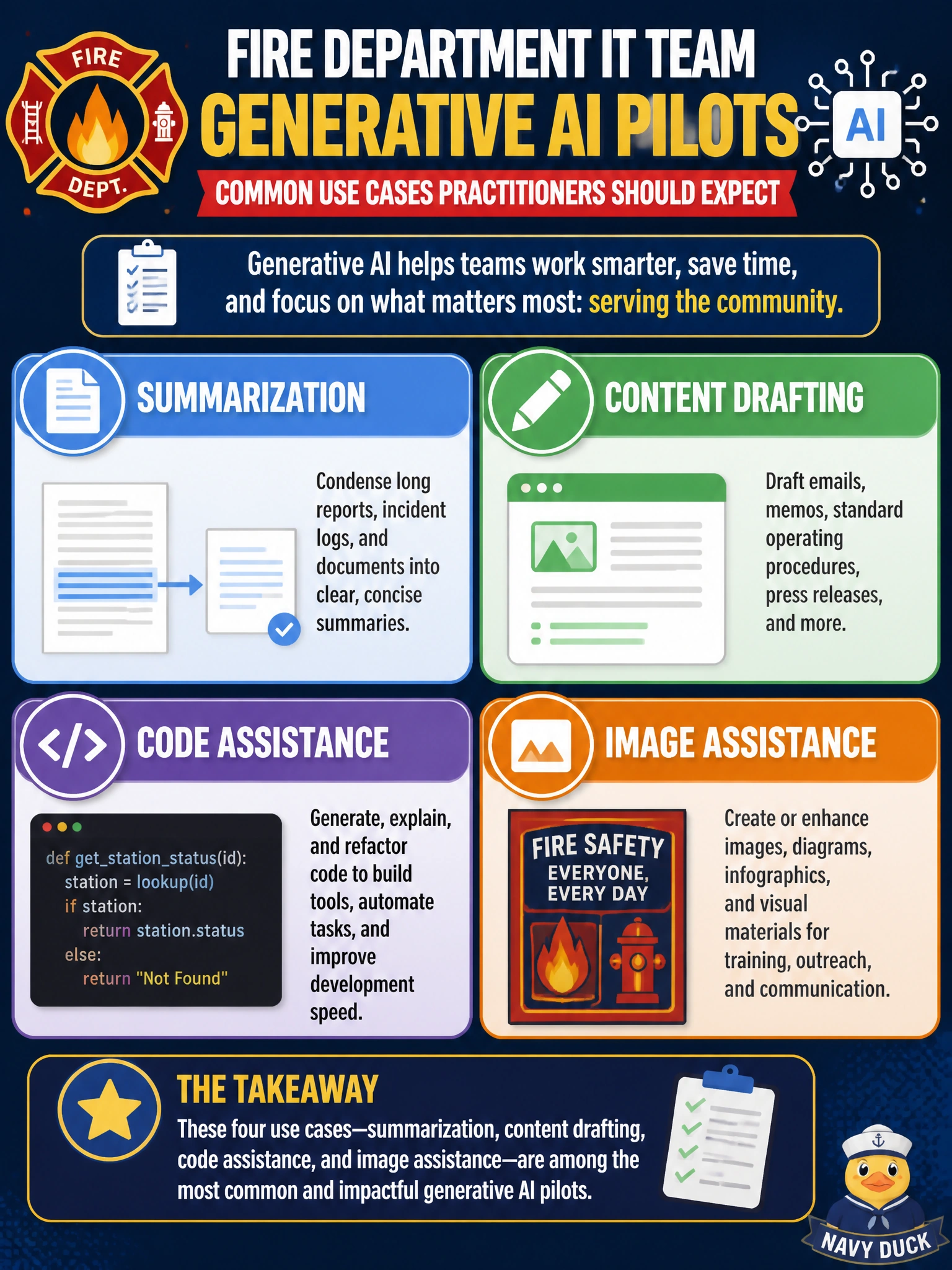
A fire department IT team catalogs generative AI pilots for the year. Which set best reflects common generative model use cases practitioners should expect?
Select an answer to reveal the explanation.
Short Explanation
Stick to the generative greatest hits: summarize, draft, help with code, help with images. Cabling GPUs and designing BGP aren’t generative-model use cases—they’re a different exam entirely.
Full Explanation
A fire department IT catalog of generative AI pilots should center on common generative use cases: summarization, content drafting, code assistance, and image assistance—the modalities practitioners actually deploy for reports, public messaging, scripting, and visual aids. Those four buckets help prioritize pilots that map to real generative families rather than unrelated infrastructure projects mislabeled as ‘AI.’ InfiniBand fabric design, RoCE tuning, and GPU cluster cabling are networking/infrastructure topics; they may support hosting later but are not generative model use cases. BGP route-reflector placement and MPLS TE tunnel sizing are WAN engineering problems, not generative AI applications. Bare-metal hypervisor licensing and SAN zoning worksheets are virtualization and storage administration tasks outside generative-model use-case catalogs. Exam caveat: do not confuse enabling infrastructure with generative application patterns when an item asks what use cases to expect. Operational check: for each pilot, tag the modality and civic outcome (e.g., after-action summarization, public tip drafting, SQL helpers, training-poster art), require a privacy review, define success metrics beyond novelty, and keep infrastructure workstreams separate so funding and skills are scoped correctly.