
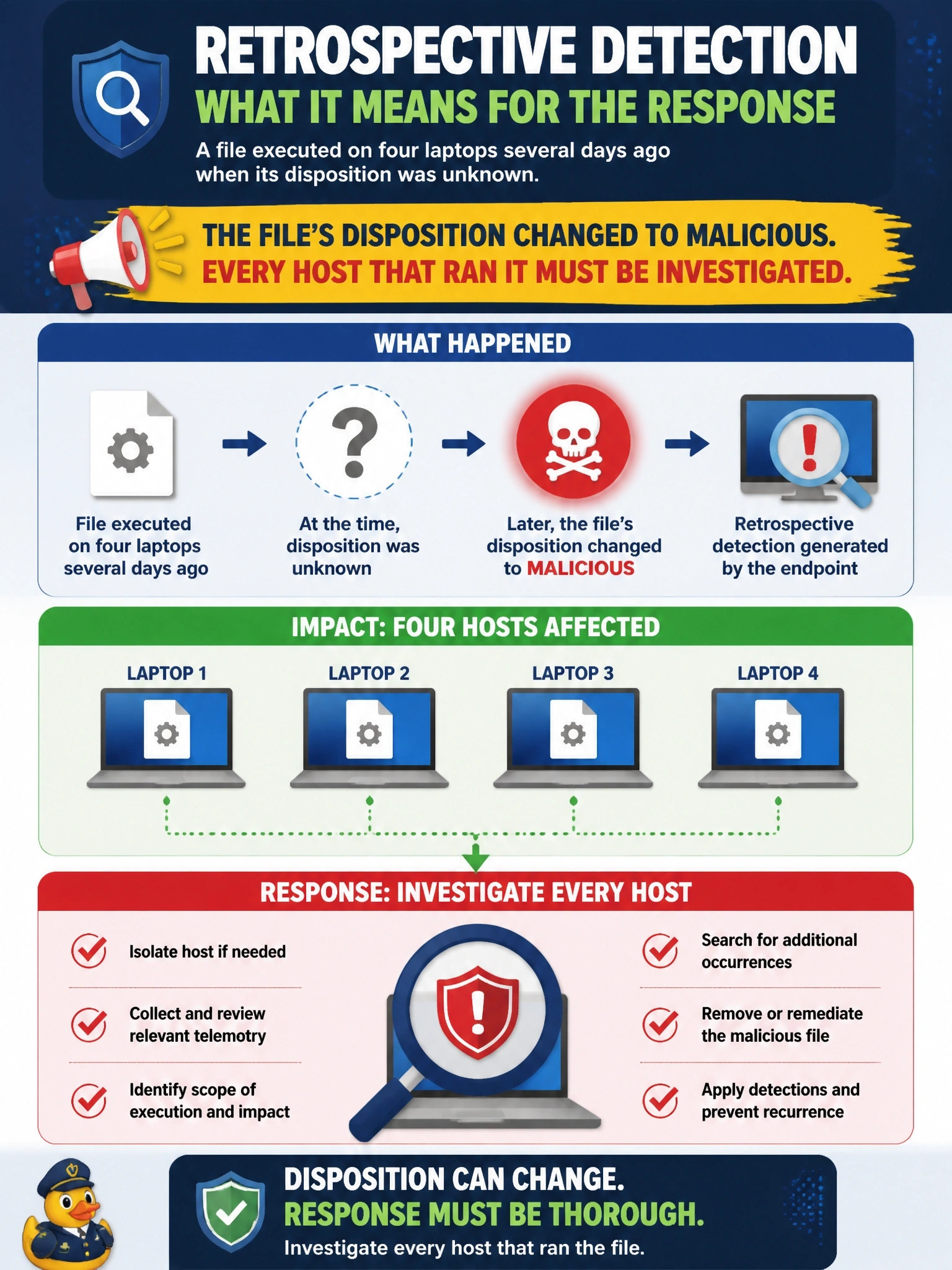
Cisco Secure Endpoint generates a retrospective detection for a file that executed on four laptops several days ago, when its disposition was unknown. What does this event mean for the response?
Select an answer to reveal the explanation.
Short Explanation
A retrospective detection is the late phone call saying, "That package you opened last week? It was bad." It ran back then, so the damage, if any, already happened. You go check every host it touched.
Full Explanation
Retrospective detection in Cisco Secure Endpoint occurs when the cloud disposition of a file changes after the file was already seen. The file here was unknown when it executed, so it was allowed to run on four laptops; it is now known to be malicious, and the service flags the hosts that had it, quarantining remaining copies according to policy. Because the file executed, each of those hosts may already be compromised. The response is to scope and investigate: use file trajectory to confirm every host and execution, device trajectory to see what the file did on each laptop, and contain or remediate as findings require. The file was not blocked on arrival; an unknown disposition is exactly why it was allowed, and that is what makes the retrospective event important. The new detection does not erase history; the earlier execution is the key fact driving the investigation. Secure Endpoint does not reimage computers automatically, so treating the event as merely informational would leave possible compromises untouched. Exam caveat: retrospective quarantine removes the file, but it does not undo changes the file made while running, such as dropped files, persistence or data theft. Operational check: list affected hosts in file trajectory, review each device trajectory for child processes and connections, and isolate any host with follow-on malicious activity.