
A game studio hypervisor completes FLOGI on an MDS F port and receives one FCID. Virtual machines on that host send FDISC to request their own FCIDs, and the switch rejects those requests. NPIV is disabled. What does enabling NPIV allow on that port?
Select an answer to reveal the explanation.
Short Explanation
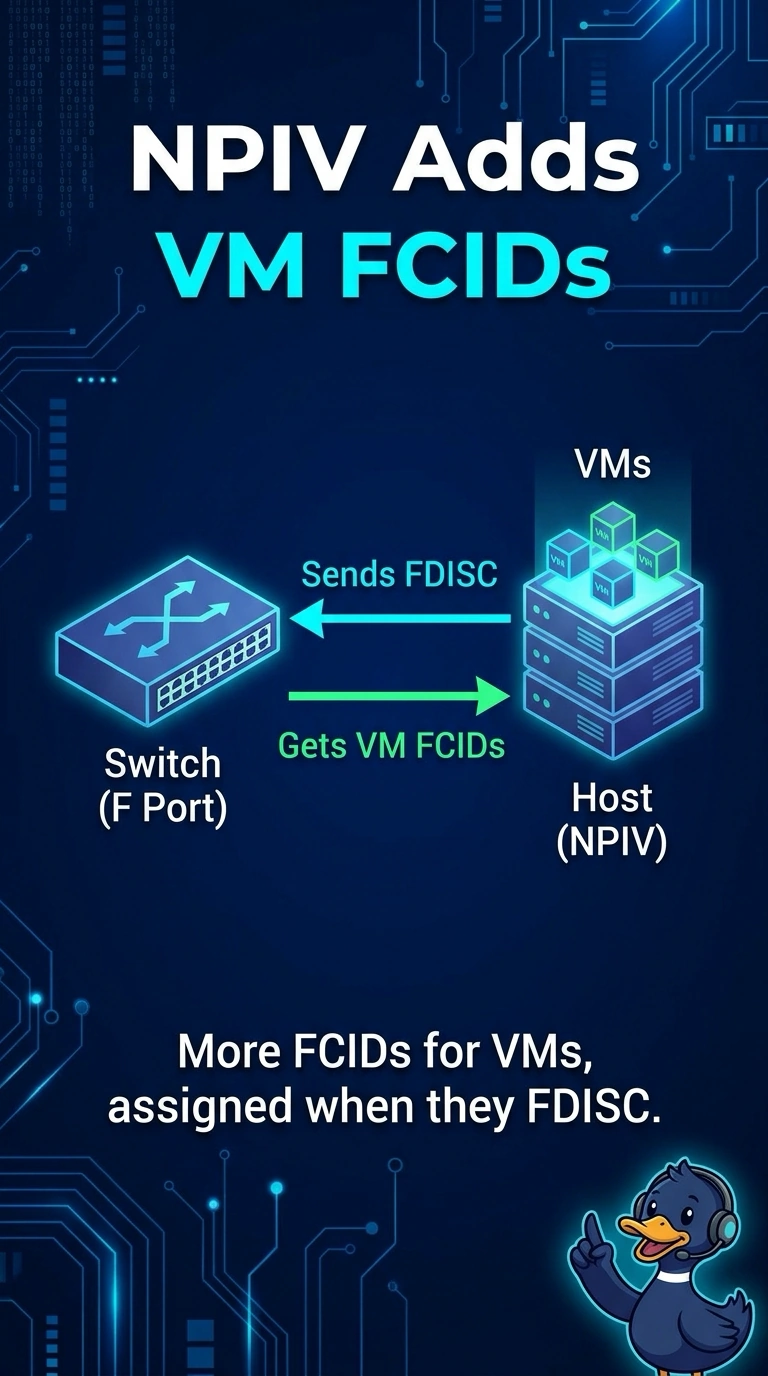
The front desk issued one visitor badge and is refusing the rest of your tour group. FLOGI gave the hypervisor its FCID, and the virtual machines need NPIV before FDISC can get them more.
Full Explanation
NPIV lets a single N port obtain more than one FCID. The hypervisor FLOGIs once. Each virtual machine then FDISCs, and the switch assigns another FCID when NPIV is enabled. With NPIV disabled, those FDISCs are rejected and the VMs never get addresses, which is this studio's failure. A domain ID belongs to a switch, not to a hypervisor. NPIV does not create a second domain. Zoning and LUN masking follow the port WWN that logs in, not the node name. Enabling NPIV does not switch the fabric over to WWNN zoning. Default-zone permit lets devices that are in no zone talk to each other. It does not create extra FCIDs, and it would loosen access rather than complete FDISC. Caveat: after NPIV is on, each VM PWWN still has to be zoned to the target or the new FCID can log in and still miss the LUN. Operational check: enable NPIV, have a VM FDISC, and confirm a second FCID appears for that host port. Enable NPIV on the switch that owns the F port. Enabling it only on a distant NPV core does not help a hypervisor plugged in here.