
A state university activates a second zoneset in a VSAN where a different zoneset was already active. Hosts that were members only of the first zoneset lose their targets. Why did the first zoneset stop enforcing?
Select an answer to reveal the explanation.
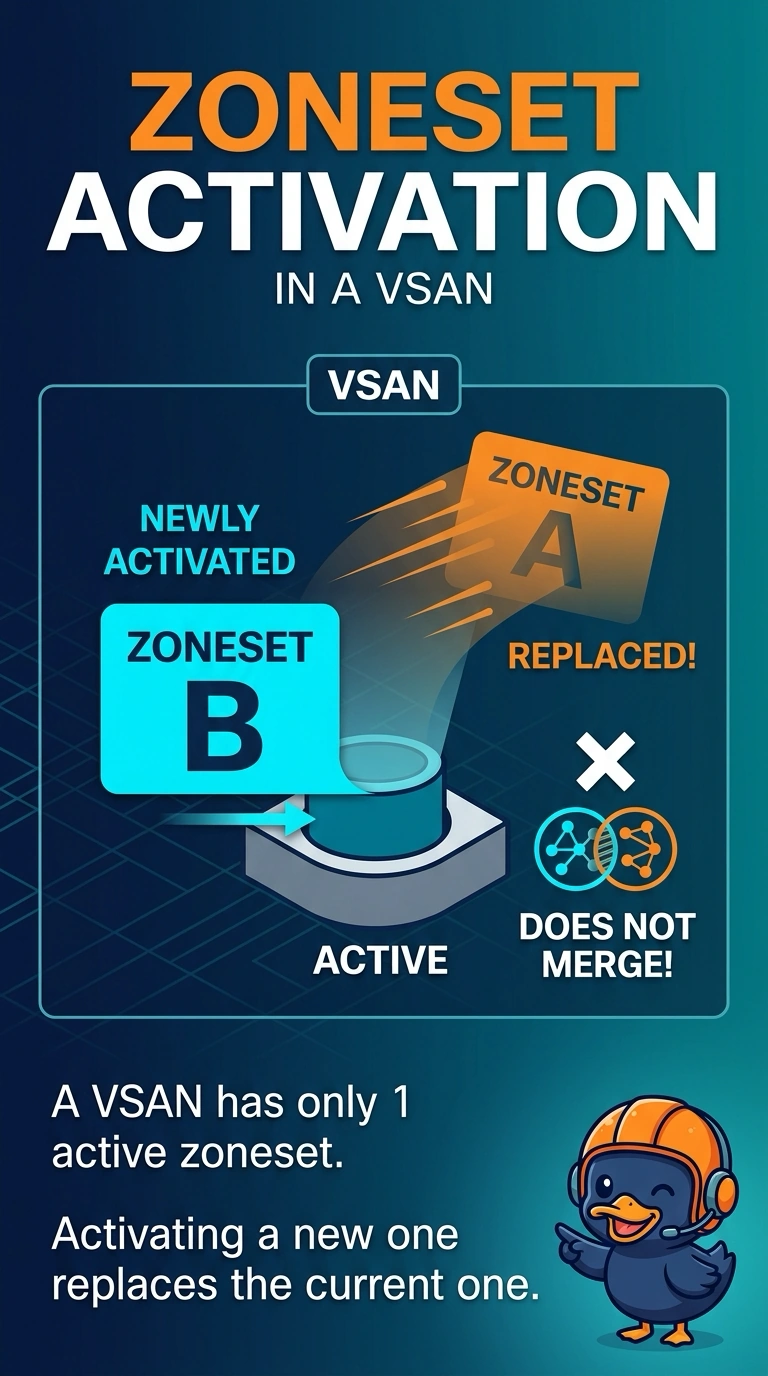
Short Explanation
The club can post only one guest list at the door, and hanging a new list takes the old one down. You lost the first zoneset because a VSAN enforces only one active zoneset, and activating the second replaced it rather than merging the members. Creating the second list was not what removed the first, and distribution of aliases does not retire a zoneset.
Full Explanation
MDS zoning enforces a single active zoneset in a VSAN. The zones that control traffic are the members of whichever zoneset was activated last. When this university activated the second zoneset, it replaced the first as the active set. Hosts that existed only in the first zoneset are no longer in the enforced configuration, so they lose their targets. The two zonesets are not merged. Device-alias distribution copies friendly names through Cisco Fabric Services. Creating or activating a zoneset does not make that database withdraw a previous zoneset. NPV is an edge mode that avoids a domain ID. It does not select which zoneset stays active, and a switch that is running full fabric services is not discarding zones because of NPV. The name server records logged-in devices. It does not enforce zoning, and a new zoneset does not clear prior members by flushing the directory. The members disappear from enforcement because they are absent from the zoneset that is now active. Caveat: if the second zoneset also contains the original zones, those members keep working, so the outage is limited to zones that were left out of the activation. Operational check: put every required zone into the one zoneset you intend to keep, activate that zoneset in this VSAN, and confirm the previously working members are back in the active set.