
A factory IoT network MDS 9700 director has only one supervisor module installed. An engineer plans a system-image upgrade and expects forwarding to continue the whole time. Why will this upgrade interrupt the switch?
Select an answer to reveal the explanation.
Short Explanation
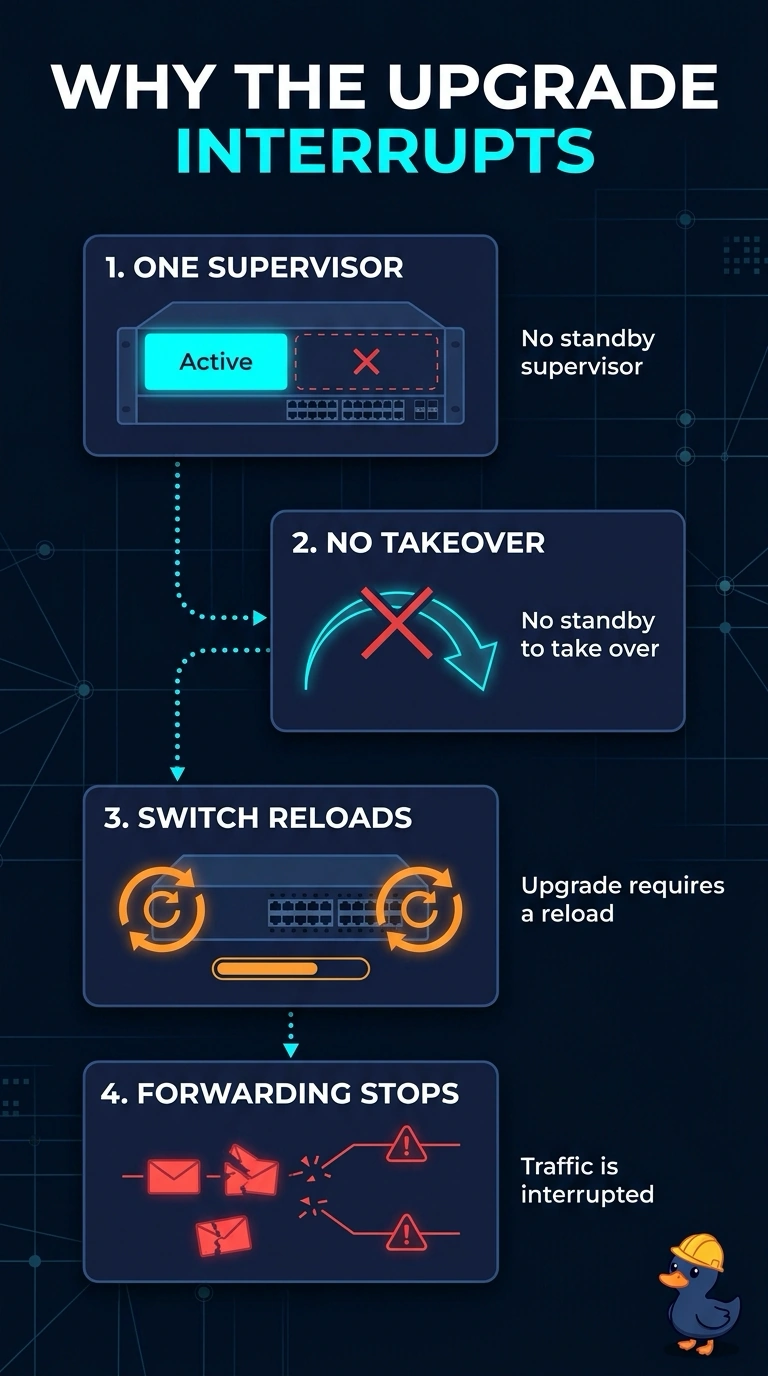
A single-supervisor switch is a plane with one pilot and no one to take the controls. You reload that supervisor to load the new system image, and forwarding on this switch stops while it does. A second supervisor is what would let the other one keep flying through the upgrade.
Full Explanation
On an MDS director, a nondisruptive system-image upgrade uses a second supervisor: the standby is upgraded, traffic switches over, and the remaining supervisor is then upgraded. A director with only one supervisor installed has no standby to take over, so installing the new system image reloads the switch and forwarding through it stops. That is why this factory upgrade cannot be hitless on this chassis. An EPLD update is a separate programmable-logic image and can be disruptive on its own. It is not the only image that reloads a switch, and a system-image upgrade on a single supervisor is itself disruptive. Zoneset activation programs zoning. It does not install NX-OS and it does not keep a supervisor upgrade hitless. A CFS commit distributes selected configuration databases such as device aliases. It does not copy a system image to a peer and it does not replace the reload. Caveat: hosts can stay up if they have a redundant path through a second MDS that is not reloading, even though this switch itself goes down. Operational check: read the upgrade impact before you start, confirm the chassis has one supervisor, and schedule the reload window rather than expecting a hitless switchover.