
A state university storage engineer must see the actual Fibre Channel frames between a host and an array during a failed read. Which tool provides that frame copy?
Select an answer to reveal the explanation.
Short Explanation
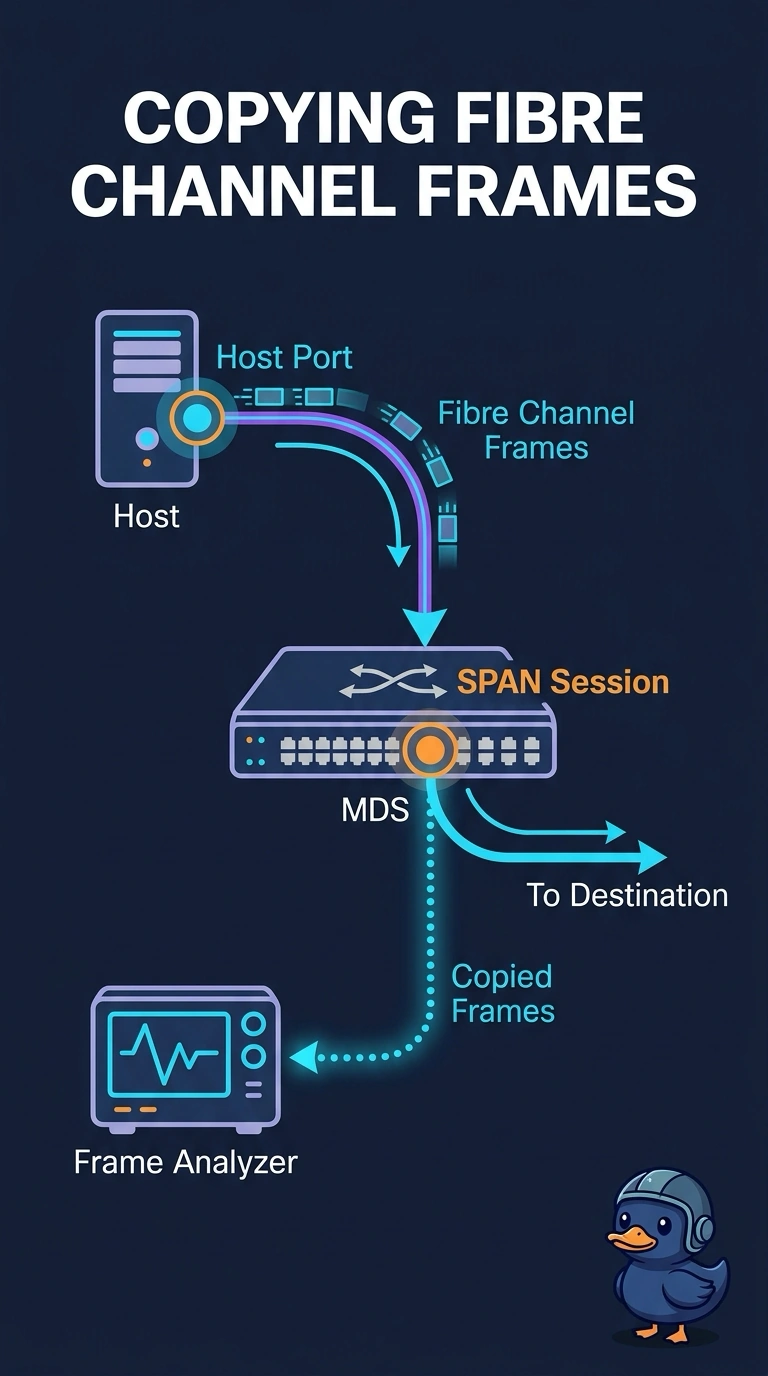
SPAN is a photocopier sitting on the fibre link. You point it at the host port and it makes a copy of the frames for an analyzer, which is the only way to see the failed read itself. A dashboard chart can show that the link is unhappy, and it is not the stack of frames.
Full Explanation
MDS SPAN copies Fibre Channel frames from a source port to a destination where an analyzer can capture them. That copy is what lets the university engineer see the actual frames of the failed read, including the exchange between the host and the array. Nexus Dashboard can show fabric health, congestion, and slow-drain symptoms for a SAN. Those views summarize conditions. They do not store each frame payload for a packet-level replay of this read. The name server lists devices that have logged in, with their Fibre Channel addresses and port names. A login entry does not contain the SCSI data of a later read. Zoneset activation writes the zoning enforcement database. The activation record is not a trace of every frame the zone later permitted. Caveat: the SPAN destination has to be able to absorb the copy, and spanning a very busy link can overwhelm a slow analyzer even when the session is correct. Operational check: start the SPAN session against the host port, reproduce the failed read, and confirm the analyzer shows those frames rather than only a dashboard counter.