
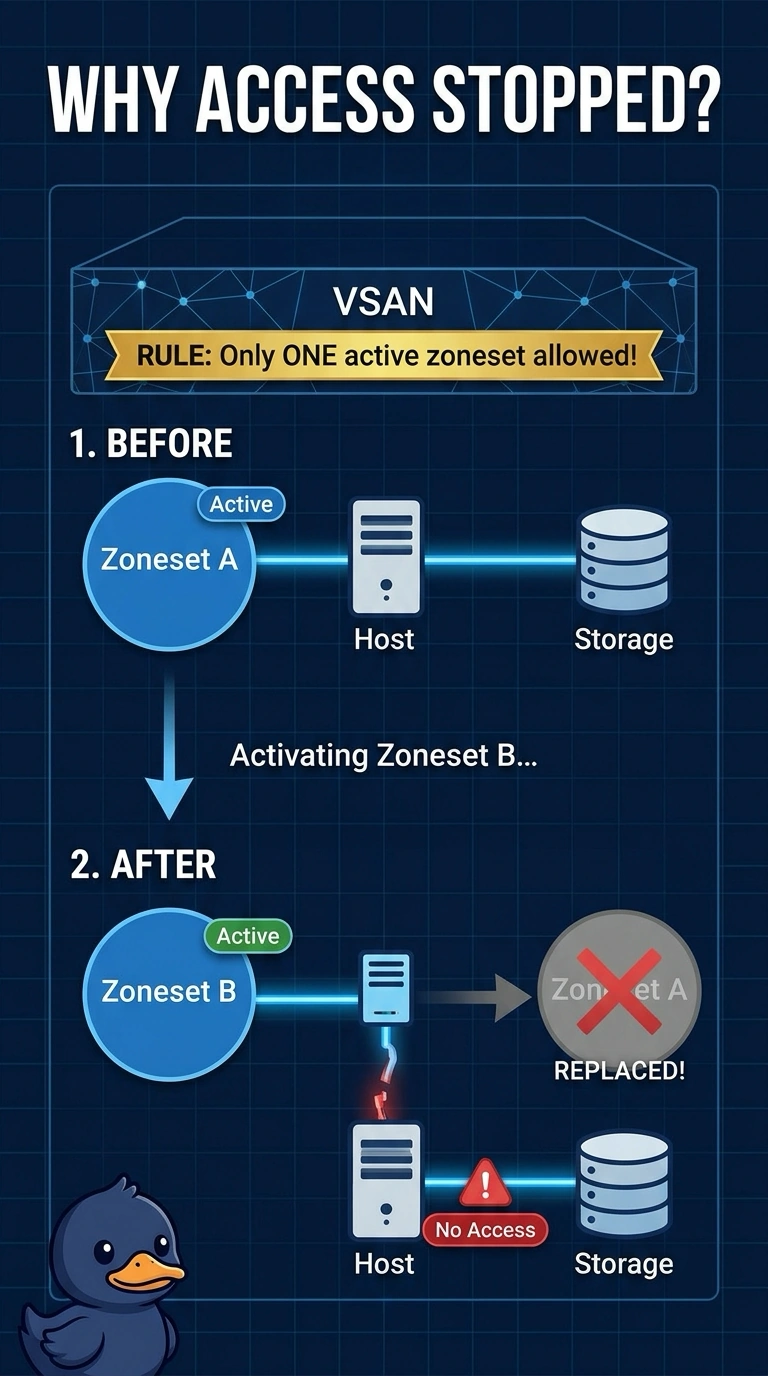
A factory IoT network host could see its target until an engineer activated a different zoneset in the same VSAN. The host's zone exists only in the previous zoneset. Why did access stop?
Select an answer to reveal the explanation.
Short Explanation
A VSAN keeps one active guest list, and hanging a new list on the door takes the old one down. You activated a different zoneset, so the only zoneset still enforced is the new one, and this host's zone was only in the old list. Creating a second zoneset on paper does not replace the list, and only activation does that.
Full Explanation
An MDS VSAN has a single active zoneset. The configured database can hold several zonesets, and none of them are enforced until activation. When the engineer activated a different zoneset, that zoneset became the only active one and the previous active zoneset stopped being enforced. The host's zone was never added to the zoneset that is now active, so the host and target are no longer allowed to see each other. Creating a second zoneset object does not by itself clear the name server or delete FCIDs. Devices that have logged in stay in the directory, and access changed because enforcement changed, not because the addresses were wiped. CFS distribution of device aliases is independent of how many zonesets are configured. It does not switch itself off because a second zoneset exists. NPV is an edge mode that an administrator configures so a switch does not take a domain ID. It does not start because a VSAN has two zoneset objects, and it is not what removed the host from the active set. Caveat: the fix is to put the host's zone into the zoneset you intend to keep and activate that zoneset, knowing activation replaces whatever was active before. Operational check: display the active zoneset for the VSAN, confirm the host and target zone is in it, and have the host rescan for the target.