
A game studio leaf receives EVPN prefixes in BGP, but those prefixes do not enter the tenant VRF. The VRF does not import the route target that the advertising VRF exports. What has to be aligned?
Select an answer to reveal the explanation.
Short Explanation
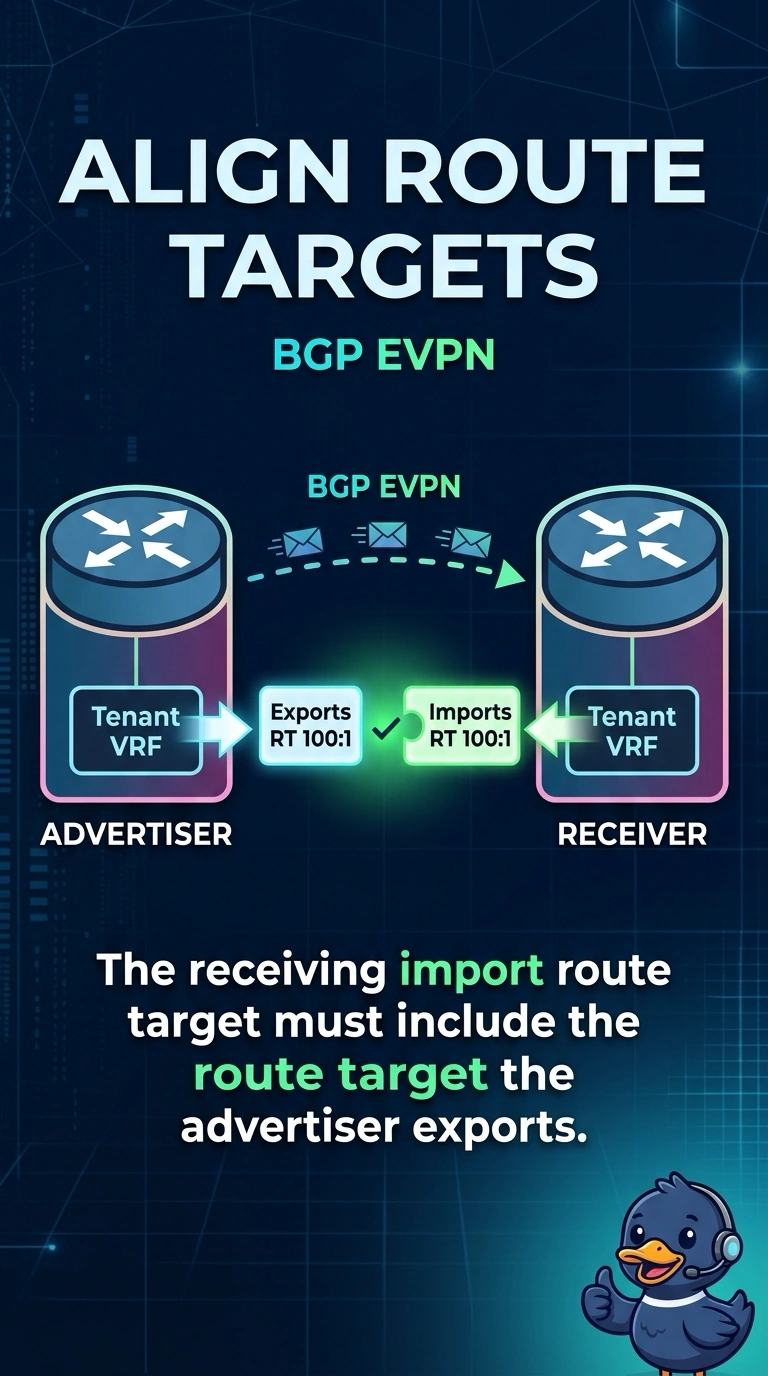
The package arrived at the loading dock and the department's name is not on the accept list. You align the import route target so it includes the target the other VRF exports, and the prefixes can enter the tenant VRF. Making the route distinguishers identical does not put a prefix on that list.
Full Explanation
EVPN prefixes are imported into a VRF when their route targets match the VRF's import list. This studio leaf already has the prefixes in BGP, so the session and the address family are working. They stay out of the tenant VRF because the receiving import list does not include the route target the advertiser exports. Aligning those targets is what lets the VRF install the routes. A route distinguisher makes a prefix unique inside BGP. VRFs normally use different distinguishers, and import selection is not a requirement that the distinguishers match. Removing the EVPN address family would stop the prefixes from arriving at all, which is the opposite of a leaf that already received them, and that family is how the VRF gets EVPN routes. OSPF process tags are local. They do not filter EVPN imports, and mismatched tags do not keep a received EVPN route out of a VRF. Caveat: after the targets match, the next hop still has to be reachable in the underlay or the VRF can hold the route and still fail to forward. Operational check: add the exported route target to the receiving VRF's import list, then confirm the prefixes move from the BGP EVPN table into the tenant VRF routing table.