
A national retailer saved a checkpoint, then applied a bad change and copied the running configuration to startup. A reload would bring the bad configuration back. What restores the earlier state with the least disruption?
Select an answer to reveal the explanation.
Short Explanation
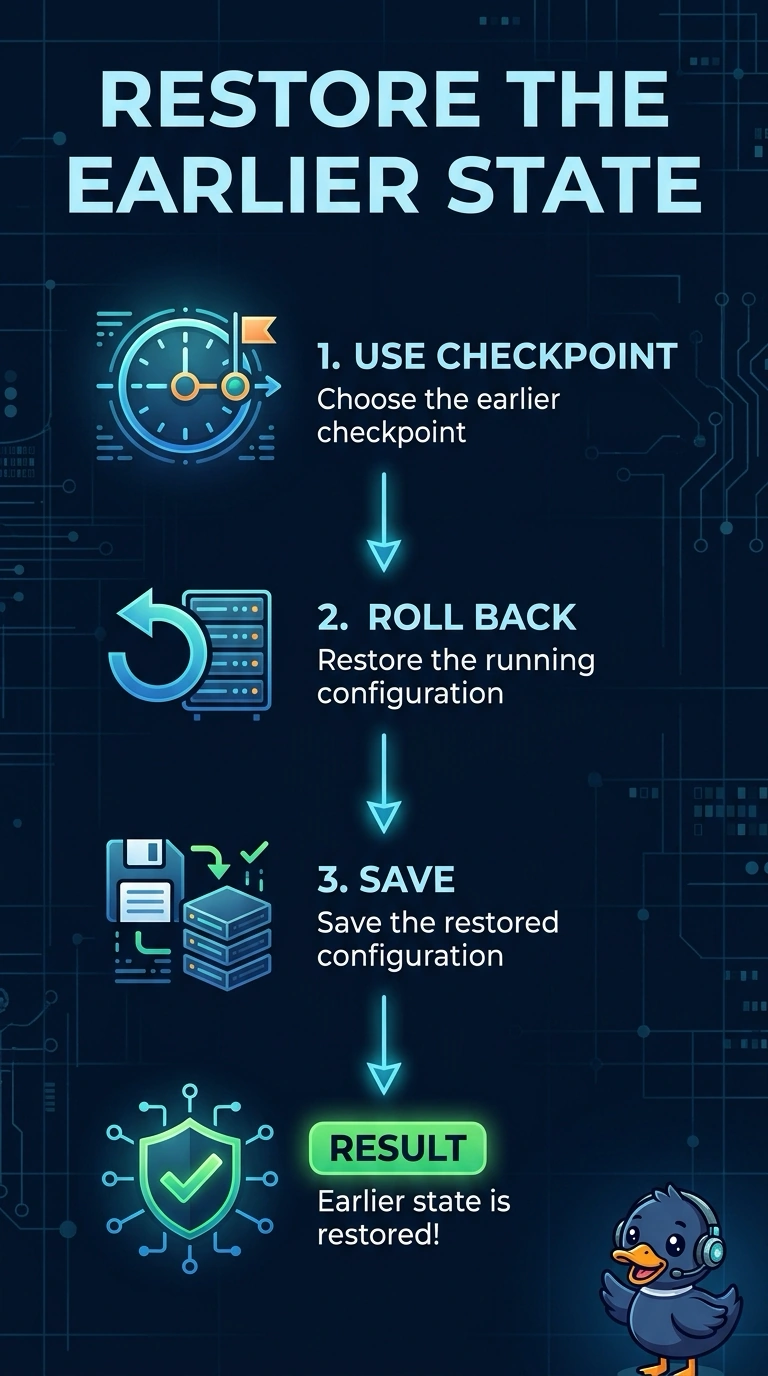
A checkpoint is a bookmark you dropped in the document before the bad edit. You roll the running configuration back to that bookmark, because a reload would open the startup copy you already overwrote. Comparing the file with a golden copy only shows the damage, and it does not put the old lines back.
Full Explanation
NX-OS can store a checkpoint of the configuration and later roll the running configuration back to it. Rollback applies the difference between the checkpoint and the current running configuration, which returns the retailer switch to the earlier state without erasing the boot image or waiting for a reload. Because the bad change was copied to startup, a reload would load that bad startup and would not recover the checkpoint. A golden comparison, or any comparison of running configuration to a saved reference, shows what differs. It does not apply the old configuration. Erasing startup and reloading throws away the configuration and can drop the switch into day-0 provisioning, which is far more disruptive than a rollback and does not target the checkpoint. Shutting the vPC peer-link changes forwarding roles and does not make the secondary peer import a checkpoint from the other switch. Caveat: after the rollback succeeds, the restored running configuration still has to be saved if you want the next reload to keep it. Operational check: roll back to the named checkpoint, confirm the bad lines are gone from the running configuration, and save that result.