
Developers at a retail bank deploy only their application code, while the provider runs the runtime and the operating system. Which NIST 800-145 service model matches this split?
Select an answer to reveal the explanation.
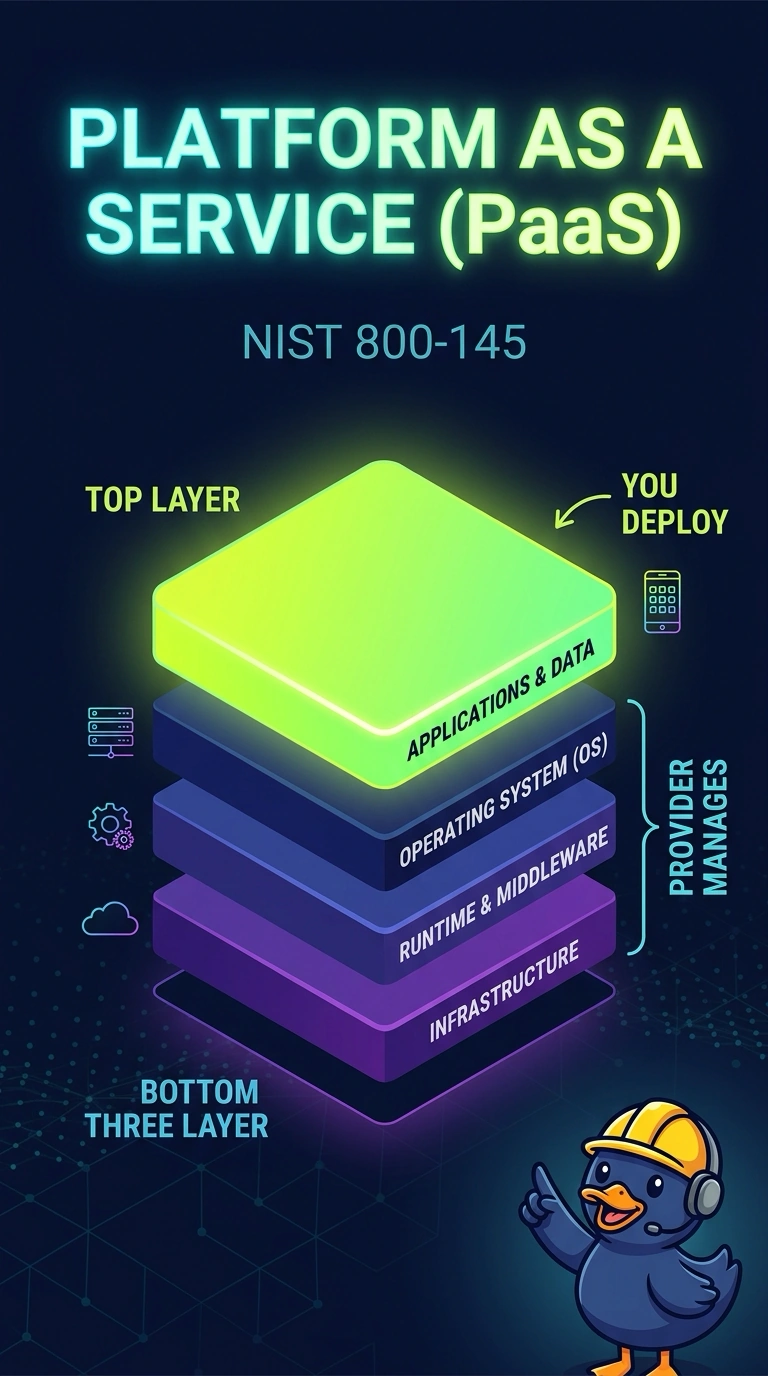
Short Explanation
This is a commercial kitchen that hands you the stove and the pantry, while you bring the recipe. You deploy the application, and the provider keeps the runtime and the operating system. That split is platform as a service, not a finished meal you only consume and not a raw building you have to patch.
Full Explanation
NIST 800-145 separates the service models by what the consumer manages. In platform as a service, the consumer deploys applications onto a runtime the provider operates, and the consumer does not manage the operating system or the underlying hardware. That is the bank's split. Infrastructure as a service stops lower: the provider supplies compute, storage, and networking, and the consumer still manages the guest operating system, including patching it. The option that says the bank patches the guest operating system describes IaaS, which this arrangement does not. Software as a service is a finished application the consumer uses. Writing and deploying the code means the bank is not merely a SaaS client of someone else's application. A community cloud is a deployment model, meaning the infrastructure is shared by a community of organizations. It does not name who manages the operating system, so it does not name the service model. Caveat: a private or public location can host any of the three service models, so the bank's data-center ownership does not by itself pick PaaS. Operational check: list what the bank administers and what the provider administers, and confirm the bank owns the application while the provider owns the runtime and operating system.