
A SaaS platform must upgrade firmware on both fabric interconnects in a cluster and keep one interconnect forwarding throughout the work. Which sequence meets that goal?
Select an answer to reveal the explanation.
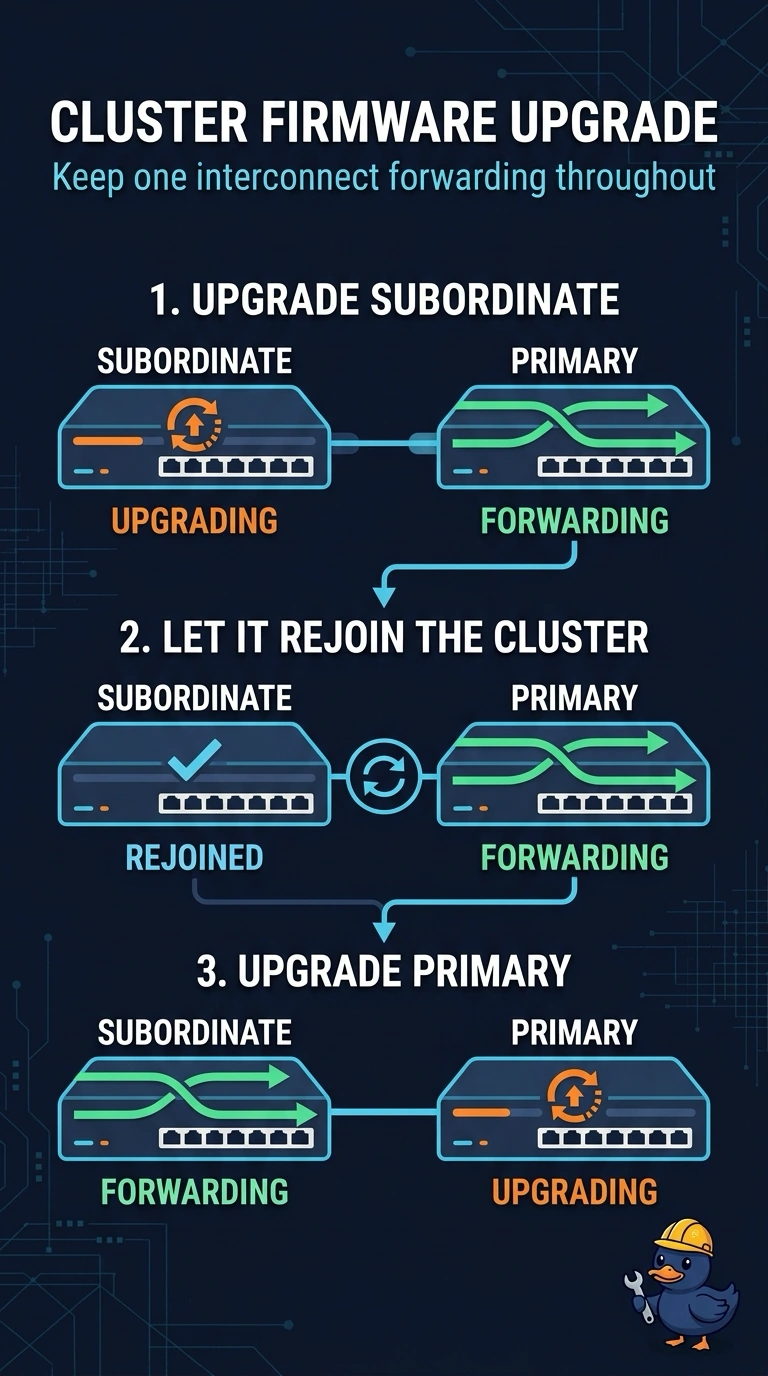
Short Explanation
You send one of the two receptionists to training and wait until that person is back before you send the other. You upgrade the subordinate fabric interconnect, let it rejoin the cluster, and only then upgrade the primary so one side keeps forwarding. Taking both down together is the outage this platform is trying to avoid.
Full Explanation
A fabric interconnect cluster forwards on the surviving member while the other one reloads for firmware. The subordinate is upgraded first. After it rejoins the cluster on the new firmware, the primary can be upgraded and the subordinate carries the domain through that second reload. That sequence is what keeps one interconnect forwarding for this SaaS platform. Upgrading both interconnects in one step reloads the cluster together and drops the forwarding the requirement is there to protect. Upgrading only the primary leaves the subordinate on the old firmware and, if the primary reloads first, fails the cluster onto a member that has not been upgraded yet. It also fails the goal of finishing both interconnects in this window. Chassis IOMs sit downstream of the interconnects. Updating them does not install interconnect firmware, and the IOMs do not forward in place of the cluster. Caveat: the two interconnects need a supported path between their current firmware and the target, or the subordinate may not rejoin cleanly and the second upgrade should wait. Operational check: confirm which interconnect is subordinate, upgrade that one, confirm it rejoins, and only then start the primary while traffic still passes through the cluster.