
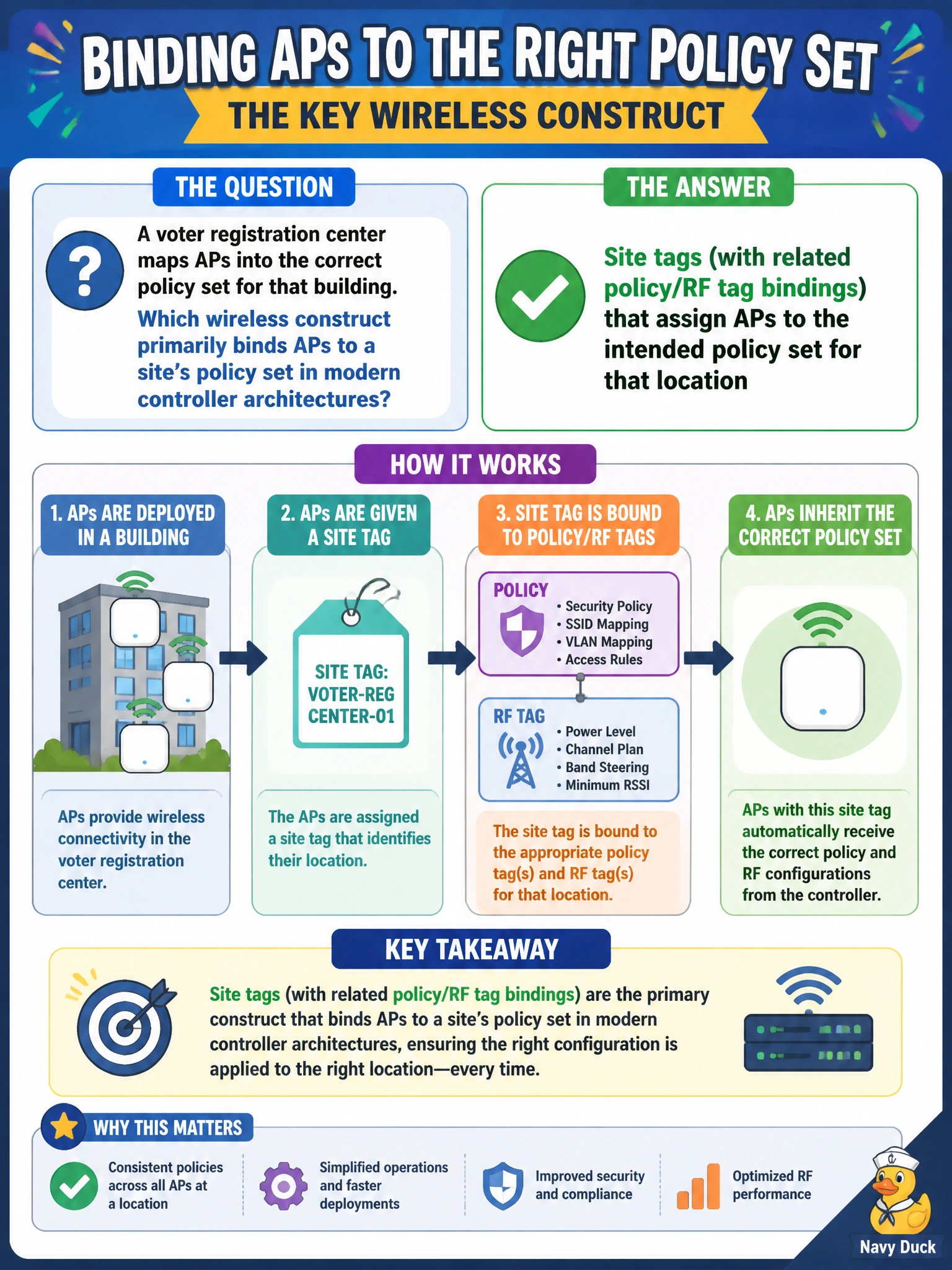
A voter registration center maps APs into the correct policy set for that building. Which wireless construct primarily binds APs to a site’s policy set in modern controller architectures?
Select an answer to reveal the explanation.
Short Explanation
Site tags are the folder tab that drops an AP into the right building policy set. Renaming the hostname without tags is just a label on an empty folder.
Full Explanation
A voter-registration center that maps APs into the correct policy set for that building relies primarily on site tags (with related policy/RF tag bindings) in modern controller architectures. The site tag assigns the AP to the intended policy set for that location so WLAN, RF, and policy profiles apply consistently to that building’s APs serving election workers and public kiosks.
Per-SSID unique HSRP groups on the AP Ethernet port fail by concept—HSRP is first-hop redundancy on routers and switches, not the AP policy-binding model. GRE tunnel keys negotiated per probe request fail because probe requests are not GRE key-negotiation sessions for policy assignment. Changing the AP hostname alone without tag or profile assignment fails because a hostname is cosmetic inventory labeling unless tags and profiles actually bind the AP to the building policy set.
Exam caveat: Site tags work together with policy and RF tags; knowing only “hostname” or only one tag type is incomplete. Verify the full tag binding for the registration-center APs before go-live.
Operational check: Apply the correct site, policy, and RF tags for the voter center; reboot or rejoin the AP if required; confirm on the controller that the AP shows the intended tag set and serves the building’s SSIDs and policies; spot-check a client association against expected VLAN and security.