
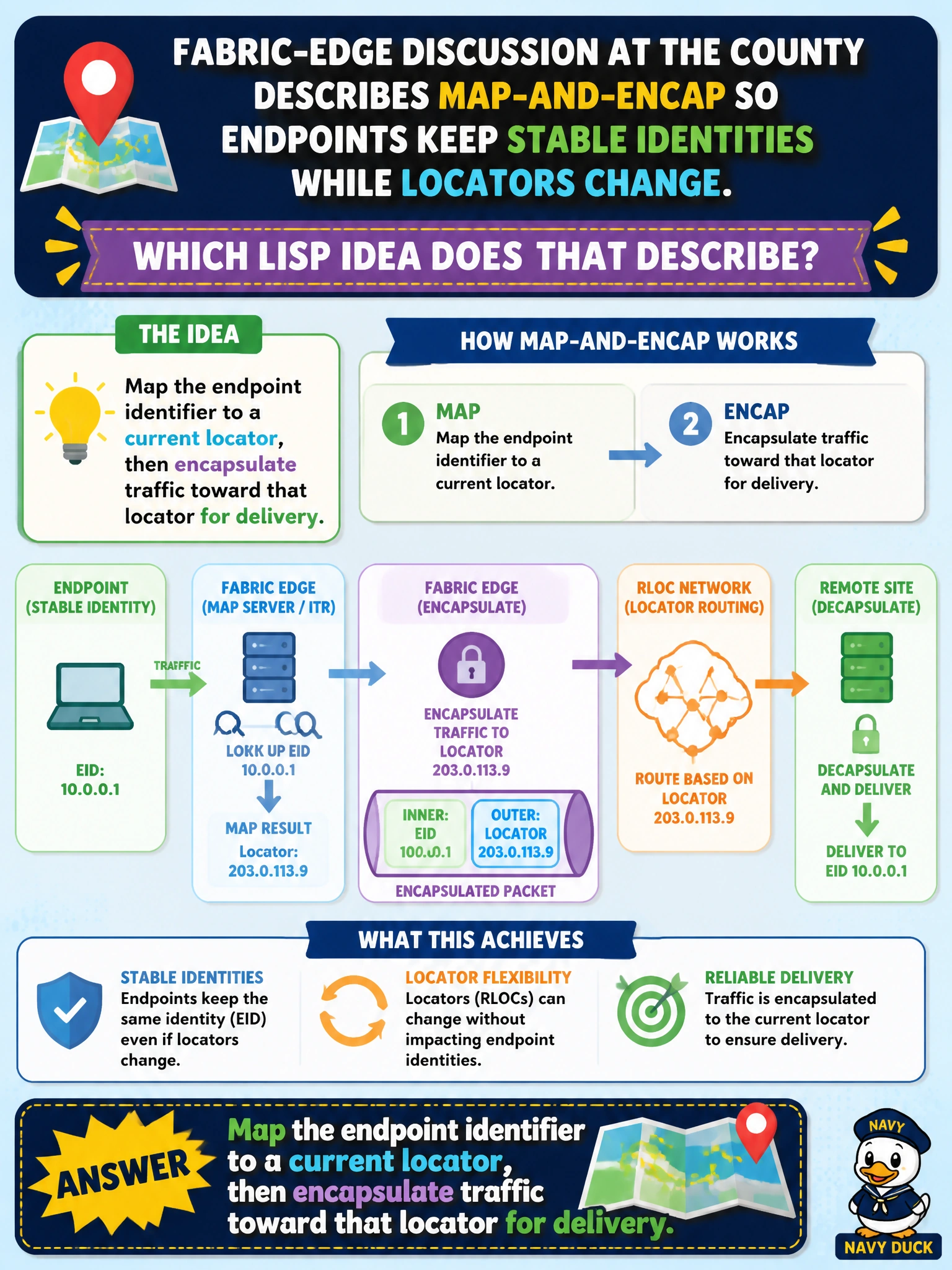
Fabric-edge discussion at the county describes map-and-encap so endpoints keep stable identities while locators change. Which LISP idea does that describe?
Select an answer to reveal the explanation.
Short Explanation
Map-and-encap is look up where the badge is right now, then wrap the packet for that lobby address. The person's ID stays put; only the delivery address on the outer wrapper changes. No need to flood the whole county or rename everyone after STP.
Full Explanation
Fabric-edge discussion at the county describing map-and-encap—so endpoints keep stable identities while locators change—matches the LISP idea of mapping an endpoint identifier to a current locator, then encapsulating traffic toward that locator for delivery. Map-and-encap is lookup-then-wrap: consult the mapping system for where the EID lives now, then send encapsulated packets to that RLOC. Endpoint identity stays stable; only the outer delivery locator changes as the county fabric moves or fails over paths. Flooding every frame to all locators without consulting a mapping system fails by concept and abandons map-and-encap efficiency. Replacing all endpoint IPs with Spanning Tree bridge IDs before forwarding confuses STP bridge identifiers with LISP identity and locator roles. Disabling encapsulation and relying only on NAT overload for locator changes is not LISP map-and-encap and does not preserve the identity/locator separation model. Exam caveat: map-and-encap requires timely, correct mappings—wrong RLOCs black-hole traffic even when the underlay is fine. Operational check: query the county mapping system for a test EID, confirm the returned RLOC, send traffic and verify encapsulation toward that locator, then change locator and confirm updated mapping before declaring mobility validated.