
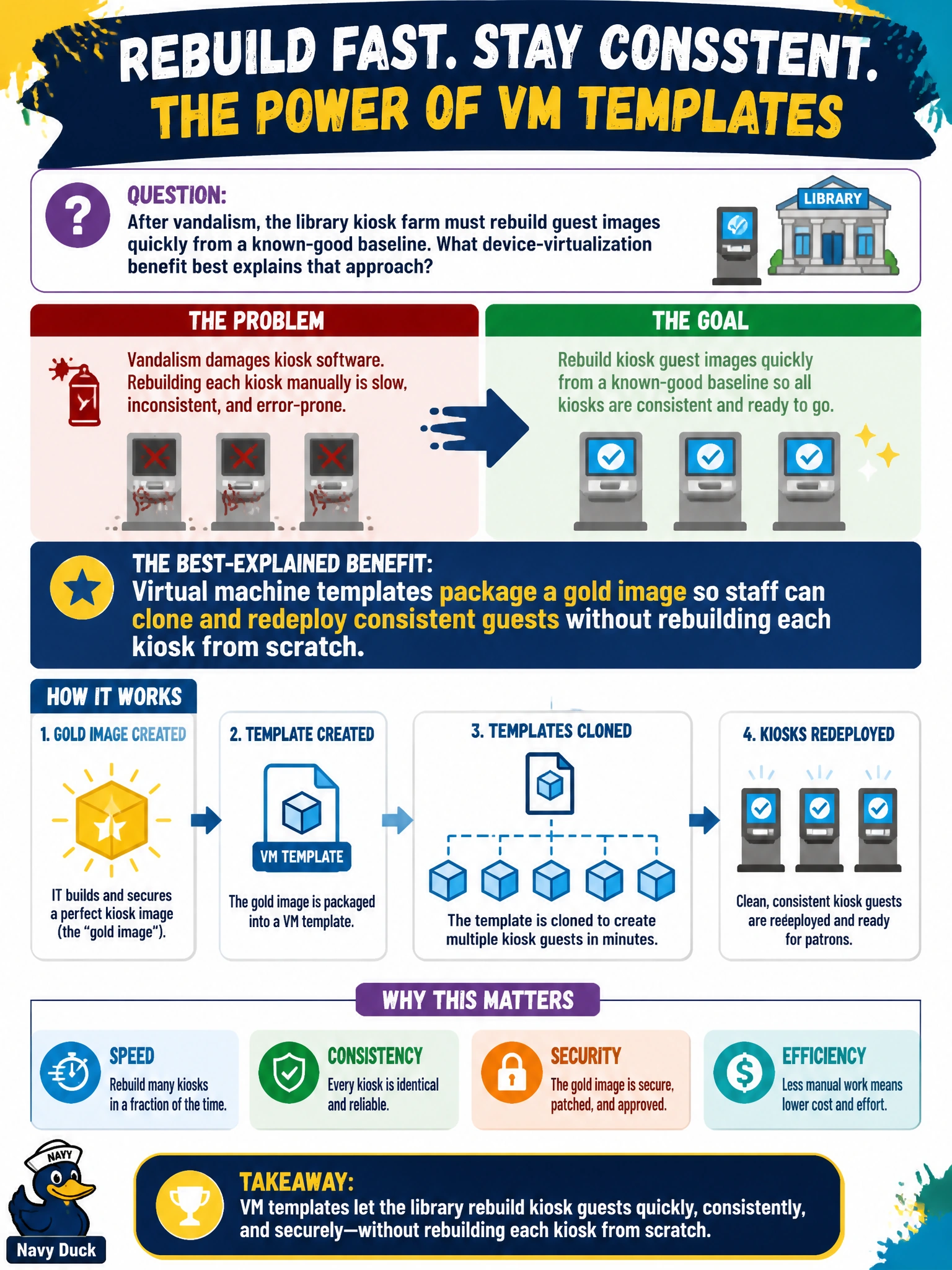
After vandalism, the library kiosk farm must rebuild guest images quickly from a known-good baseline. What device-virtualization benefit best explains that approach?
Select an answer to reveal the explanation.
Short Explanation
Think of a kiosk rebuild like printing from a master flyer instead of rewriting the poster by hand every time someone scribbles on it. A VM template is that master flyer—clone it, and you are back online fast with the same known-good setup.
Full Explanation
After vandalism, the library kiosk farm needs a fast return to a known-good guest image rather than hand-rebuilding each terminal. Device virtualization delivers that by packaging a validated guest as a virtual machine template (gold image) that staff can clone and redeploy consistently. The template captures OS, applications, and baseline settings once; cloning restores identical kiosk workloads quickly with less configuration drift than recreating each machine from scratch. That packaging-and-clone model is the operational benefit the stem asks for when the civic library must recover guest kiosks at scale. Hypervisors do not permanently freeze MAC tables so vandalism cannot affect Layer 2 learning—MAC learning and CAM behavior on switches remain separate from the gold-image rebuild story, and vandalism on a kiosk guest does not freeze fabric MAC state. Physical CPE appliances do not automatically clone themselves across every kiosk port; that invents a hardware self-replication myth and ignores how templates actually produce new guests. VXLAN VNIs do not replace guest OS image management; VNIs segment overlay traffic but still leave administrators responsible for OS and image lifecycle on each virtual machine. Exam caveat: templates speed consistent redeploy after loss or damage, but they do not by themselves replace patching, secret rotation, or validating that the cloned image still matches library policy after a security update. Operational check: confirm the library gold image is current and checksummed, clone a replacement kiosk VM from that template onto a clean hypervisor host, verify the guest boots with the expected applications and network port-group assignment, and document rebuild time versus a manual bare-metal rebuild so staff know the recovery window after another vandalism incident.