
Remote ferry terminals lack local IT staff, and the county wants easy install plus cloud visibility for wireless. Which deployment model best fits?
Select an answer to reveal the explanation.
Short Explanation
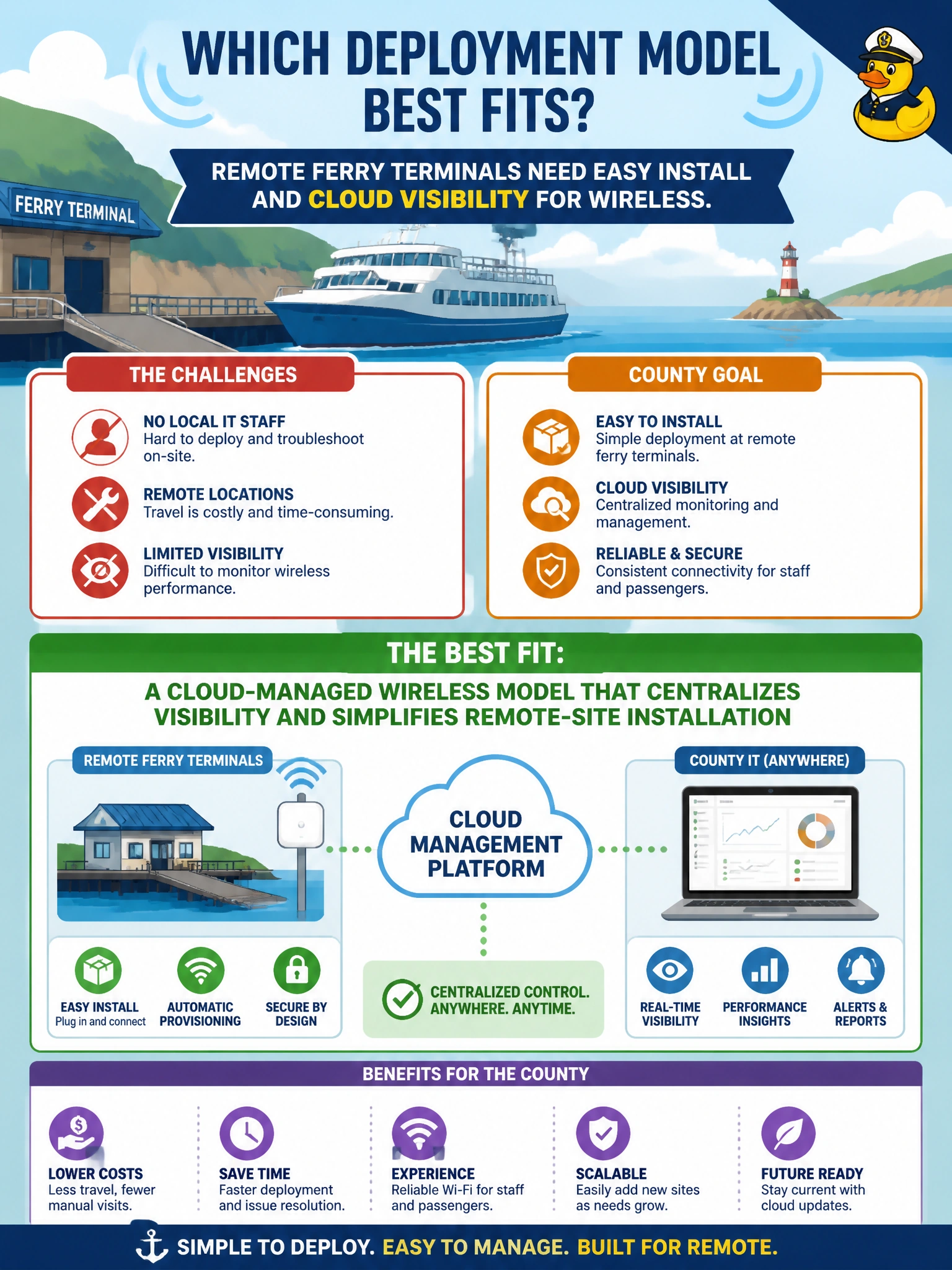
You shouldn’t need a truck at every ferry terminal just to change an SSID or check wireless status. Cloud-managed wireless gives you a central view of the docks and makes remote installation and routine updates easier.
Full Explanation
Remote ferry terminals without local IT staff, where easy installation and cloud visibility are priorities, fit a cloud-managed wireless model. Cloud management centralizes monitoring, configuration, and troubleshooting, while on-site work can focus on mounting access points and providing power and backhaul. For distributed docks and terminals, that can reduce truck rolls for routine SSID or policy changes and give the county a single view of remote sites. Locally managed access points that require technicians to visit each terminal for SSID changes and status reviews undermine the goal of easy remote operations. Fully offline autonomous access points with no management channel provide neither the centralized visibility nor remote management the county needs. Controller-less mesh that forbids cloud dashboard access also conflicts with the explicit need for cloud visibility. Exam caveat: Cloud-managed wireless is a good fit for distributed, lightly staffed sites that need centralized visibility; that does not mean on-premises controllers are never valid, only that the constraints here favor cloud management. Practical check: Verify each terminal has WAN or Internet reachability for cloud connectivity, confirm access points support zero-touch or otherwise simplified onboarding, and check that the county dashboard displays wireless health and client metrics without requiring engineers to visit for routine changes.