
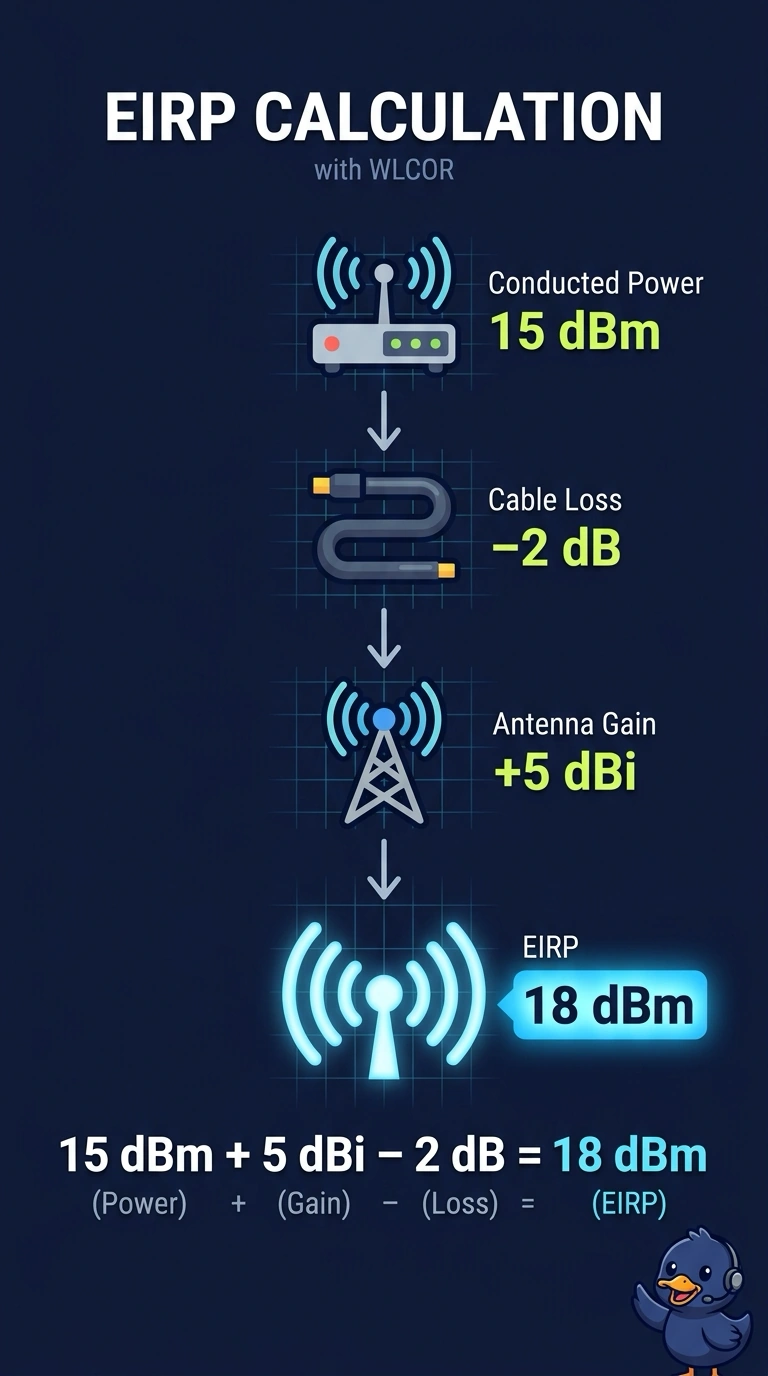
A stadium radio is set to 15 dBm conducted power, the antenna is rated 5 dBi, and the cable loss is 2 dB. What is the EIRP?
Select an answer to reveal the explanation.
Short Explanation
EIRP is the radio, plus the antenna, minus the cable. You have 15 plus 5 minus 2, which lands on 18 dBm. Leaving the cable in the drawer, or subtracting the antenna, is a different sum.
Full Explanation
EIRP adds antenna gain to conducted power and subtracts cable loss, all in decibels. Here that is 15 dBm plus 5 dBi minus 2 dB, which is 18 dBm. The units combine because dBi and dB are both ratios stacked on the dBm starting point. Reporting 15 dBm pretends the antenna and the cable do not exist. The radio setting is the conducted power, and EIRP is the radiated result after the antenna system. Reporting 20 dBm adds the 5 dBi and drops the 2 dB cable loss. That would be right only if the cable were lossless. Reporting 12 dBm subtracts the antenna gain instead of adding it, then adds the cable loss back. Gain concentrates energy and belongs on the plus side. Cable loss belongs on the minus side. Exam caveat: this is the radiated number you compare with a regulatory cap. A vendor power page that shows only the conducted setting is not the EIRP until you do this sum. Operational check: read the conducted setting, the antenna's gain figure, and the cable loss from the install notes, add them as above, and write the 18 dBm result next to the country's limit for that band.