
A branch WAN drops. Centrally switched clients stall. Locally switched clients on the same access points keep reaching the branch gateway. What is the difference?
Select an answer to reveal the explanation.
Short Explanation
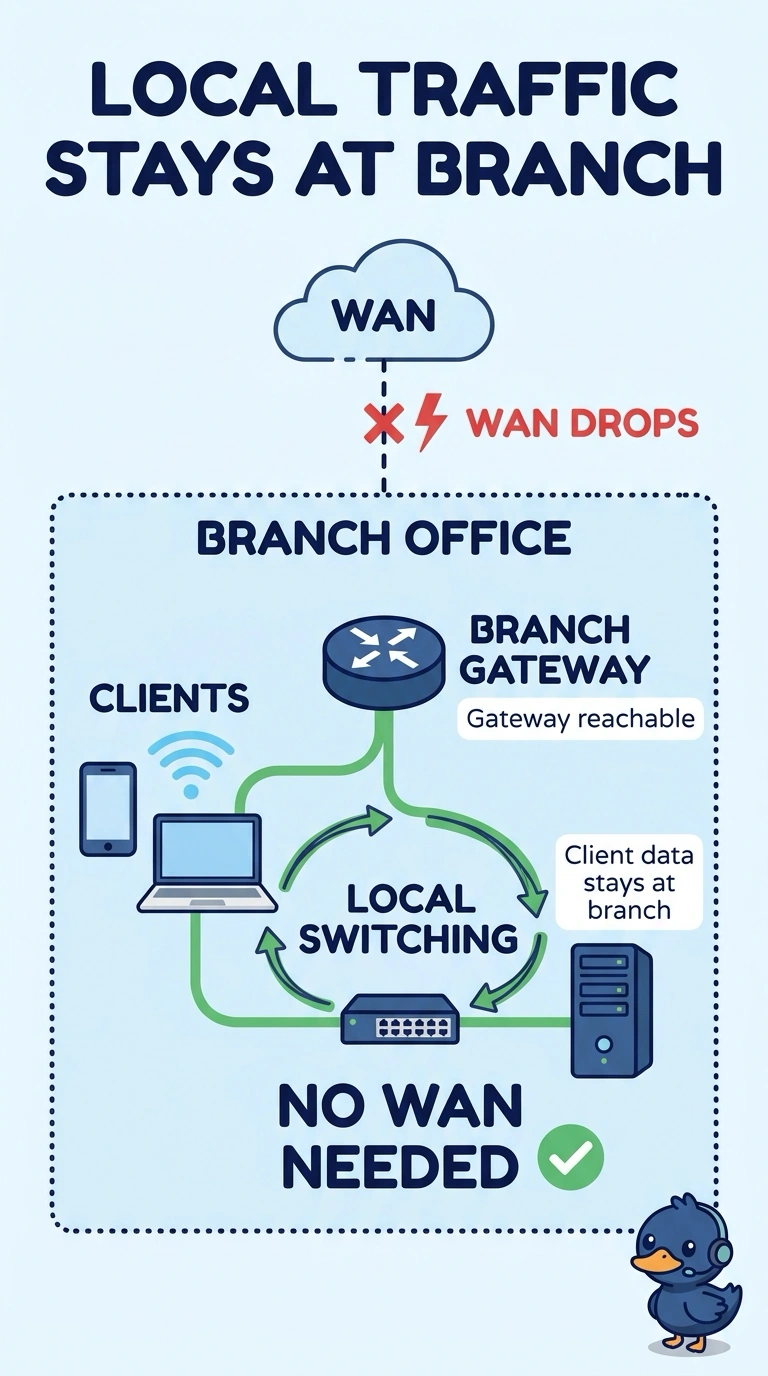
The WAN is the path centrally switched clients use to reach the controller, and that path is down. Locally switched clients never needed it for their data to reach your branch gateway. They are still talking to the branch gateway.
Full Explanation
Central switching tunnels client data to the controller, so a dead WAN stalls those clients. Local switching bridges them onto the branch VLAN, so they keep reaching the branch gateway. Central switching does not stay up without the path to the controller. Local switching does not tunnel data over the WAN. A hidden SSID does not keep a central tunnel alive. Centrally switched clients die when the WAN drops. Locally switched clients at the same branch keep passing traffic. Check one live client after the change and leave the rest of the floor alone until that client matches the result you expected. Confirm the symptom on the next attempt before changing anything else. Confirm the symptom on the next attempt before changing anything else. Exam caveat: locally switched clients still need the branch gateway and the local VLAN. A WAN failure plus a dead branch gateway takes both designs down. Operational check: during a planned WAN drop, confirm a locally switched client still reaches the branch gateway and a centrally switched client does not.