
A hotel wants lobby guests to type a username on a page hosted by the wireless controller, with no external policy server in the design. Which authentication fits?
Select an answer to reveal the explanation.
Short Explanation
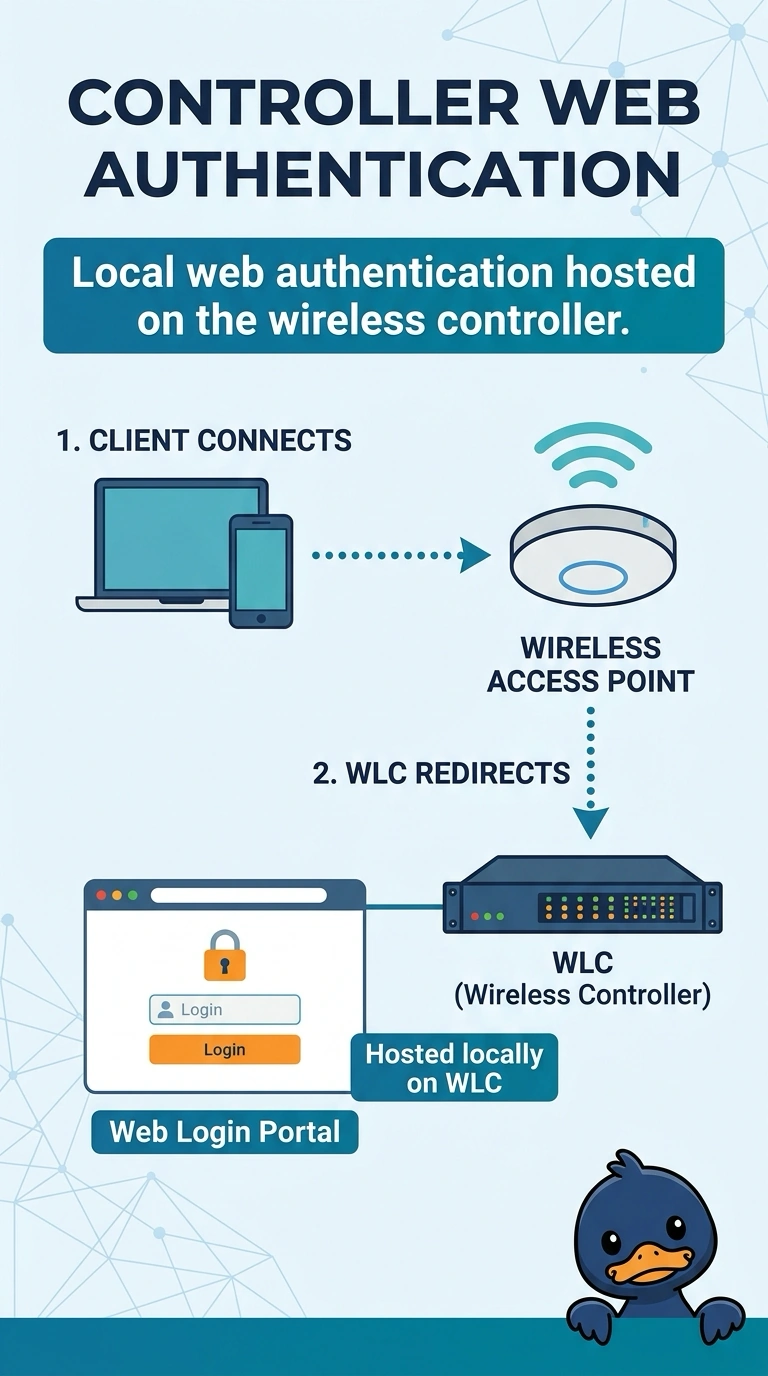
The page they asked for lives on the controller, and there is no outside policy server to send people to. That is local web authentication. A shared passphrase never draws the username page your lobby is expecting.
Full Explanation
Local web authentication terminates the guest login page on the wireless controller and checks the credentials there, or against a simple local list, without redirecting the session to an external policy server. The hotel asked for a username page hosted by the controller and no external policy server, so local web authentication is the match. Central web authentication redirects the guest to an external policy server, typically ISE, which this design excluded. The redirect is the opposite of a page hosted only on the controller. WPA3-Personal asks for a passphrase at association time. It does not present a username web page, so the lobby flow the hotel described would not exist. EAP-TLS uses certificates, not a lobby web page, and a web form is not a client certificate. Guests would need enrolled certificates the hotel is not issuing. Exam caveat: local web authentication still needs DHCP and DNS so the client can open the page, and the controller certificate should be one guests can trust or they will see a browser warning. Operational check: associate a test guest, confirm the browser lands on the controller's page, and confirm no redirect to an external policy server appears in the session.