
Hospital voice handsets roam without a full EAP exchange, but each roam still takes a long time while the handset scans every channel. Which mechanism shortens that scan?
Select an answer to reveal the explanation.
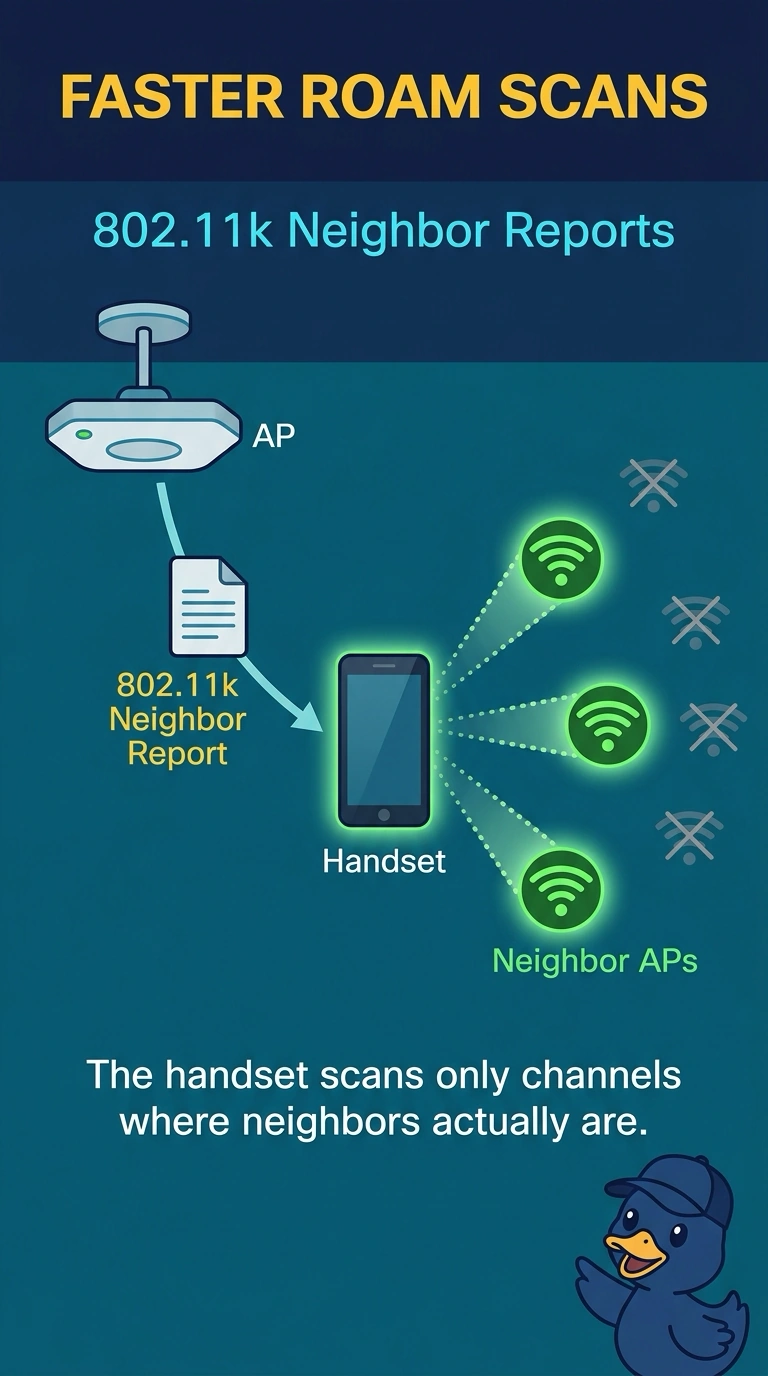
Short Explanation
Your handset is already through the security door and is wasting the roam walking every hallway looking for the next one. Neighbor reports hand it a short list of channels to check. Hiding the network name does not give it that list.
Full Explanation
802.11k neighbor reports tell a client which nearby access points and channels are worth scanning, so it does not have to dwell on every channel in the band before a roam. These handsets already avoid a full EAP exchange, and the remaining delay is the scan. Neighbor reports are the mechanism that shortens that scan. Hiding the SSID removes the name from beacons. Clients then probe for the hidden name, which does not reduce the channel list and often adds probe traffic. A new VLAN on every access point forces a Layer 3 change at the roam. It does not tell the handset which channels to scan, and it adds address and forwarding work the hospital did not ask for. Open authentication removes link security. It does not load a neighbor list, and the handsets are already roaming without a full EAP exchange, so weakening authentication does not shorten the scan. Exam caveat: the client has to request or honor neighbor reports. A handset that ignores 802.11k will keep scanning the long way even after you enable it on the WLAN. Operational check: on a test roam, confirm the handset receives a neighbor report and that its scan list shrinks to the reported channels.