
A warehouse phone can place premium-rate calls because its permission set is the unrestricted one. Policy says those calls must be blocked, and the route group already points at the correct trunk. What enforces the block?
Select an answer to reveal the explanation.
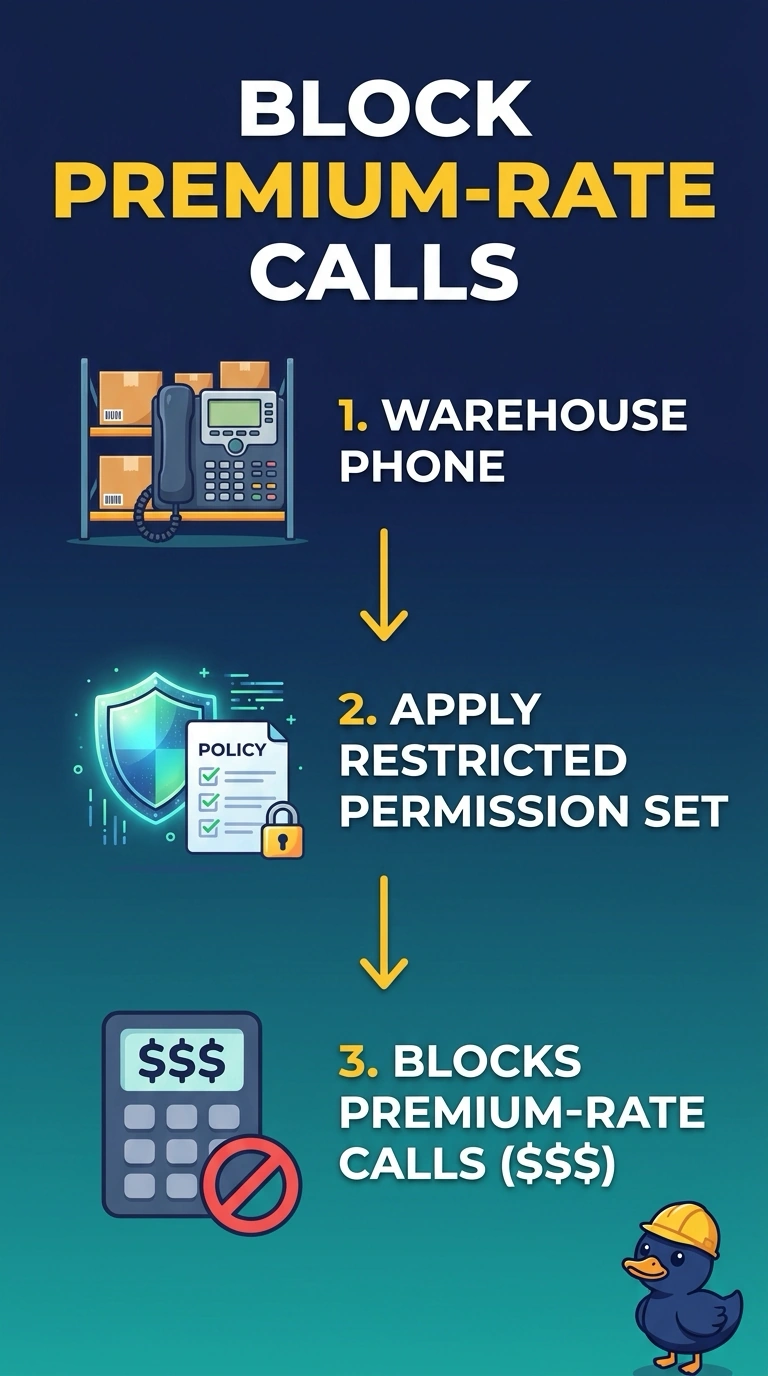
Short Explanation
An all-access badge is why the call goes through, and changing the truck route does not print a new badge. You apply the restricted permission set that blocks premium-rate calls for this phone. Reordering the route group is the trap, because a route group does not state that call policy.
Full Explanation
Call permissions allow or block a call type. This phone uses the unrestricted set, so premium-rate calls are allowed even though the route group already points at the right trunk. Apply the restricted permission set that blocks the premium-rate calls placed from this warehouse phone, which is the control that expresses the policy. Add a translation pattern that strips digits, because a translation decides whether premium-rate calls are allowed to leave, and you rewrite digits with a tool that does not allow or block the call type. Close the meeting lobby on the warehouse meetings site so premium-rate calls have nowhere to wait before they connect and you change a meeting control that does not govern this phone's call permission. Reorder the route group so the same trunk is listed in a way that refuses premium-rate call types for this phone and you edit trunk order, which does not change the user's call permission. Exam caveat: a route group is an ordered set of trunks for capacity and failover, and it does not replace a permission set. Operational check: apply the restricted set, then attempt a premium-rate call from the warehouse phone and confirm it is blocked while an allowed call type still uses the same trunk.