
A utility dispatcher can place international calls even though site policy forbids that call type. The digits and the route are already correct. Which change enforces the policy?
Select an answer to reveal the explanation.
Short Explanation
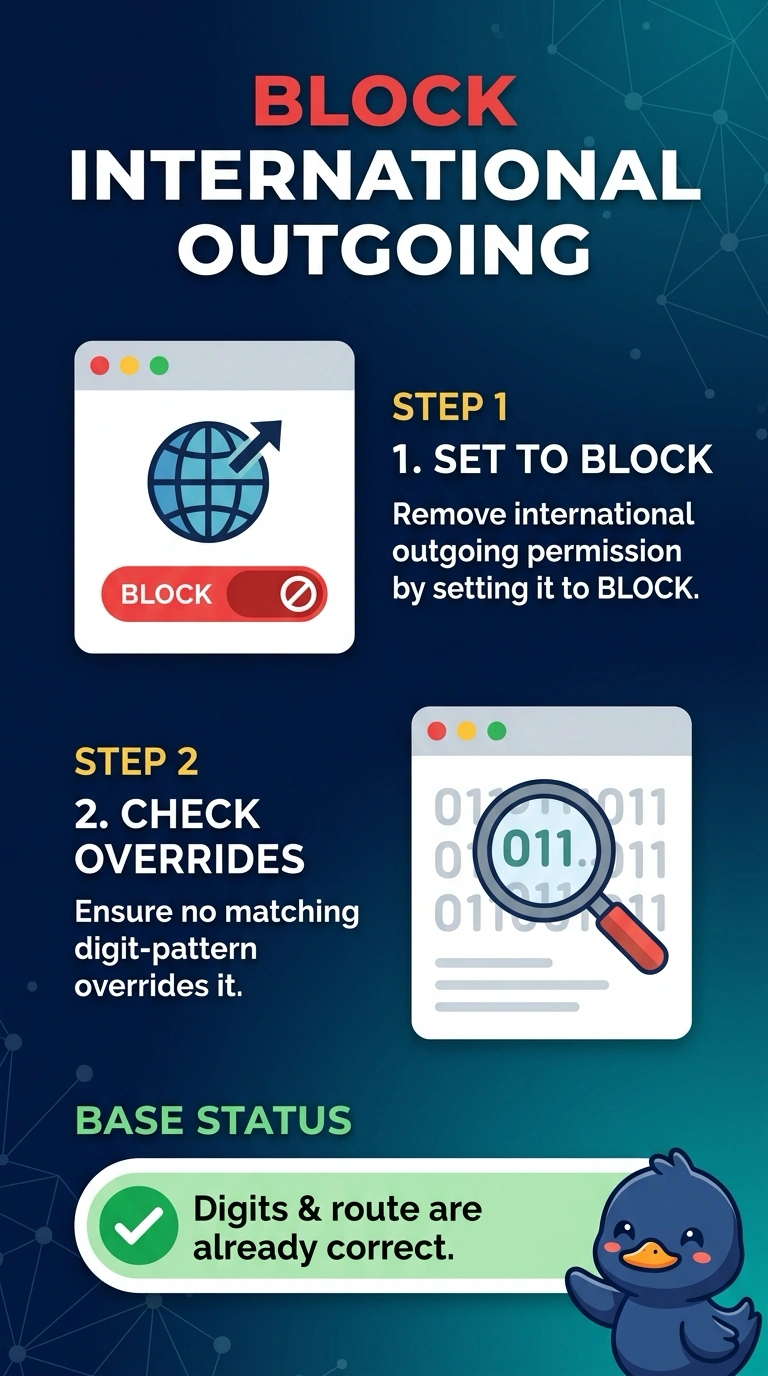
Taking the passport stamp away is what stops the trip, not rewriting the address on an envelope you still mail. Set the effective International outgoing permission to Block and check that no matching digit-pattern permission overrides it, so you block the type even though digits and route are valid. A translation that keeps sending those digits is the trap, because rewriting is not a block.
Full Explanation
Call permissions allow or block a call type such as international. A valid route and correct digits still complete the call when the user is allowed to place it, so the policy has to remove that allowance at the permission layer. Set the effective International outgoing permission to Block and check that no matching digit-pattern permission overrides it, which stops the dispatcher without breaking the route for allowed call types. Add a translation pattern that keeps sending the same international digits toward the utility PSTN trunk and you rewrite nothing that matters, because a translation does not decide whether the call type is allowed. Reorder the utility route group, which changes the trunk list but does not change this dispatcher's call permission, and the same allowed international call can still leave on another available trunk. Disable the auto attendant so its business-hours menu stops placing the dispatcher's international calls and you edit an inbound menu that is not the permission on this user's outbound call. Exam caveat: a blocked international call with a correct route is a permission problem, and a translation that still sends the digits is not the block. Operational check: place an international test call as the dispatcher after the permission change and confirm the call is rejected before it uses the trunk.