
A school receptionist can dial other campus extensions, but every international call fails before it reaches the local gateway. The trunk log shows those calls never arrived. Control Hub shows International set to Block in this user’s effective calling permissions, and a coworker can reach the same destination through the trunk. Which change restores the international calls?
Select an answer to reveal the explanation.
Short Explanation
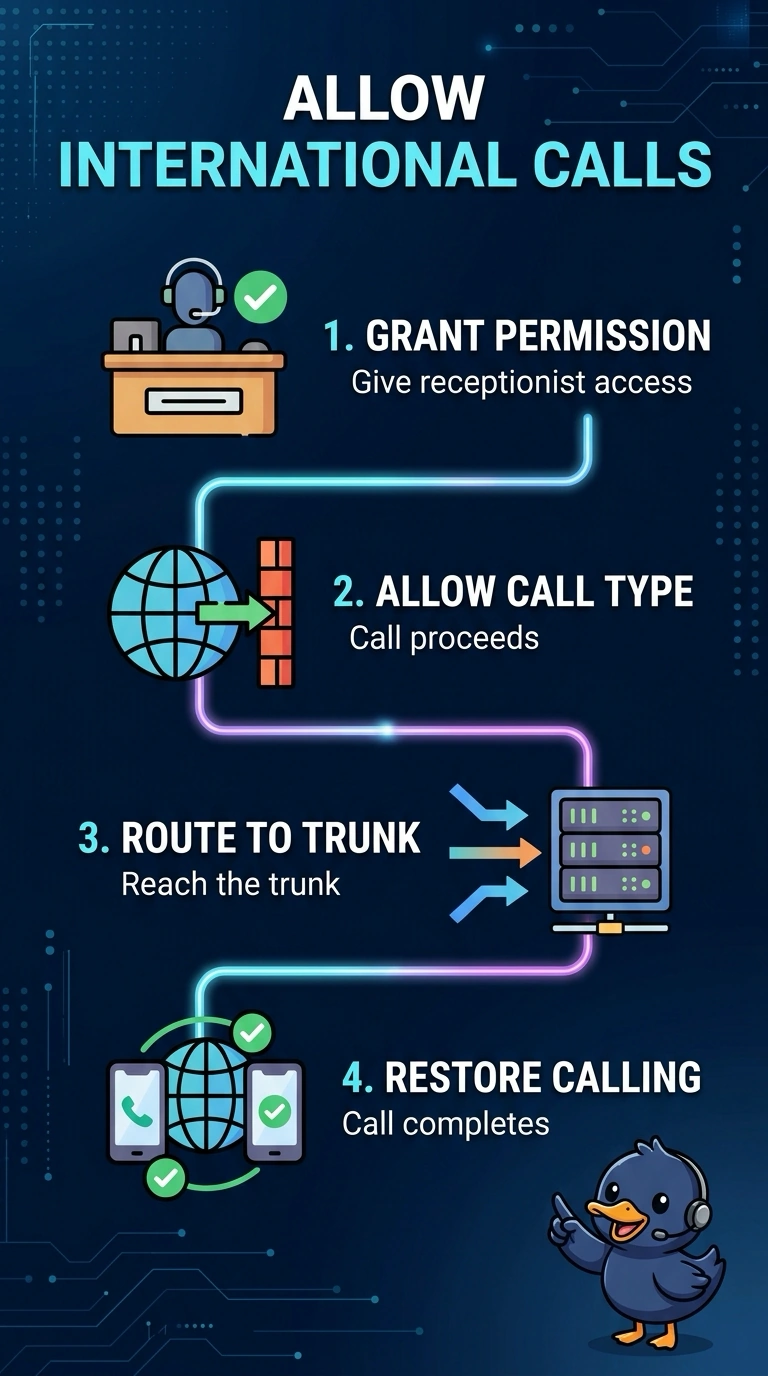
Think of a gate that stops the car before it ever reaches the highway. You grant the receptionist international call permission, because the trunk never saw the call and the trunk is not the broken part. Rebuilding that trunk is the trap when the call type was blocked first.
Full Explanation
Call permissions allow or block a call type before routing selects a trunk. The configured block explains why the trunk has no attempt for this user. Grant the receptionist international call permission so that call type is allowed to proceed toward the trunk, and the same healthy trunk can carry the calls. Add a translation pattern that inserts an international prefix, which rewrites the school digits but does not allow the call type, and you change digits without permitting international calling. Move the receptionist onto a spare number in another school location that is not assigned to this user and you point at an unassigned number instead of allowing the call type on this person. Rebuild the local gateway trunk and its route group, because a call that never arrived must mean the school trunk is down, and you replace a path the call never reached while the permission block remains. Exam caveat: a correct route does not override a blocked call type, and a trunk debug that never shows the attempt is a clue to look at permissions. Operational check: compare this user's international permission with a coworker who can complete the same call, then place one test call and confirm it appears on the trunk.