
A factory's outbound calls fail after the local-gateway trunk goes down, and a technician starts editing call permissions so users can still dial out. What should be repaired so calls can leave the site?
Select an answer to reveal the explanation.
Short Explanation
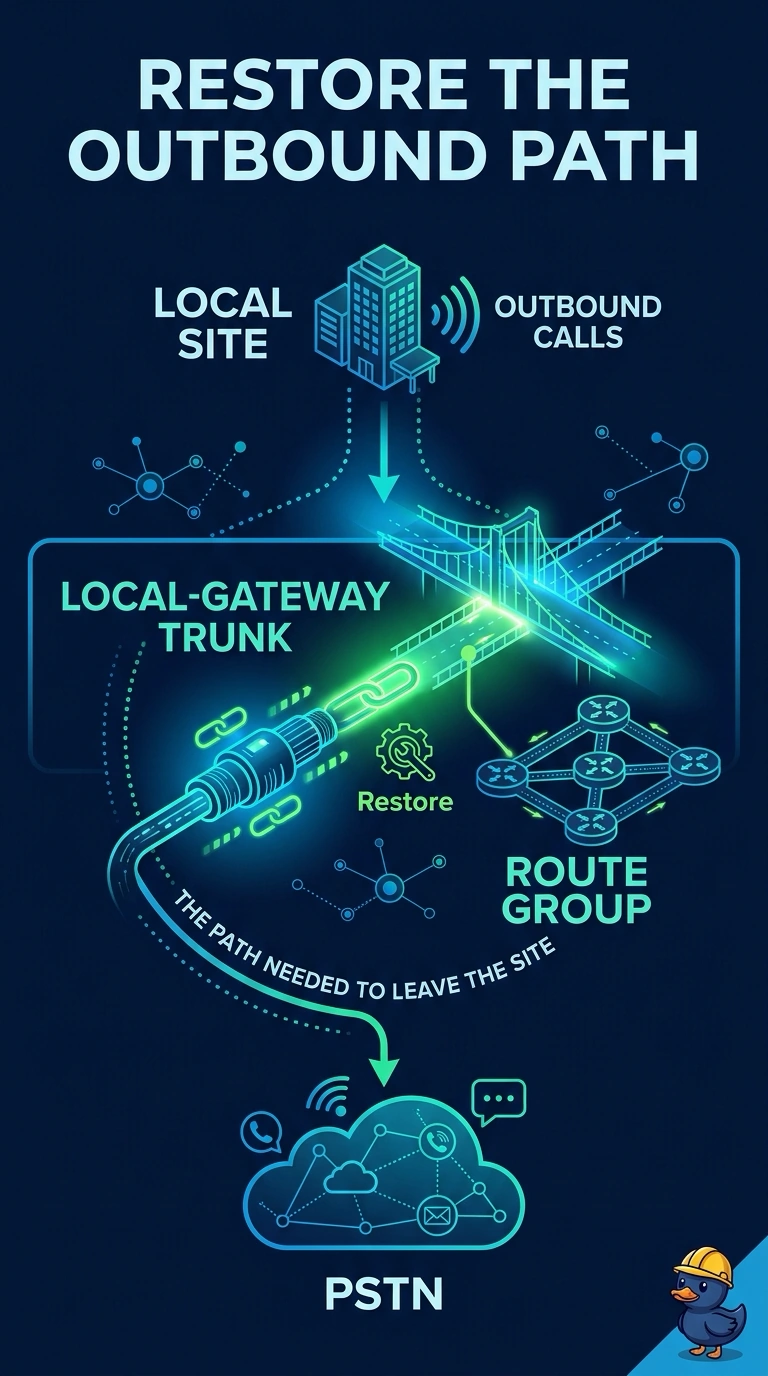
Changing who is allowed to drive does not put a fallen bridge back up. You restore the local-gateway trunk or its route group, because that is the path calls leave on. Call permissions only allow or block a type of call, and they do not bring the trunk up.
Full Explanation
A trunk is the local-gateway connection, and a route group is an ordered set of trunks used for capacity and failover. When that path is down, outbound calls stop even if users are still allowed to dial, so the repair is the local-gateway trunk or its route group. The users' call permissions allow or block a call type and do not bring a failed trunk back into service, which is why editing them leaves the calls with nowhere to go. An auto attendant after-hours menu plays greetings and does not replace a down local-gateway trunk, because a menu is not a PSTN path. A hot-desking sign-in on a shared desk attaches a user identity to the device and does not repair the outbound trunk. Calls that must leave the factory stay failed until that path is usable again, even if every user permission already allows the call type. Exam caveat: a route group does not change a user's call permission, and a permission does not choose or revive a trunk. Operational check: from the factory, confirm the trunk shows a usable path and place an outbound test call before changing any permission.