
A bank registration-based local gateway trunk rejects new calls once it reaches its concurrent-call limit. A second trunk to another CUBE already exists but is not in the route group those calls use. How should the extra capacity be used?
Select an answer to reveal the explanation.
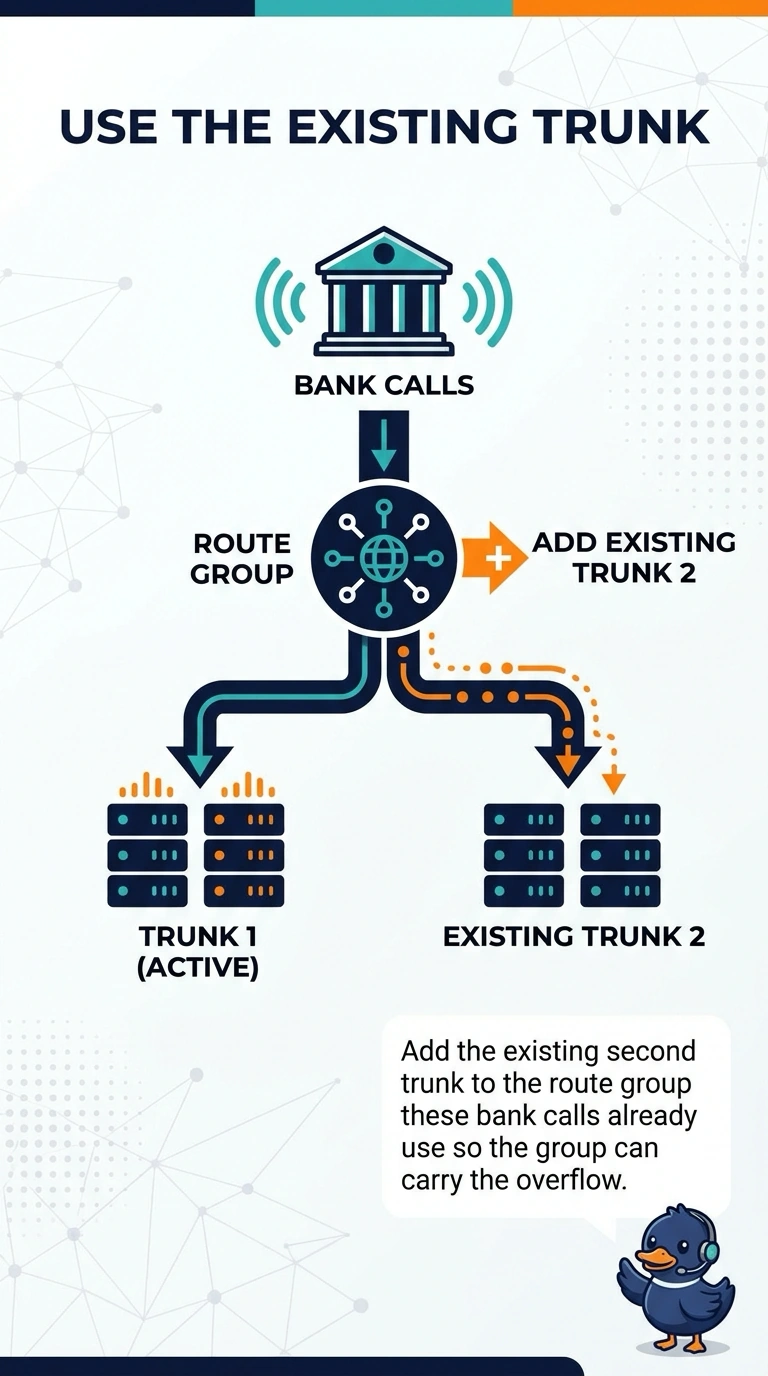
Short Explanation
You know a second checkout lane only helps once you open it, and enlarging the same registration, using a meetings site, or parking callers on an auto attendant does not open it. Registration-based Local Gateway supports up to 250 concurrent calls per trunk. Add the second trunk to the route group and give both trunks the same priority to distribute calls across them.
Full Explanation
Registration-based Local Gateway supports up to 250 concurrent calls per trunk. Add the second trunk to the route group and give both trunks the same priority to distribute calls across them. A route group is the ordered set of trunks used for capacity and failover, so the idle trunk to the other CUBE must be a member before it can carry overflow from the bank calls. Raising the concurrent-call capacity of that same registration so one trunk accepts the overflow without another trunk in the group fails because the per-trunk limit cannot be exceeded by configuration and extra capacity must come from another trunk in the group. Moving overflow callers onto a new meetings site until the first trunk shows spare room for additional voice calls fails because a meetings site hosts meetings and does not add PSTN voice capacity or place the second trunk in the route group. Sending the overflow callers to an auto attendant menu so the extra calls wait there instead of needing another trunk fails because an auto attendant only plays menus and routing, and waiting callers still need trunk capacity. Verify provider and CUBE capacity too, then confirm both trunks share the same priority in the route group and test calls above 250 to confirm they distribute across the second trunk.