
A university uses the same extension in two campus locations, and callers who dial that extension reach the wrong person. How should the overlap be handled?
Select an answer to reveal the explanation.
Short Explanation
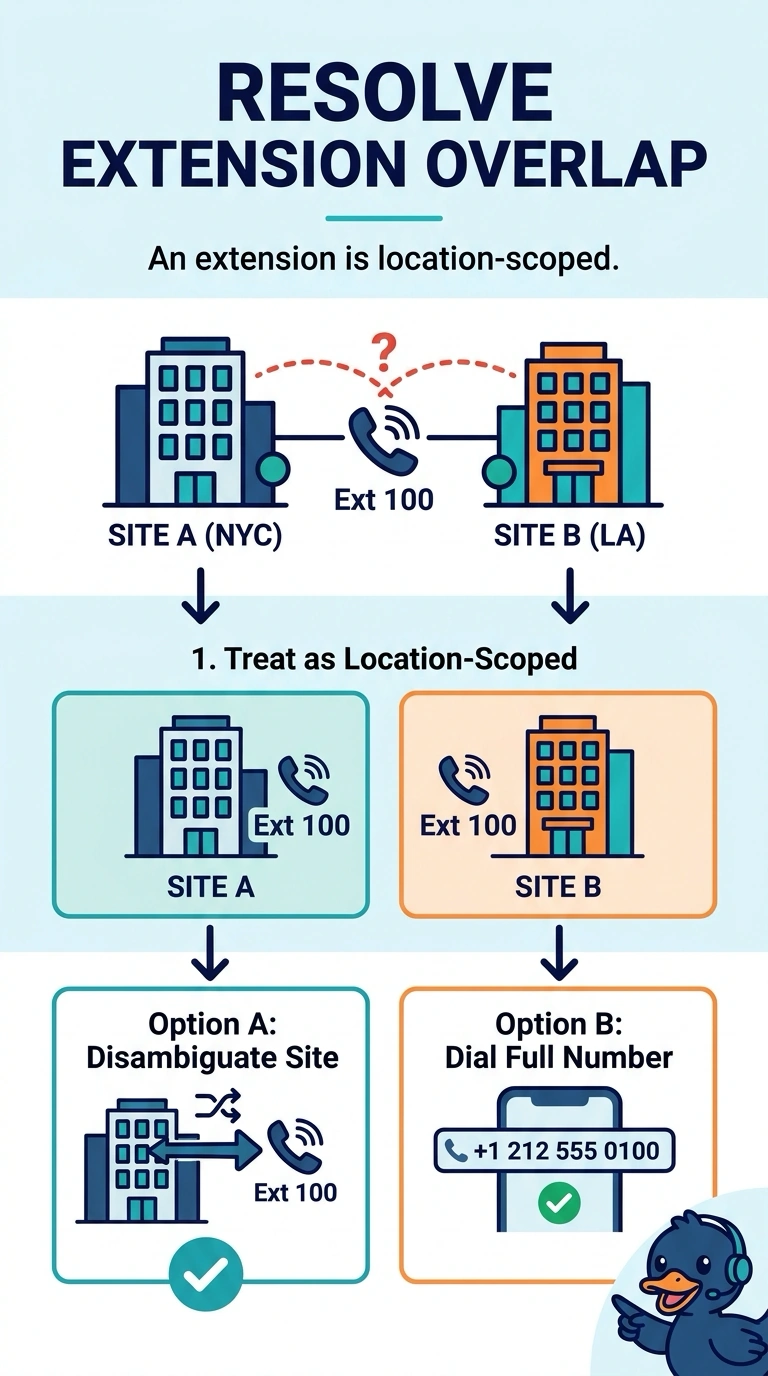
You can picture two campus locations that both use room 12: a visitor who gives only the room number may reach the wrong person. Treat the extension as location-scoped, then clarify the intended site or use that person’s full number; removing a trunk won’t turn the two extensions into one line.
Full Explanation
An extension is scoped to a location, so identical digits in two campus locations identify two different destinations rather than one shared line. Treat the extension as location-scoped: a caller can use the bare extension within their own location, but should clarify the intended site or use the destination location’s routing prefix with the extension, or dial the person’s full number, to reach someone elsewhere. Removing one campus trunk does not merge the matching extensions into a single route group; a route group orders trunks, not extension identities. Changing the organization’s single sign-on trust affects user authentication, not whether the identity provider merges users who happen to share an extension. Placing both people on one meetings site also does not merge their calling extensions, because a meetings site and a calling location are different objects. Exam caveat: when a user moves sites, the new location’s numbers and trunks apply, and keeping the old site’s extension without disambiguation can recreate the overlap. Practical check: dial the short extension from each location and verify who answers, then dial the full number and confirm it reaches only the intended person.