
A research lab sends outbound calls that arrive at the carrier one digit short, and the carrier rejects them. The translation for those calls removes one more digit than the carrier expects. What should be corrected?
Select an answer to reveal the explanation.
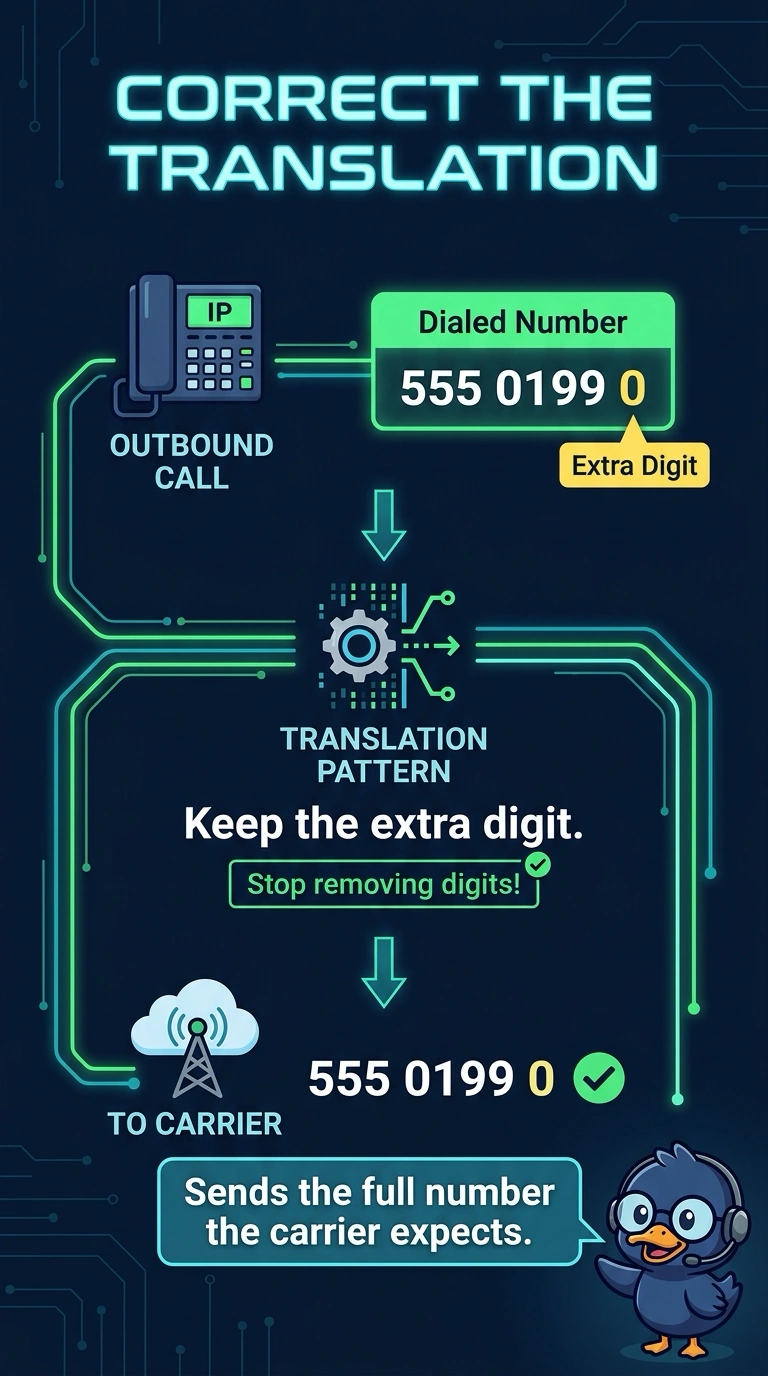
Short Explanation
Cutting one extra digit off a phone number is like dropping the last house number on an envelope. You correct the translation so the carrier receives the full number it expects. Another trunk, a broader call permission, or hybrid calendar does not put the missing digit back.
Full Explanation
Correct that translation so it stops removing the extra digit and sends the full number the carrier expects to receive on these calls. The carrier is rejecting a digit string the translation damaged, so the strip itself has to keep the digit the carrier requires. Add another trunk to the lab route group so the carrier will accept the shortened number on a different outbound path. Adding a trunk changes capacity or failover, and it does not put back a digit the translation already removed. Raise the lab international call permission so the rejected digit string is treated as an allowed international call type. A call permission allows or blocks a call type, and it does not restore a digit that was stripped before the call left. Enable hybrid calendar on the lab workspace so the same call can be placed from a scheduled meeting join button. Hybrid calendar shows meetings on a workspace, and it does not repair a translation that is shortening the called number. Exam caveat: Translations rewrite digits and do not choose the trunk, so a rejected number with a missing digit is fixed in the translation rather than by adding capacity. Operational check: Capture the digits sent on a test call and confirm they match the full number the carrier expects after the translation runs.