
Utility crews dial a leading 9 and then a ten-digit public number. The carrier rejects the call unless it receives only those ten digits. The location has no outbound dial digit configured, and the carrier expects national-format digits from the premises gateway. Which change removes the extra digit before the call is sent?
Select an answer to reveal the explanation.
Short Explanation
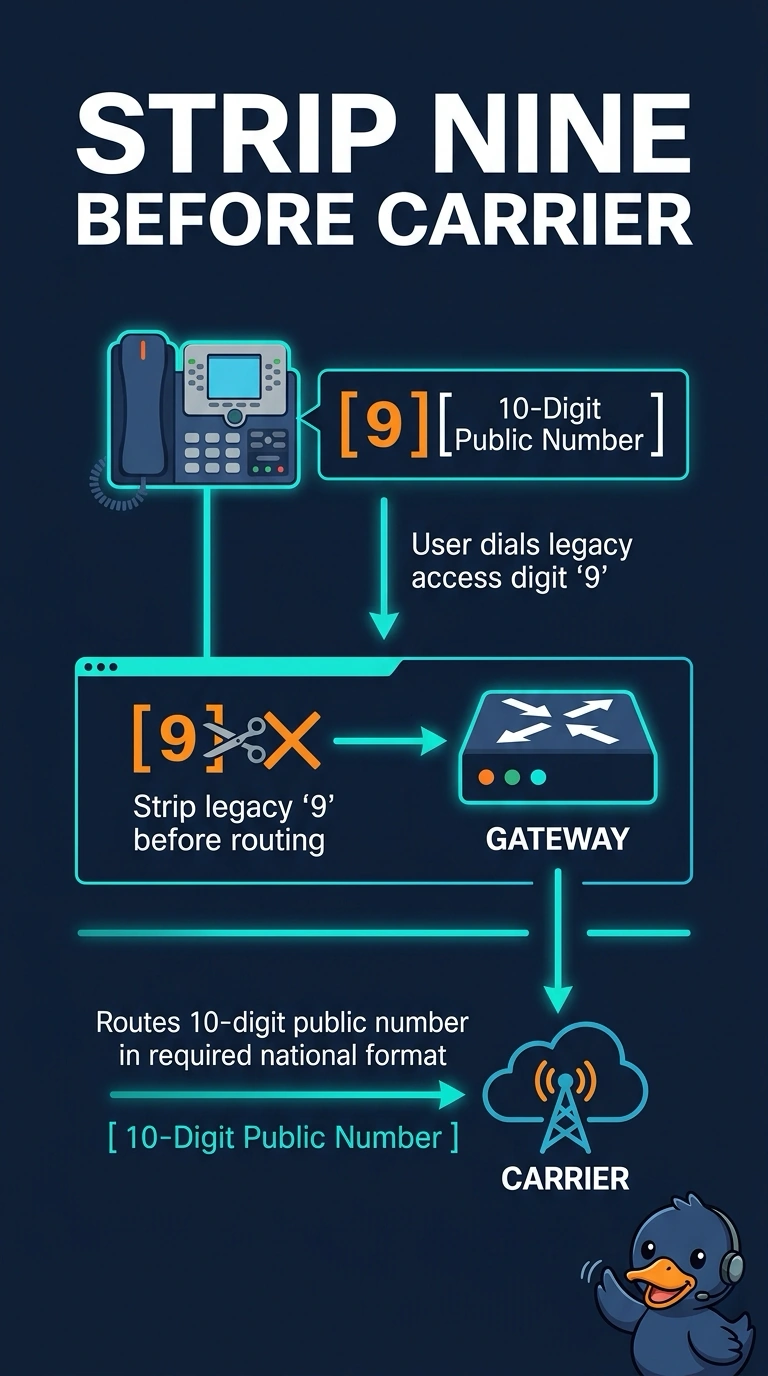
Think of peeling the extra sticker off before shipping. You strip the legacy access digit before routing and configure the gateway to present the carrier’s required national format so only the ten digits go out. Permissions, extra trunks, and calendar still can’t remove that digit for you.
Full Explanation
Strip the legacy access digit before routing and configure the gateway to present the carrier’s required national format is correct because the location has no outbound dial digit configured, so the dialed 9 reaches dial-plan processing and must be removed before the PSTN handoff. A translation pattern rewrites the dialed string to drop that access digit, and the premises gateway then presents national-format digits the carrier expects, which satisfies the ten-digit requirement. Set a call permission that allows national calls, which still forwards the leading 9 onward to the carrier unchanged fails by concept because permissions authorize a call type and do not rewrite digits, so the rejected 9 would still be sent. Add a second trunk to the route group so the carrier is offered more capacity and will accept the extra leading digit fails by concept because capacity and failover do not edit the called number, so digit validation still fails. Reconnect hybrid calendar so a room device can place the same public call from the meeting join button instead fails by concept because calendar join displays meetings and initiates the same outbound dialing, without changing digit manipulation toward the carrier. Use translation only to rewrite digits here; it does not select the trunk and does not decide permission.