
A warehouse user should answer an inbound direct-inward-dial number, but that number is spare in another location and is not assigned to this user. The DID does not ring this user. What binds the number to this user?
Select an answer to reveal the explanation.
Short Explanation
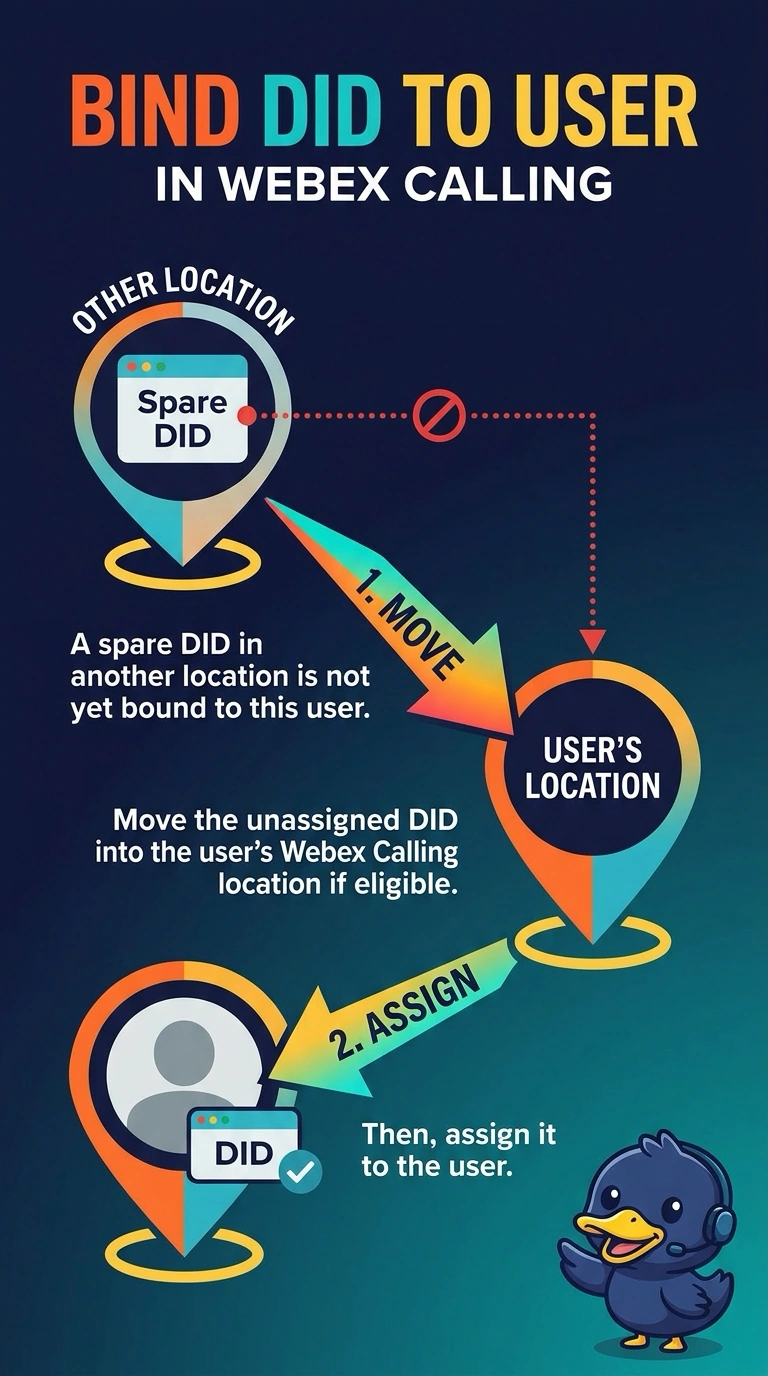
Think of a reserved parking stall in another lot: you must move it to your lot before putting your name on it. Move the unassigned DID into the user’s Webex Calling location if eligible, then assign it to the user so inbound calls ring correctly. If it is ineligible to move, you need a provisioned DID in the user’s location.
Full Explanation
A Webex Calling DID is bound through location inventory and user assignment. An unassigned DID that is spare in another location cannot ring the warehouse user because it is not assigned to that user in the user’s location. Move the DID into the user’s Webex Calling location if eligible, then assign it to the user; that creates the binding that routes inbound calls to the intended endpoint. Granting international call permission controls which destinations the user may dial, but it neither moves number inventory between locations nor attaches a spare DID. Putting the user in a route group selects trunks for call routing, but it does not transfer the DID between locations or assign it to the user. Adding a translation pattern rewrites called-party digits in the signaling path, but leaving the spare number unassigned still leaves the warehouse user without a DID binding. Exam caveat: moving the DID is only an option if it is eligible to move; otherwise, a DID provisioned in the user’s location is required. As a practical check, verify that the number appears in the user’s location inventory and is assigned to the user.