
An airline gate phone stays registered and internal extensions connect, but every outside number returns reorder tone the moment the digits are sent. What should the technician check?
Select an answer to reveal the explanation.
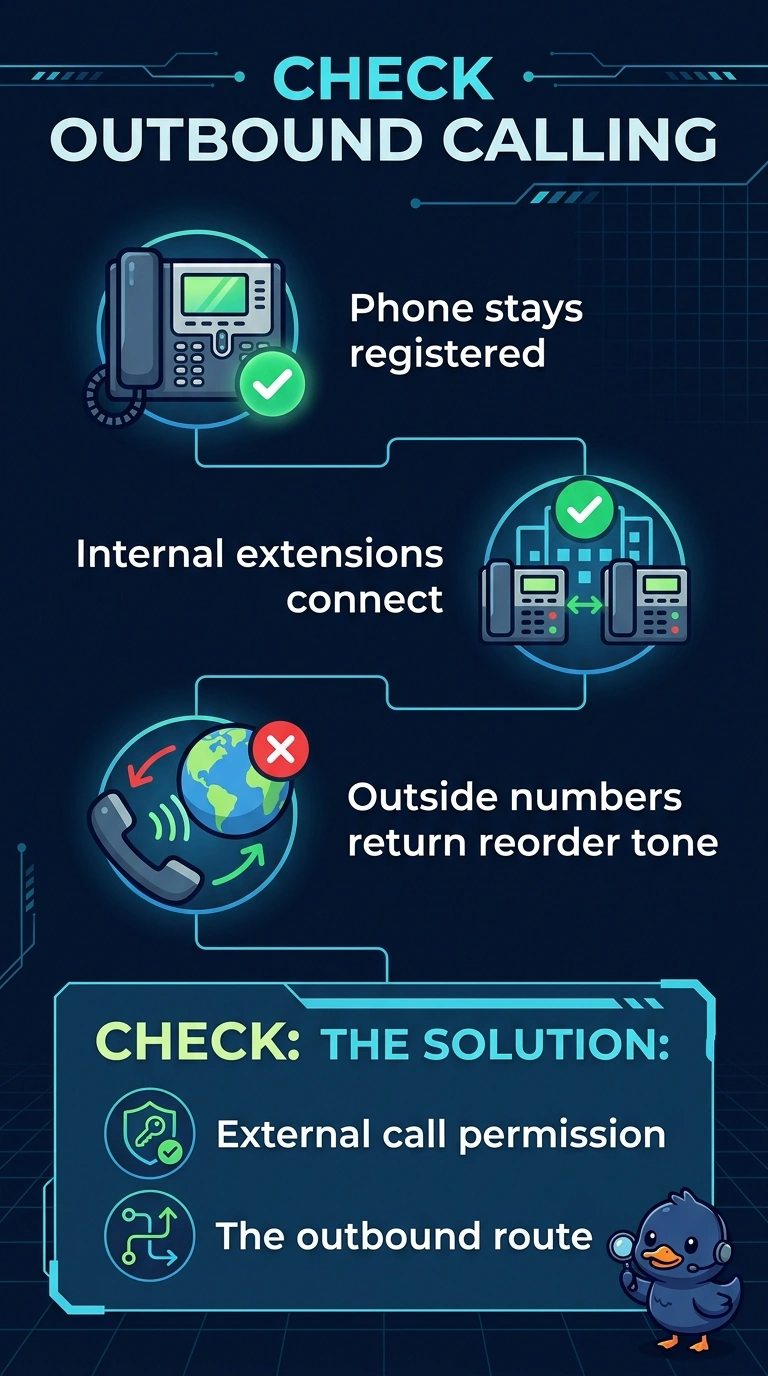
Short Explanation
Think of a phone that can ring the next desk while every outside line is still closed off. You check the external call permission or the outbound route, because the handset is already registered and internal calls connect. The trap is rebooting a phone that is already up, or looking at a meeting lobby or a directory sync.
Full Explanation
A phone that is registered and can complete internal calls has already passed registration. Immediate reorder on every outside number, with internal calls still connecting, points at the external call permission or the outbound route, because the phone is registered and internal calls already connect. Call permissions allow or block a call type, and the outbound route is what selects the trunk, so either one can reject outside calls while extension-to-extension calls still work. Rebooting the handset, on the theory that immediate reorder on outside numbers means the registered phone is actually unregistered, treats a working registration as if it were down. The meetings-site lobby setting that decides whether a guest waits before joining an airline briefing is a meeting control, and it does not generate reorder tone on a phone call. A Directory Connector resync, which would rebuild the gate agent account from Active Directory, repairs a directory sync, and this agent can already place internal calls, so the account is present. Exam caveat: a dead registration and a blocked outside call type look different, and only the second one leaves internal calls working. Operational check: compare an internal call with an outside call on this phone, then inspect the external permission and the outbound route before anyone reboots the handset.