
At a bank, callers who press one key on the auto attendant should reach the loan hunt group, but that key was built as a change to the caller's long-distance permission. What should the key do?
Select an answer to reveal the explanation.
Short Explanation
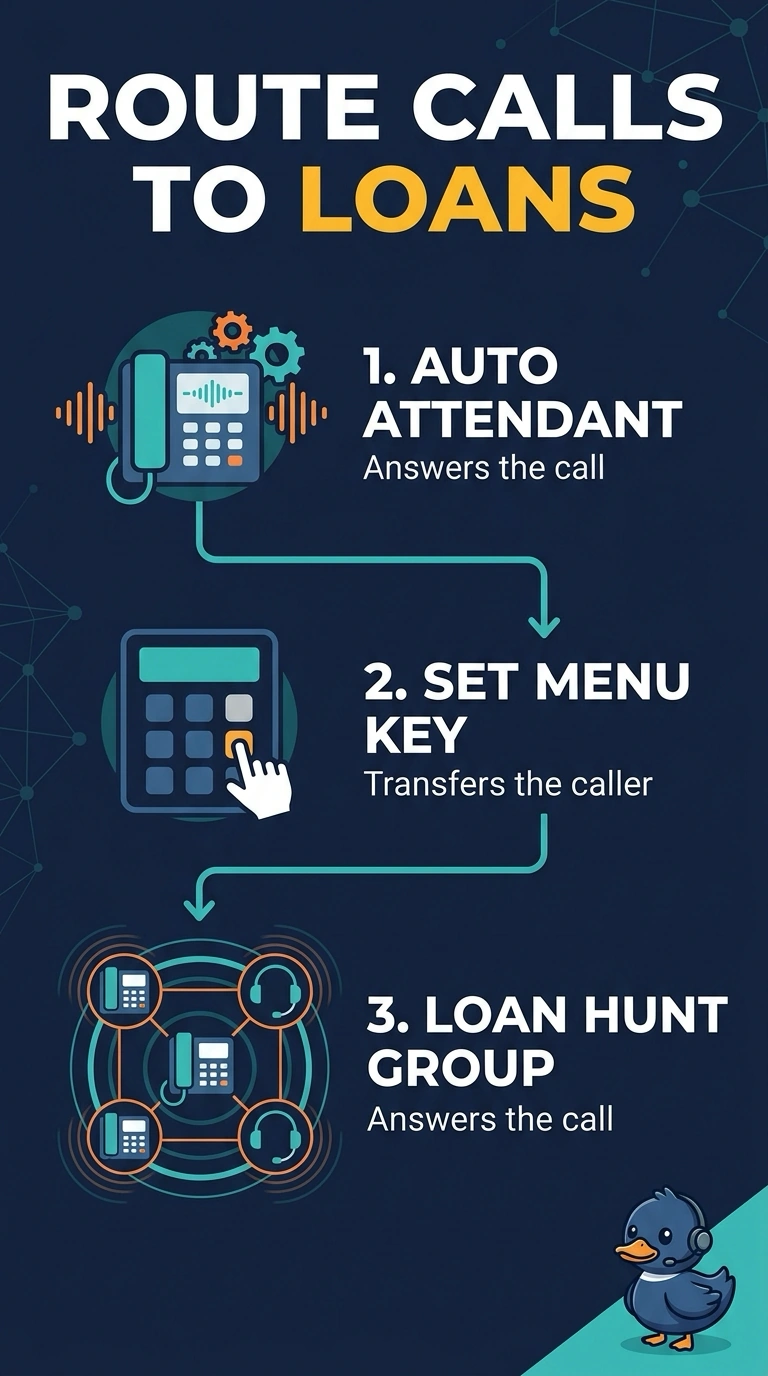
Think of a phone menu key as an elevator button that should take you to a floor, not rewrite your travel pass. That key should transfer the caller into the loan hunt group. The trap is treating the key as a long-distance permission change.
Full Explanation
An auto attendant key action decides what happens when the caller presses that key. Set the auto attendant key’s transfer destination to the hunt group’s valid extension or number and verify it in each applicable menu. Changing the caller's long-distance permission allows or blocks a call type, and a permission is not the action attached to the menu key. A translation pattern rewrites digits, and rewriting the dialed digits does not define what the key does. Pointing both the business-hours and after-hours schedules at the hunt group can choose a schedule destination, but that option still leaves the key without a transfer. On exam day, call permissions and menu actions are different controls: a blocked call type is a permission, and a key that should reach a hunt group is a transfer. After the change, call the auto attendant, press the key, and confirm the call lands on the loan hunt group. A later long-distance call can still be blocked by that caller's permission, and that block is a separate control from the key that performs the transfer.