
After the hotel front desk closes, callers still hear the daytime auto attendant menu instead of the night greeting. The digits they dial are already correct. What should be changed?
Select an answer to reveal the explanation.
Short Explanation
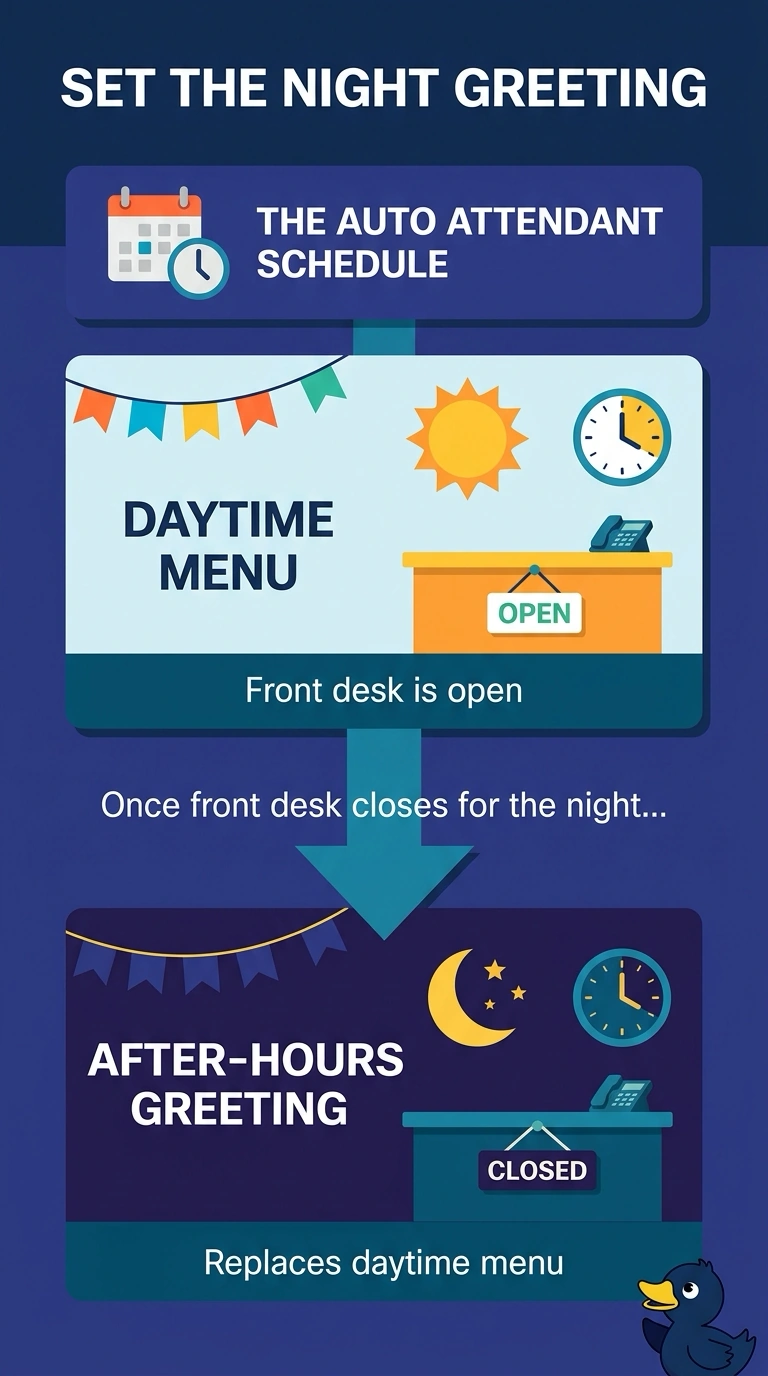
The night greeting is a store sign that flips when the schedule says closed, not a new street address. You change the auto attendant schedule so after-hours callers hear the night greeting instead of the daytime menu. A translation pattern only rewrites digits, and these digits are already right.
Full Explanation
An auto attendant schedule selects which greeting or destination is active for business hours, after hours, or a holiday. Callers still hear the daytime menu after the front desk closes, and the digits are already correct, so the auto attendant schedule should make the after-hours greeting replace the daytime menu. The local gateway route group chooses trunk order for capacity and failover. Failover to a second trunk does not swap a daytime menu for the night greeting. The guest call permissions after the desk closes allow or block a call type such as long distance. Blocking long distance does not select the greeting the auto attendant plays. A translation pattern that rewrites the main number changes digits. Digit rewrite does not pick the after-hours greeting, and a schedule is able to choose the greeting. The digits are already the right number. Exam caveat: a schedule does not rewrite digits, and a translation does not choose which greeting is active. Operational check: set the schedule to the closed period, call the main number, and confirm the night greeting plays, then check a daytime call still hears the daytime menu.