
A warehouse main number should answer with a menu that sends callers to dock scheduling or to billing. Workers already sign in on their own phones. Which feature should answer that public number?
Select an answer to reveal the explanation.
Short Explanation
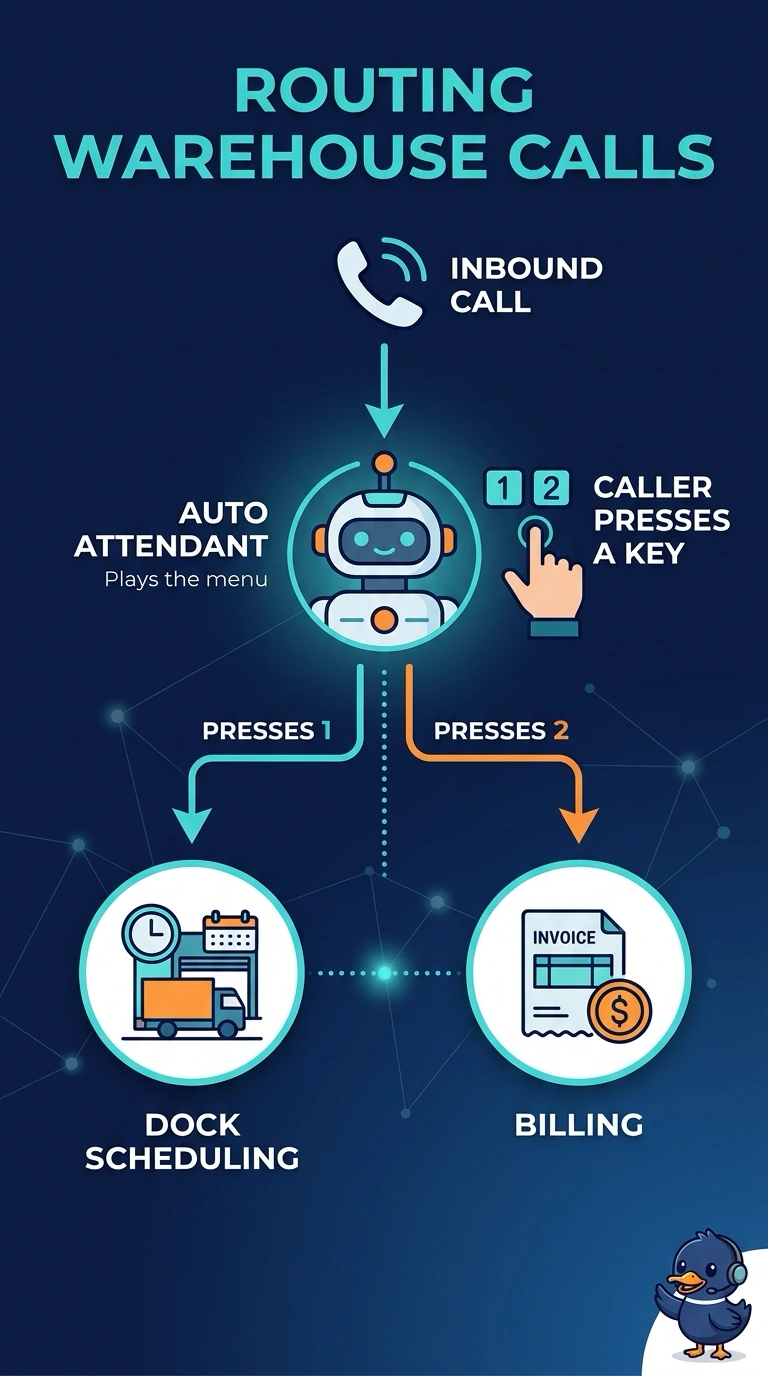
You need a menu that answers the warehouse number and lets callers choose dock scheduling or billing. An auto attendant plays that menu and routes callers based on the key they press. Hot desking signs a worker into a shared device; it does not answer the public number with a menu.
Full Explanation
An auto attendant answers the warehouse main number, plays a menu, and sends callers to a destination based on the key they press. Because callers need to choose between dock scheduling and billing, the auto attendant is the feature that should answer the public number. Workers signing in on their own phones is a separate action and does not create or answer that menu. A translation pattern rewrites digits, such as changing the main number into a dock extension; it does not speak choices or route callers according to a menu selection. Hot desking on a shared Desk device lets the next worker sign in with a Webex identity and take personal calls, but that sign-in does not make the worker or device the voice menu for the warehouse number. A call permission limited to internal calls allows or blocks a call type; it does not speak the dock and billing choices, and blocking other destinations is not menu routing. Exam caveat: the menu can route callers only to the destinations configured for its choices. Practical check: call the main number, confirm the menu offers dock scheduling and billing, then press each key and verify that the caller reaches the matching destination.