
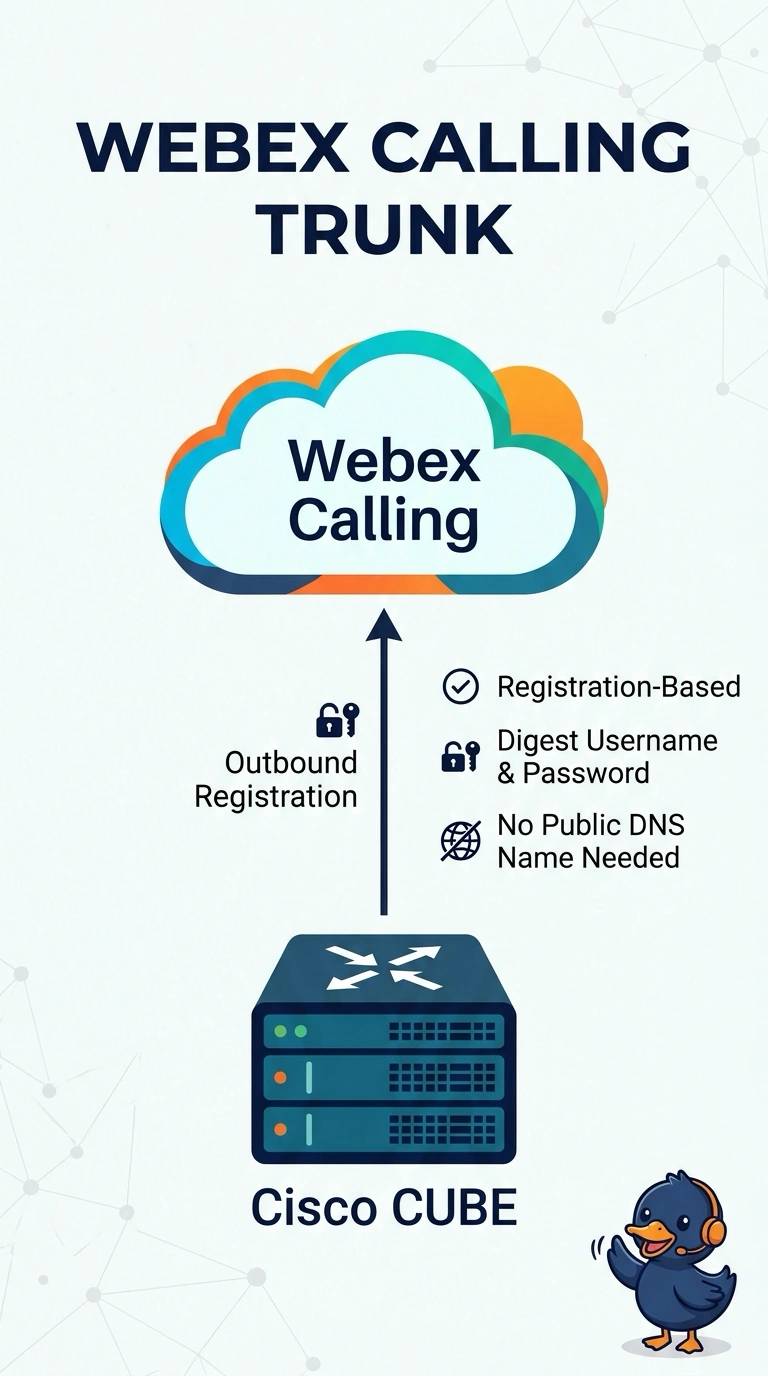
A lab Cisco CUBE has no public DNS name and should register outbound to Webex Calling with a digest username and password. Which trunk model matches that design?
Select an answer to reveal the explanation.
Short Explanation
Some clubs let you show a membership card at the door, and they do not bolt a street plaque to the building. You use a registration-based trunk that registers outbound with a digest username and password and needs no public DNS name. Choosing a certificate-based trunk is the trap when this lab CUBE has no public DNS name.
Full Explanation
A registration-based local gateway registers outbound with a digest username and password, allows dynamic NAT, and does not require a public DNS record. That is the design this lab CUBE is ready to use. A registration-based trunk that registers outbound with a digest username and password and needs no public DNS name matches the CUBE, the digest credentials, and the missing DNS name. A certificate-based trunk that still needs a public DNS record, a verified domain, and a public address or static NAT before it can run and you pick the model this lab cannot satisfy without a public name and a static address. A public DNS name and a verified domain added first, because digest registration is blocked until that name is published for the lab, and you invent a DNS requirement the registration-based trunk does not have. Site survivability as the lab's normal phone registration, skipping the local gateway trunk the CUBE was meant to provide, and you use backup calling in place of the trunk the CUBE should register. Exam caveat: when that IOS XE gateway is enrolled, Control Hub can validate the registration-based configuration, which is separate from needing a public DNS name. Operational check: configure the digest username and password, confirm no public DNS record is required, and verify the lab trunk shows registered from the outbound registration.