
A utility Cisco CUBE sits behind dynamic NAT and registers to Webex Calling with a digest username and password. A teammate wants to convert the trunk to certificate-based only because NAT is present. What is the right conclusion?
Select an answer to reveal the explanation.
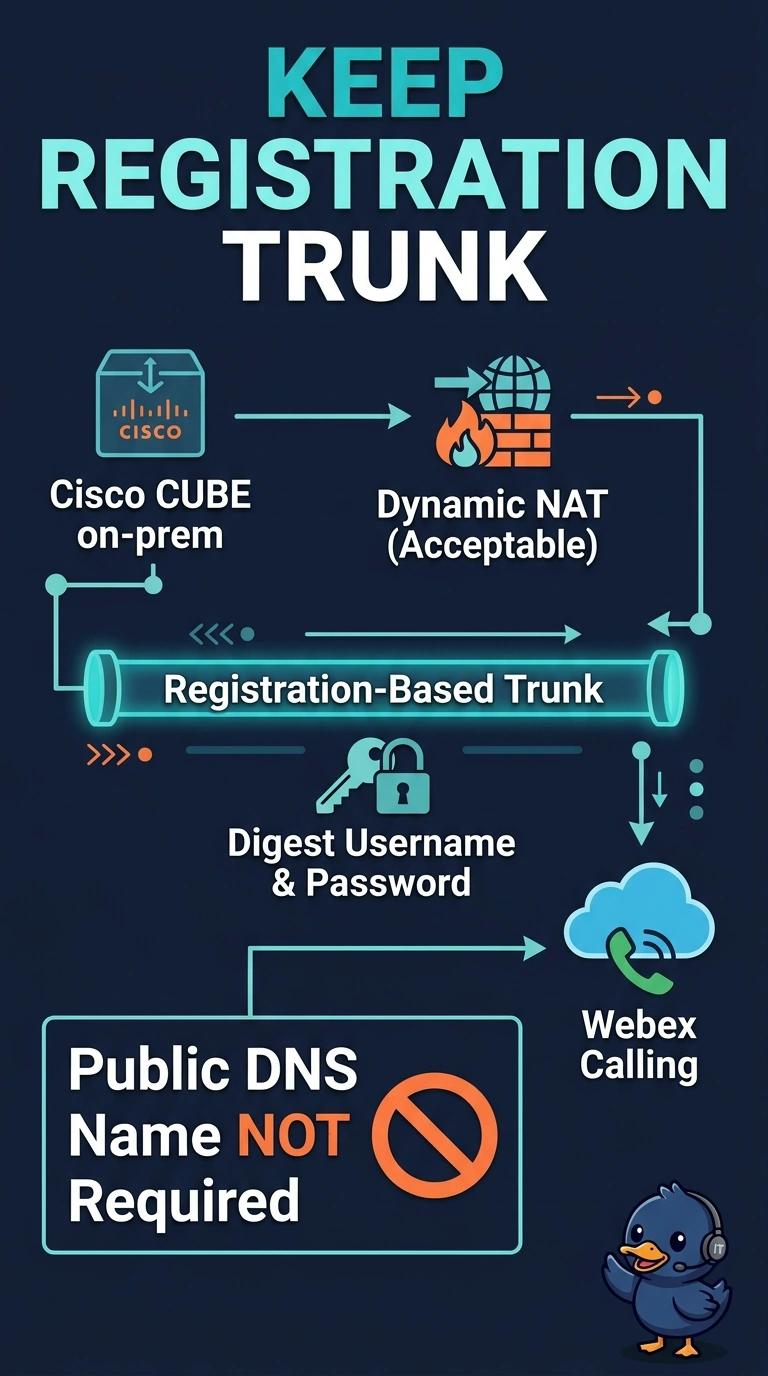
Short Explanation
A mail slot can work behind a changing address, and you do not rebuild the post office because the address moves. You keep the registration-based trunk, because dynamic NAT is acceptable and a public DNS name is not required. Converting to certificate-based only because NAT exists is the trap.
Full Explanation
Registration-based trunks register outbound with a digest username and password. Dynamic NAT is acceptable, and no public DNS record is required. The utility CUBE already matches that model, so NAT is not a reason to convert it. Keep the registration-based trunk, because dynamic NAT is acceptable and a public DNS name is not required for it, which is the right conclusion. Publish a public DNS name before the digest registration is allowed to stay up behind the utility NAT and you add a DNS requirement this registration-based trunk does not have. Install a wildcard certificate and enroll the gateway so the certificate-based configuration check can approve that NAT and you move toward a certificate model, where wildcard certificates are not supported and automated checks are not the registration story. Convert the trunk to certificate-based mutual TLS, because dynamic NAT is not allowed on a registration-based utility gateway, and you reject a NAT type the registration-based model accepts, while certificate-based trunks look for a public address or static NAT instead. Exam caveat: converting to certificate-based would add a verified domain, a public DNS record, and a CA-signed certificate, none of which this NAT symptom requires. Operational check: leave the digest registration in place behind dynamic NAT, confirm the trunk stays registered, and do not create a certificate-based trunk for this CUBE.