
An airline keeps a registration-based Cisco CUBE trunk. Calls are rejected once that trunk passes 250 concurrent calls, and the team will stay with registration-based trunking. How should they add capacity?
Select an answer to reveal the explanation.
Short Explanation
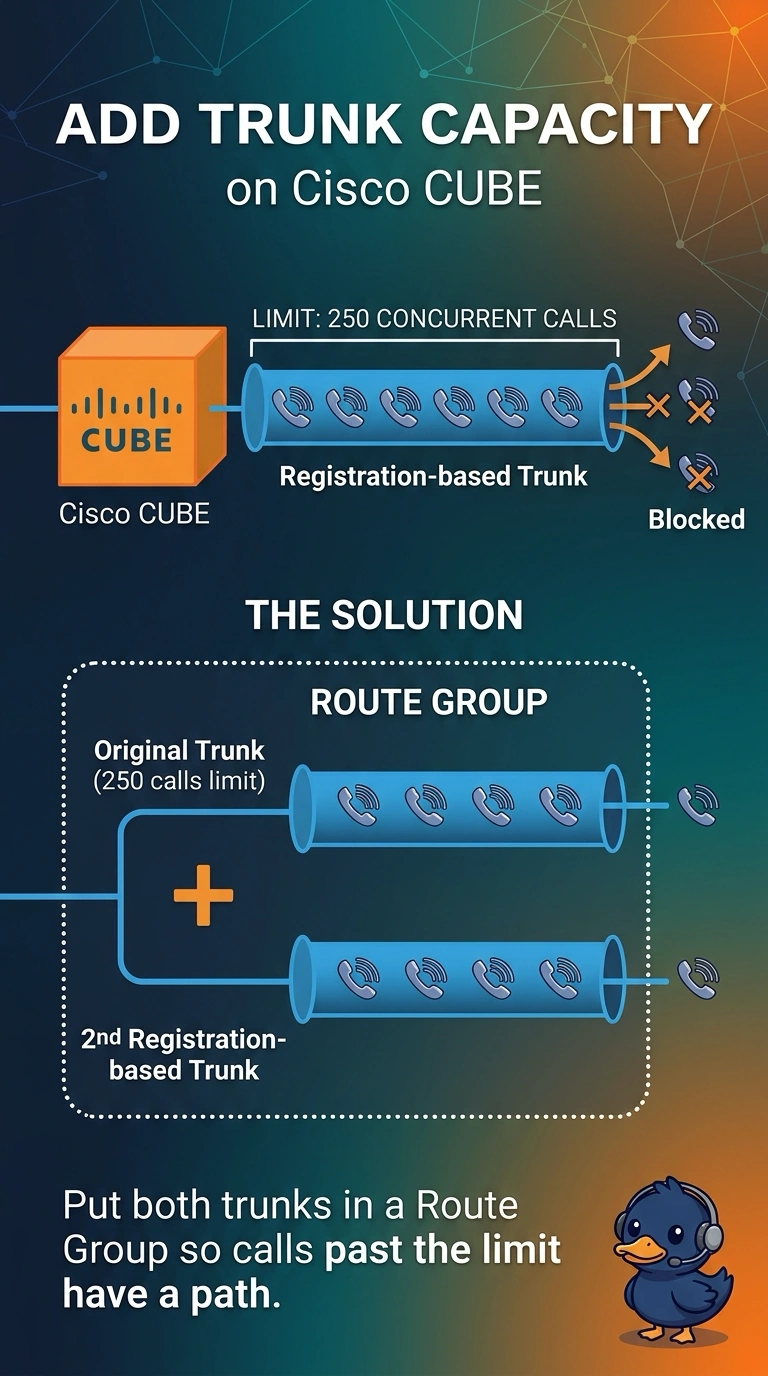
Think of the 250-call limit as a hard cap on one checkout lane: you need another lane, not a bigger number painted on the same one. Add another registration-based trunk and put both trunks in a route group so calls past the limit have a path. Raising the dial-peer number on the same trunk does not lift its cap.
Full Explanation
A registration-based trunk supports up to 250 concurrent calls, and calls beyond that capacity are rejected. To add capacity while staying with registration-based trunking, add another registration-based trunk and place both airline trunks in a route group so calls past the first trunk’s limit have a path. Enabling hot desking so callers above the limit sign in on a shared device applies shared-device sign-in to a trunk-capacity problem; it does not remove the gateway cap. Installing a wildcard certificate on the same trunk changes its certificate style but does not lift the 250-call limit; wildcard certificates are not the registration model. Raising the dial-peer number on the same trunk renumbers a dial peer without adding another trunk, so the per-trunk cap remains. Exam caveat: certificate-based trunks are the model that supports more than 250 calls on a trunk, but the team has chosen to stay with registration-based trunking. Practical check: add the second registration-based trunk to a route group with the first, then place calls past 250 and confirm the extra calls use the second trunk instead of being rejected.