
A factory certificate-based local gateway uses a private address with dynamic NAT, and Webex cannot complete mutual TLS to it. What addressing does that trunk model require?
Select an answer to reveal the explanation.
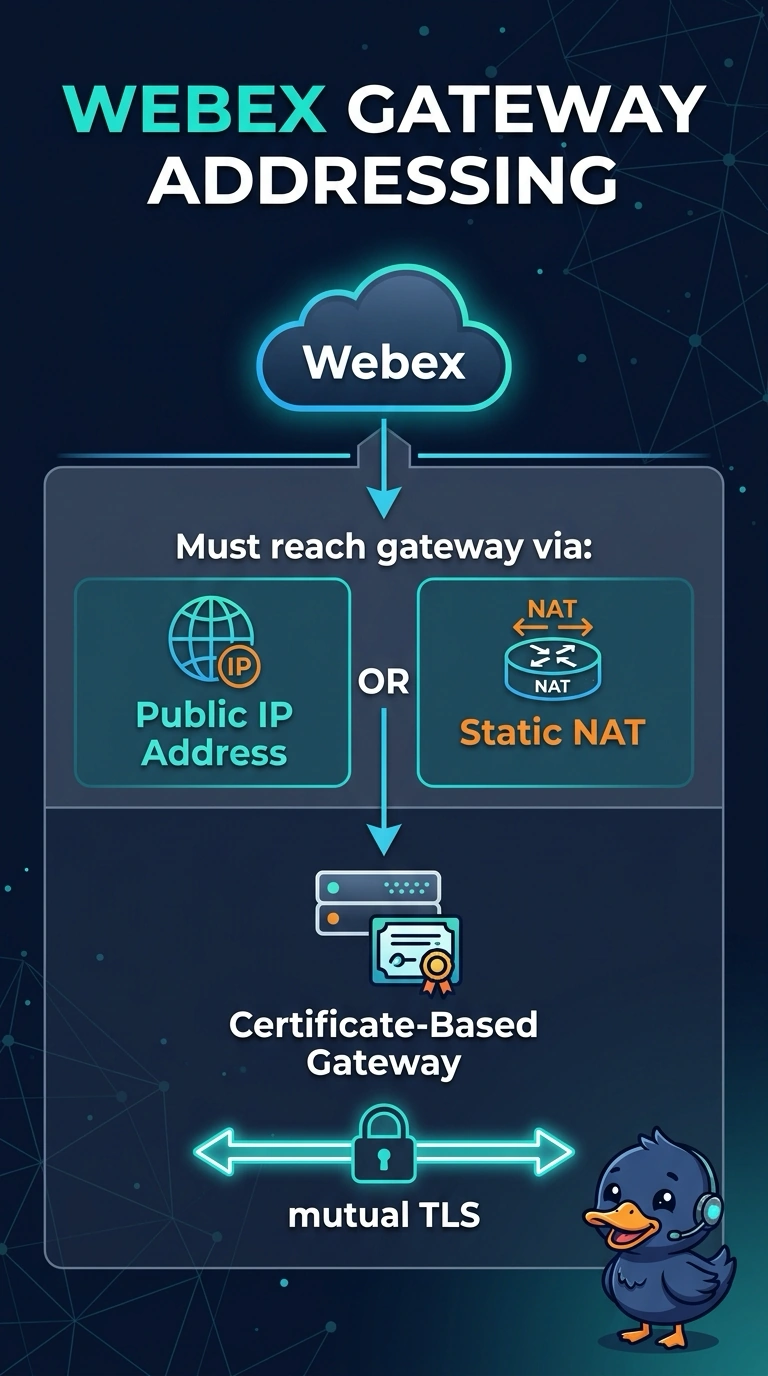
Short Explanation
A loading dock that exists only behind a shifting private address is a dock the trucks cannot find. You give the certificate-based gateway a public address or static NAT so Webex can reach it. Dynamic NAT can suit a registration-based trunk, and it leaves this mutual TLS trunk unreachable.
Full Explanation
A certificate-based local gateway needs a public IP address or static NAT so Webex can open mutual TLS to a stable address. Dynamic NAT with only a private address hides the gateway behind a changing translation, which leaves this certificate-based model unreachable even though that pattern can suit a registration-based trunk. No public DNS name and a shifting translated address is acceptable for registration-based CUBE trunks, which do not require a public DNS record, and it does not meet the certificate-based reachability rule. A digest username and password registration is how a registration-based gateway registers outbound, and it is not how Webex reaches a certificate-based trunk. Webex has to open mutual TLS to a stable address, and a dynamic translation does not provide that reachable target for a certificate-based gateway. Exam caveat: dynamic NAT is acceptable on the registration-based model, and that permission does not transfer to the certificate-based model. Operational check: confirm the factory gateway presents a public address or a static NAT mapping, then retry the mutual TLS connection from Webex.