
Active Directory is the source of truth at a bank through Directory Connector, and a technician creates a new teller directly in Control Hub. What is the supported way to add that teller?
Select an answer to reveal the explanation.
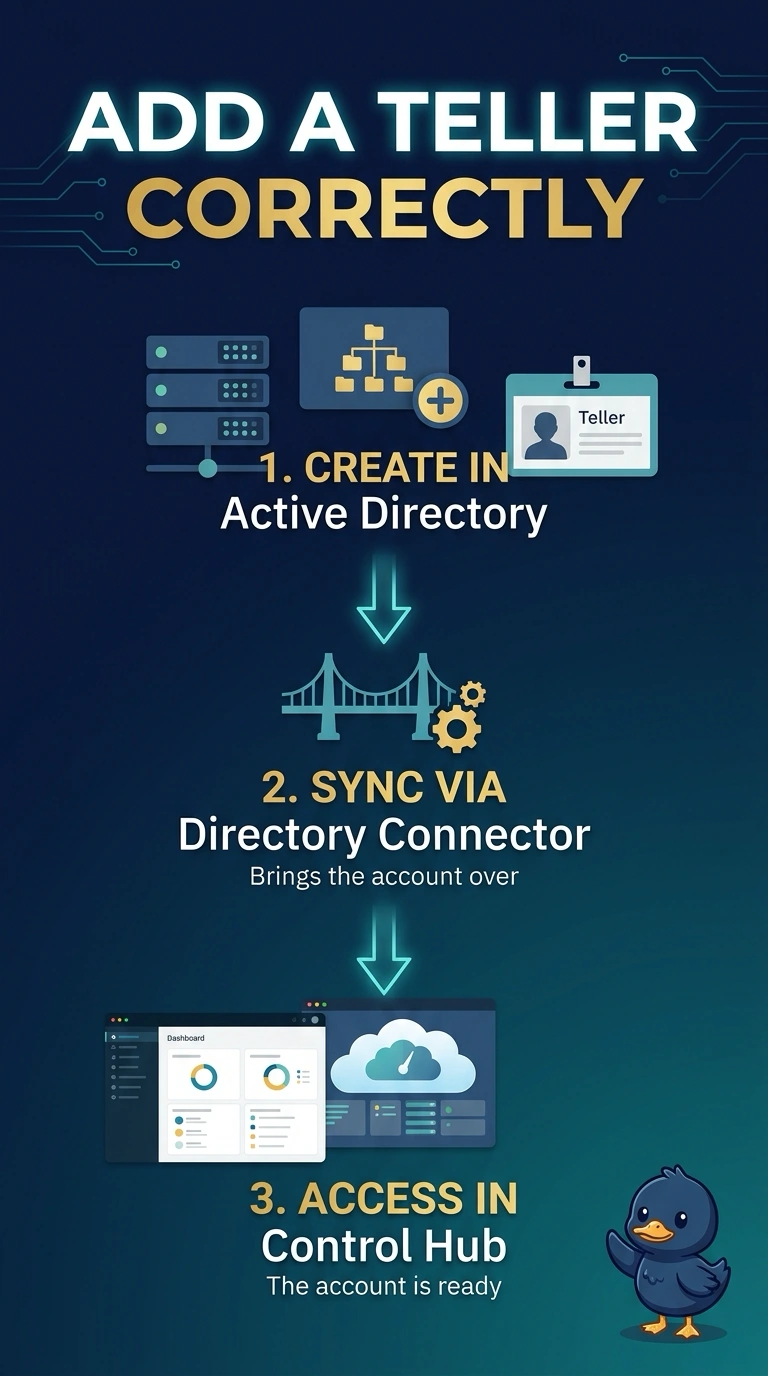
Short Explanation
Think of writing a new name on the lobby screen while the staff file is still the roster everyone else trusts. Create the teller in Active Directory and let Directory Connector bring the account into Control Hub; that keeps ownership with the source of truth. Leaving the hand-added user in place, rebooting the local gateway, or opening a second meetings site does not make a manual add the source of truth.
Full Explanation
While Directory Connector owns the organization, Active Directory is the source of truth, so you add users in Active Directory rather than by hand in Control Hub. A hand-added teller may be rejected or overwritten; the supported approach is to create the teller in Active Directory and let Directory Connector bring the account into Control Hub. Leaving the hand-added Control Hub user in place would create a second owner, which the connector does not allow. Rebooting the local gateway restarts a calling trunk; it does not write a Control Hub user into Active Directory. Opening a second meetings site adds a site but does not change directory ownership or make the connector accept a manual account. Exam caveat: SCIM from a cloud identity provider is a different source model and is not available alongside this connector. Operational check: create the teller in Active Directory, run the connector sync, and confirm the hand-added Control Hub record does not remain as a separate source.