
An airline trainer signs into a shared desk device with a Webex identity and tells the crew that organization single sign-on is now in place. Which statement separates the two sign-ins?
Select an answer to reveal the explanation.
Short Explanation
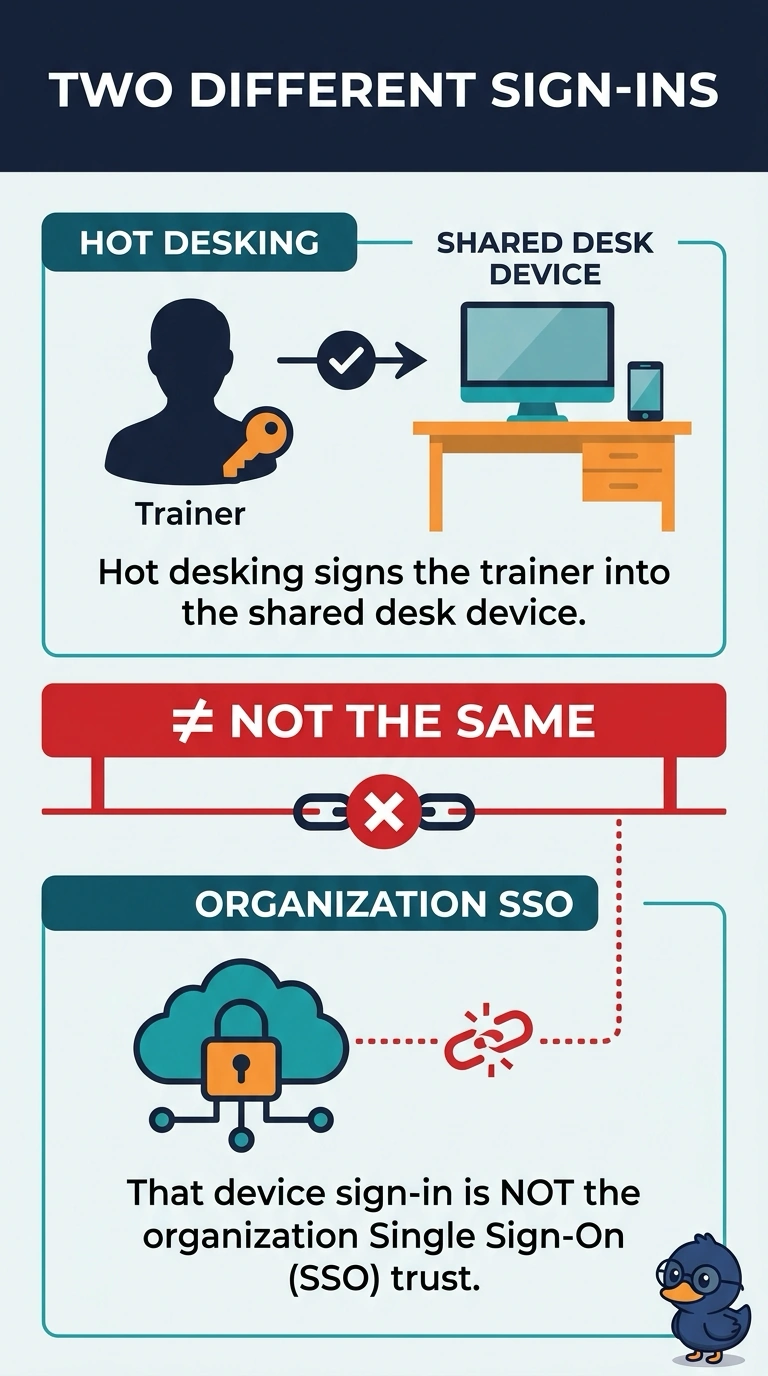
Think of signing a guest book at a shared podium and telling the crew that the building badge system is now live. You separate hot desking, which signed the trainer into the shared desk device, from the organization single sign-on trust. The trap is treating that device sign-in as proof of the identity provider, of directory sync, or of a meeting password.
Full Explanation
Hot desking is a user signing in to a shared Board or Desk device with a Webex identity. Organization single sign-on is the trust that sends users to the enterprise identity provider. The trainer did the device sign-in, so the statement that separates them is that hot desking signed the trainer into the shared desk device, and that device sign-in is not the organization single sign-on trust. The claim that the shared-desk sign-in completed organization single sign-on, so the identity provider trust is already proven for every airline user, treats a device login as the organization trust. The claim that Directory Connector confirmed the sign-in, because a desk-device login is the Active Directory synchronization path, confuses a device sign-in with directory synchronization. The claim that a meetings-site join password was accepted, and that password is what establishes single sign-on for the organization, uses a meeting control as if it were the identity-provider trust. Exam caveat: hot desking, single sign-on, directory sync, and a meeting password are different mechanisms, and success at one does not prove the others. Operational check: confirm whether airline users are redirected to the identity provider, and do not mark single sign-on complete only because a trainer signed into a shared desk.