
A research lab wants single sign-on for staff and also wants leavers removed from Webex automatically. Leadership expects the single sign-on setting to do both jobs. Which division of duties is correct?
Select an answer to reveal the explanation.
Short Explanation
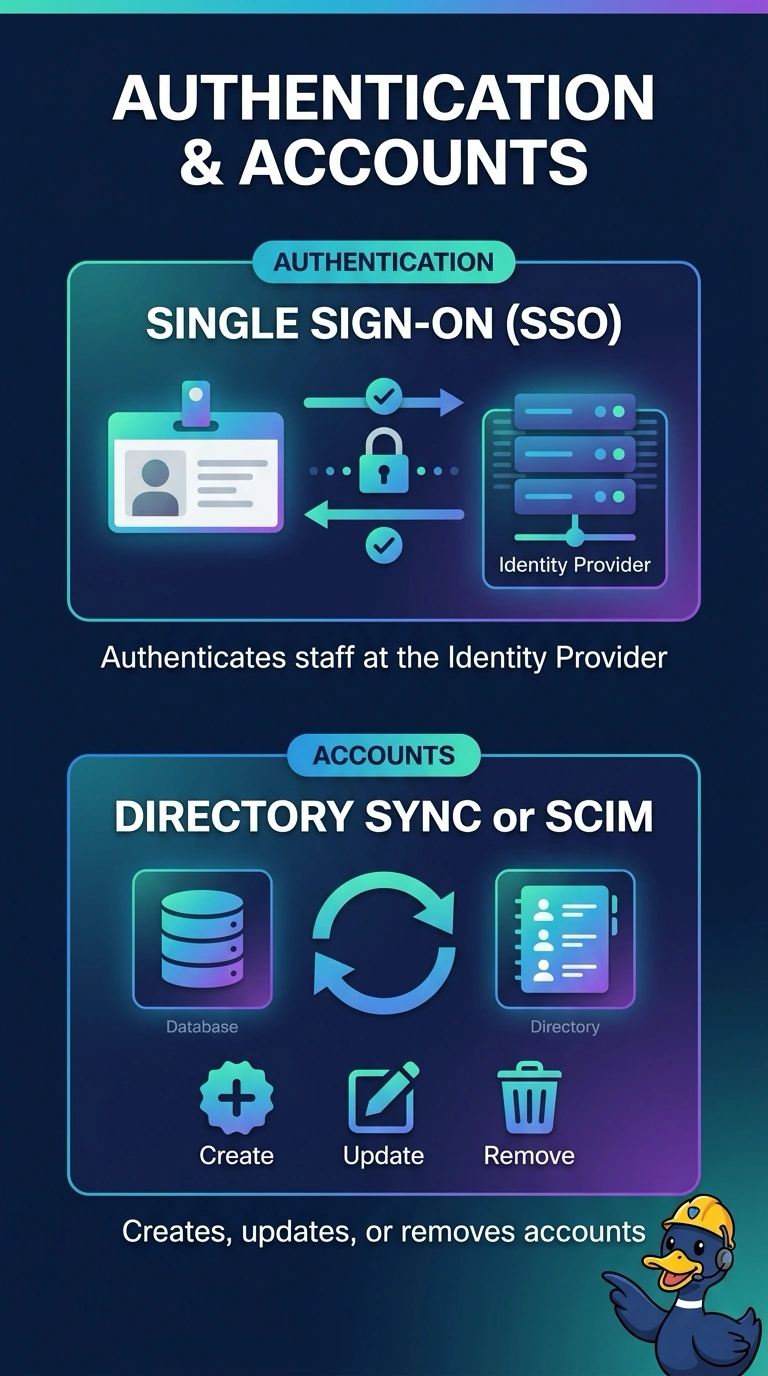
Checking a badge at the door is not the same job as taking someone off the payroll. You use single sign-on only to prove who someone is, and you use directory sync or SCIM when a lab account must be created or removed. The trap is asking the sign-in redirect to delete leavers.
Full Explanation
Single sign-on sends the user to the enterprise identity provider. SSO authenticates users and may support configured SAML account creation or updates. Use Directory Connector or SCIM to automate the required deprovisioning. That division keeps authentication at the identity provider while create, update, and delete for leavers follow from the directory source. Using the single sign-on redirect to authenticate staff and also to delete leavers, because that redirect is treated as the account life cycle, asks an authentication hop to deprovision people, which it does not do. Skipping the identity provider and keeping a local Webex password, then removing leavers with a nightly hand edit in Control Hub, abandons both single sign-on and automated removal. Turning on hybrid calendar so removing a mailbox also removes the person from the lab organization in Control Hub ties a calendar mailbox to identity deletion, and hybrid calendar does not own the user life cycle. On the exam, the single sign-on toggle authenticates and the directory or SCIM path creates and removes accounts. In operations, remove a test account in the source directory and confirm Webex access ends without changing the single sign-on setting.