
An airline meeting forces outside guests through the corporate identity provider before they can join, while staff single sign-on is already healthy. Which correction fits those outside guests?
Select an answer to reveal the explanation.
Short Explanation
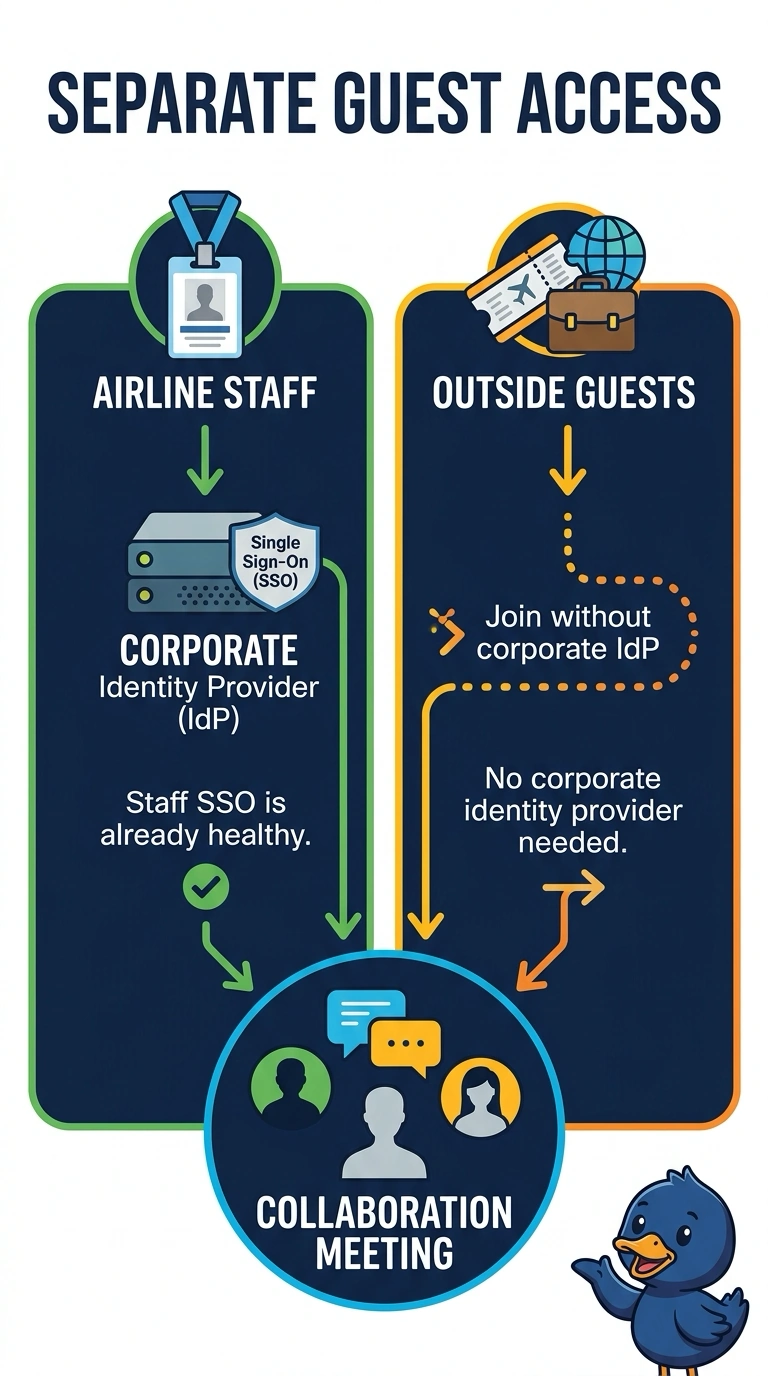
The crew entrance and the visitor entrance are not the same doorway. You keep single sign-on for the airline's own users and let outside guests join without the corporate identity provider. The trap is pushing guests through the corporate directory, a local password reset, or a retention change.
Full Explanation
Single sign-on sends the organization's users to the enterprise identity provider. It is not the way outside guests join a meeting, and it does not create accounts for them. Staff sign-in is already healthy, so the correction is to keep single sign-on for the airline's own users and let outside guests join the meeting without the corporate identity provider. Adding every outside guest to airline Active Directory so Directory Connector can sync a corporate account before the guest joins turns visitors into directory users, which is not required for them to attend. Requiring each outside guest to reset a local Webex password every morning even though staff single sign-on is already healthy invents a local password for people who are not on the corporate sign-in path. Changing the organization retention hold so guest content is kept even when the guest has never had an airline account changes how long content is kept and does not change how a guest enters the meeting. On the exam, single sign-on is for the organization's users, and a guest join is not that redirect. In operations, join as an outside guest and confirm the corporate identity provider is not required, while an airline user still signs in there.