
A utility help desk resets Webex passwords every morning even though single sign-on is healthy and operators already reach the identity provider. Which practice matches that healthy setup?
Select an answer to reveal the explanation.
Short Explanation
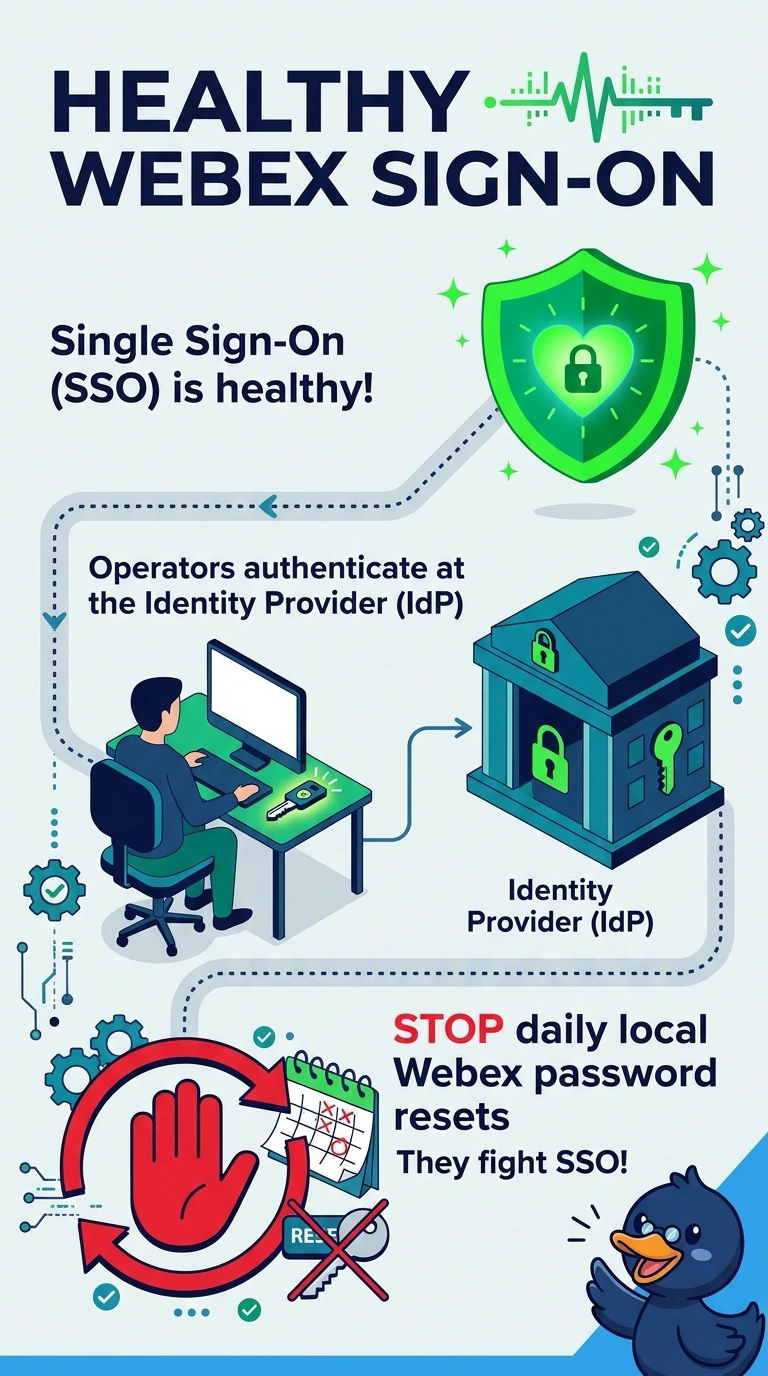
Cutting a new spare key every morning is wasted work when the real lock is the badge reader. You have operators authenticate at the identity provider and you stop the daily local password resets. The trap is fighting a healthy single sign-on setup with a local Webex password.
Full Explanation
Healthy single sign-on means users authenticate at the enterprise identity provider. Resetting a local Webex password every morning fights that path and trains people to expect a password the redirect is supposed to replace. You have operators authenticate at the identity provider and stop the daily local Webex password resets that fight single sign-on. Keeping the local Webex password reset each morning so the identity provider and the local password store stay identical for every operator preserves the local store that single sign-on is already bypassing. Disabling the identity provider redirect and standardizing on the local Webex password that the help desk already resets turns off a working sign-in path. Turning off directory sync so the morning password reset is not overwritten the next time Directory Connector runs confuses account sync with authentication, and directory sync is not what presents the identity provider. On the exam, a healthy single sign-on deployment is used at the identity provider, and local password resets are not the daily routine. In operations, sign in through the identity provider and confirm the help desk did not reset a local Webex password for that test user.