
A utility company cannot verify its domain in the organization. The verification DNS token was published in a zone other than the domain the organization is claiming. What finishes domain verification?
Select an answer to reveal the explanation.
Short Explanation
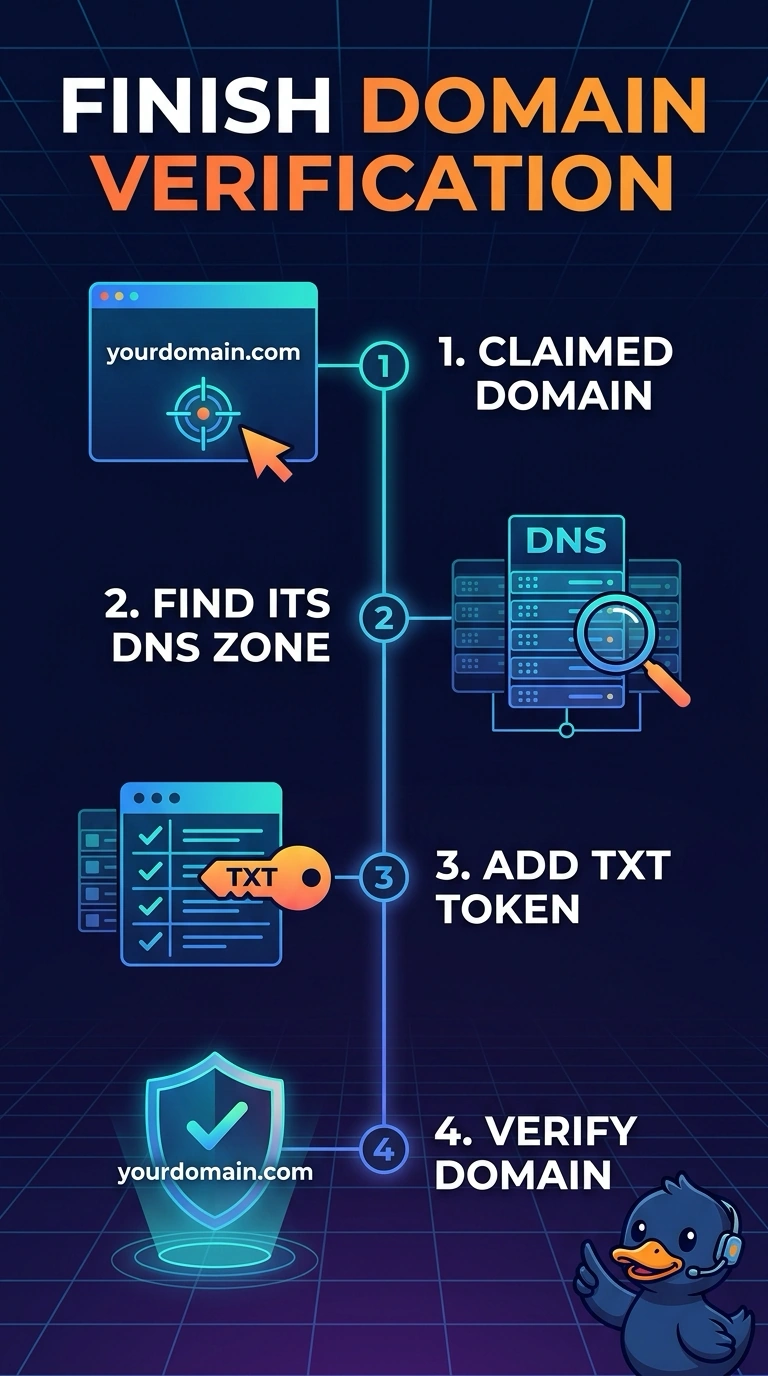
Think of hanging the house number on the neighbor's porch and wondering why the mail still will not arrive. You publish the verification DNS token on the domain the organization is claiming. The trap is flipping a meetings-site feature and treating that toggle as domain proof.
Full Explanation
Domain verification succeeds when the verification DNS token is published where the claimed domain is served, so Control Hub can see the token on that domain. Publishing it in the DNS zone of the domain the organization is actually claiming finishes the check that failed. Adding a second meetings site and enabling a site feature does not verify an organization domain, because a site toggle is not domain verification. Claiming a room device and treating activation as proof only shows the device could join the organization, and device activation is not evidence the claimed domain is verified. Placing the token on the local-gateway certificate and expecting mutual TLS to verify the domain confuses a trunk certificate with the organization DNS check. Exam caveat: a verified domain also matters before certificate-based local gateway work that depends on a verified domain, but this utility failure is still the token in the wrong zone. Operational check: query the claimed domain for the verification token, confirm it answers from that zone, and then rerun the organization verification.