
A warehouse administrator sets a password policy on a meetings site and expects the organization's single sign-on trust to change with it. What did that meetings-site policy actually change?
Select an answer to reveal the explanation.
Short Explanation
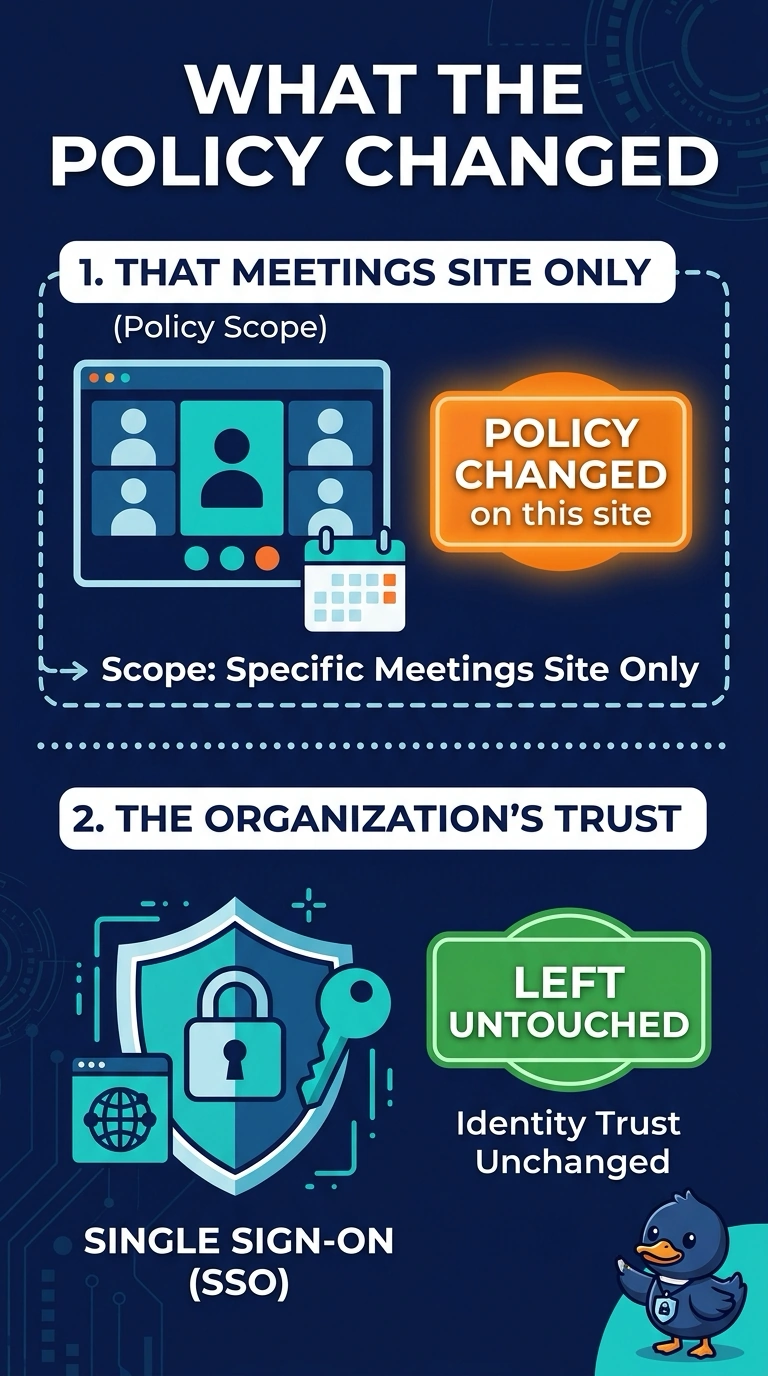
Think of changing the keypad code on one meeting room and expecting the organization’s identity trust to follow—you changed a site-level policy only. Your organization’s single sign-on identity trust stayed untouched. The key is to keep a meetings-site password rule separate from the organization-wide identity-provider setting.
Full Explanation
A meetings-site password policy applies to that meetings site; it does not replace or otherwise change the organization’s single sign-on identity trust, which directs users to the organization’s identity provider. That is why changing the policy leaves the organization’s trust untouched. The claim that the policy replaces the identity-provider trust confuses a site setting with an organization-wide single sign-on setting. The policy also does not verify a new organization domain: domain verification requires the DNS token on the domain being claimed, not a meetings-site password rule. Nor does the policy move key management on-premises; Hybrid Data Security is a separate deployment and is not enabled by changing a meetings-site password policy. Exam caveat: both a site password rule and an organization’s single sign-on trust concern access, but they apply to different settings and are not interchangeable. Practical check: sign in with a test user to confirm the identity-provider challenge is unchanged, then check the meetings-site settings to confirm the new password policy applies there.