
A factory uses Directory Connector, and a departing technician must lose Webex services today. An admin changes that person only inside Control Hub. Which change removes the services and stays removed after the next sync?
Select an answer to reveal the explanation.
Short Explanation
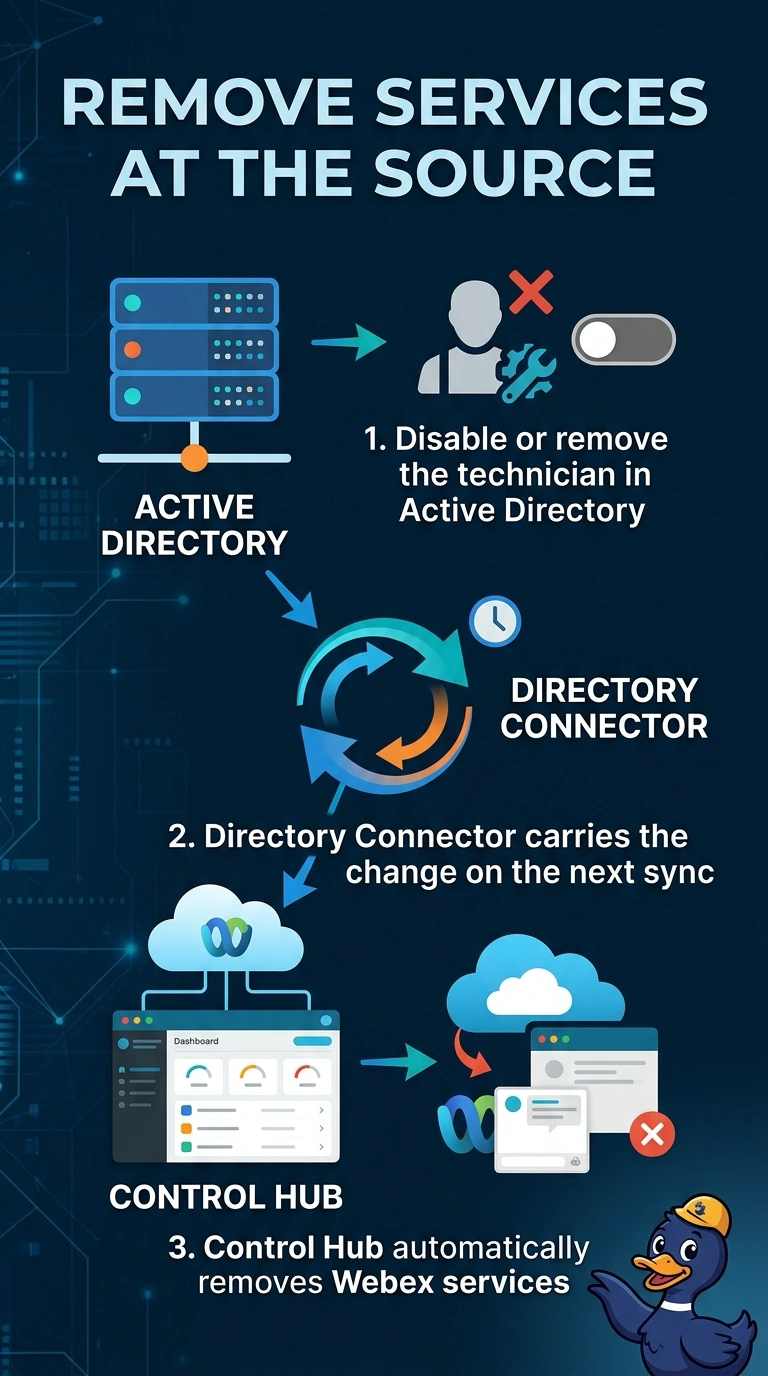
Editing the photocopy does not change the original form in the file cabinet. You disable or remove the technician in Active Directory so the connector brings that change into Control Hub. The trap is a local Control Hub edit that the next sync will put back.
Full Explanation
When Directory Connector owns the organization, Active Directory is the source of truth and directory-owned users are changed in that source. A local edit in Control Hub is overwritten on the next sync, so the technician keeps services. Disable sign-in in the source directory for immediate offboarding, then remove the user from the synchronized scope or directory according to policy and verify the next sync reflects the intended deprovisioning. Deleting the technician local gateway registration so the next connector sync treats the Webex account as already removed from the factory touches a trunk registration, not the user object the connector owns. Turning off single sign-on for the whole factory so the departing technician cannot type a password on the next shift changes authentication for everyone and does not remove the account or the services. Creating a second Control Hub user with the same name and leaving the directory-owned account in place for the next sync to restore adds a duplicate and leaves the original person in place. On the exam, a directory-owned leaver is removed in the source directory, and a Control Hub-only edit does not stick. In operations, disable a test user in Active Directory and confirm the following sync removes that user's Webex services without a second hand-built account.